IELTS Practice Test

Updated on 04-03-2026

Are you getting ready for the IELTS exam? Our thorough IELTS practice tests are created to support you in reaching your target band score.

Practice tests are vital as they acquaint you with the IELTS test format, enhance your time management skills, and help you pinpoint the areas that require more focus.

By working through practice materials under authentic exam conditions, you will boost your confidence and strengthen your listening, reading, writing, and speaking abilities, ensuring you are fully prepared for the big day.

Begin your IELTS preparation with our practice tests today and take the first step toward achieving your goals!

1.IELTS Practice Test: Reading

In the IELTS Reading test, you are given 60 minutes to complete 40 questions, applicable to both the Academic and General Training modules.

For the Academic module, the reading passages span a variety of descriptive, factual, and analytical subjects, which may include diagrams or graphs. These texts are taken from sources such as journals, books, and newspapers.

For the General Training module, you will be presented with short everyday texts, work-related materials, and a lengthier passage focusing on a general interest topic, drawn from sources like advertisements, handbooks, and documents.

Use our IELTS Reading tests to sharpen your abilities and increase your overall band score.

Why not work through a sample paper to familiarize yourself with the structure of the IELTS Reading test?

2.IELTS Practice Test: Writing

You are allotted 60 minutes to finish the IELTS Writing section, which applies to both the Academic and General Training modules.

  • For the Academic module, Task 1 requires you to write at least 150 words describing a table, chart, graph, or diagram. Task 2 consists of an essay of at least 250 words; both tasks should be written in a neutral or academic tone.
  • For the General Training module, Task 1 involves composing a letter of at least 150 words, while Task 2 is an essay of at least 250 words. Depending on the specific task, your writing style may be formal or semi-formal.

Sample questions for the writing section are as follows:

1. Some people believe that criminal behavior is genetically determined, while others argue that external circumstances are the primary cause of crime. Discuss both views and provide your own opinion.

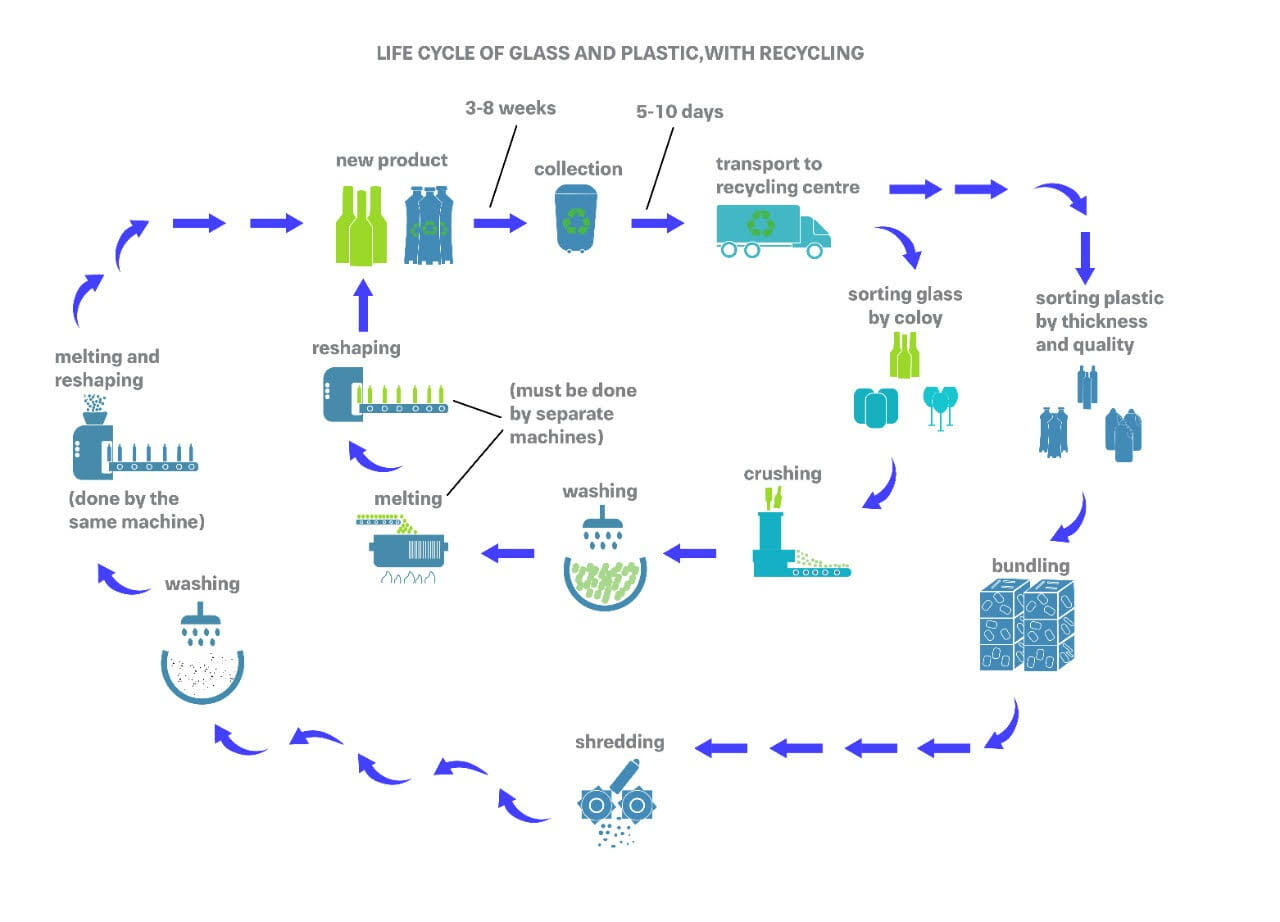
2. The diagram below illustrates the process of recycling glass and plastic containers. Summarize the information by identifying the key stages and making relevant comparisons.

ielts writing samples

3.IELTS Practice Test: Listening

The IELTS Listening test is a 30-minute exam, consistent for both Academic and General Training modules. You will listen to four recordings of native English speakers and answer a total of 40 questions, with 10 questions assigned to each recording.

Each recording is played only once, designed to evaluate your ability to:

  • Identify main ideas and specific details
  • Grasp opinions, attitudes, and the intent of the speaker
  • Track the development of ideas as the audio progresses

The structure of the test is as follows:

  • Recording 1: A conversation between two individuals in a social setting.
  • Recording 2: A social monologue (for example, a speech regarding local community events).
  • Recording 3: A monologue focused on an academic topic, such as a university lecture.
  • Recording 4: A discussion involving up to four people within an educational or academic context.

4.IELTS Practice Test: Speaking

The IELTS Speaking test is a face-to-face interview that lasts between 11 and 14 minutes for both the Academic and General Training modules. It consists of three distinct parts:

  • Part 1 (4–5 minutes): The session opens with an introduction and a set of questions covering familiar everyday topics such as your family, studies, work, and personal hobbies.
  • Part 2 (3–4 minutes): You are given a cue card featuring a specific topic. You will have 1 minute to prepare before speaking for 1–2 minutes on that subject. The examiner may ask a few follow-up questions afterward.
  • Part 3 (4–5 minutes): This is an interactive discussion where the examiner asks questions related to the theme from Part 2, giving you the chance to discuss more complex ideas and articulate your opinions.

Beyond sample questions, utilizing study books is highly recommended, as they offer structured practice and serve as excellent tools for reaching your target band score.

IELTS books are valuable because they offer authentic materials that closely replicate the real test format, helping you become comfortable with what to expect on the day of your exam.

FAQs

IELTS features two primary modules: IELTS Academic and IELTS General Training. The Academic version is intended for those applying for higher education or professional registration, while the General Training version is for those migrating to English-speaking countries for employment or permanent residency.

The test is made up of four distinct sections that assess your core language abilities:

  • Reading
  • Writing
  • Speaking
  • Listening

These sections measure your proficiency in various real-world contexts. Taking practice tests is a great way to become comfortable with the format.

Yes, you are generally able to select a preferred slot for your Speaking examination, which offers some scheduling flexibility. If you do not choose a time within the designated window, a time will be assigned to you automatically. It is recommended to book early to secure your preferred slot.

The Reading test takes 60 minutes for both the Academic and General Training modules. During this time, you will read a series of texts and provide answers to questions that evaluate your reading comprehension and critical thinking.

Both modules contain three reading passages. These selections cover factual, analytical, and descriptive topics and may feature illustrations, graphs, or diagrams. The texts are drawn from varied sources, including newspapers, books, and academic journals. Using practice tests is an ideal way to become comfortable with these passage styles.

The Academic Writing section includes two tasks. Task 1 requires you to write a summary of at least 150 words based on visual data (such as a chart, graph, or diagram). Task 2 is a 250-word essay on a given prompt. Regular practice is essential to mastering the required structure for these responses.

You are given a total of 60 minutes to complete both Task 1 and Task 2. Effective time management is crucial to ensure you have sufficient time to plan and compose both pieces of writing.

The Listening test lasts 30 minutes and is the same for both modules. It measures your proficiency in understanding spoken English, including your ability to identify main ideas, specific details, speaker attitudes, and the purpose behind the content.

You can locate free practice tests through official IELTS websites and other reputable educational providers. These resources offer valuable samples to help you prepare.

The Speaking test is an 11 to 14-minute face-to-face interview. It includes three sections: Part 1 consists of an introduction and general questions; Part 2 gives you one minute to prepare before speaking for 1–2 minutes on a specific topic; and Part 3 is an interactive discussion expanding on the themes from Part 2.

Yes, during the one-minute preparation phase for Part 2, you are encouraged to make short notes that can guide you while you speak.

Yes, the format for the Speaking test is identical across both modules, as it focuses on evaluating your general ability to communicate in English.

You can access various study materials, including sample papers and textbooks. Incorporating full-length mock tests into your routine is highly recommended to become comfortable with the testing environment.

You can find further practice materials and sample tests on trusted educational websites, such as the Neethu's Scholar resource hub, which provides tools to help you build your skills across all sections.

Utilizing computer-based practice tests at home is an excellent way to mirror real-life exam conditions. It familiarizes you with the interface, helps you manage your time effectively, and highlights specific areas where you can improve your performance.

Excel in Your Global Exams

Expert coaching from Hyderabad's No.1 Academy.

  • Expert Mentorship
  • Personalized Study Plans
  • Extensive Practice Materials