Jobs in Italy for International Students: Top Career Opportunities in 2026 & Beyond
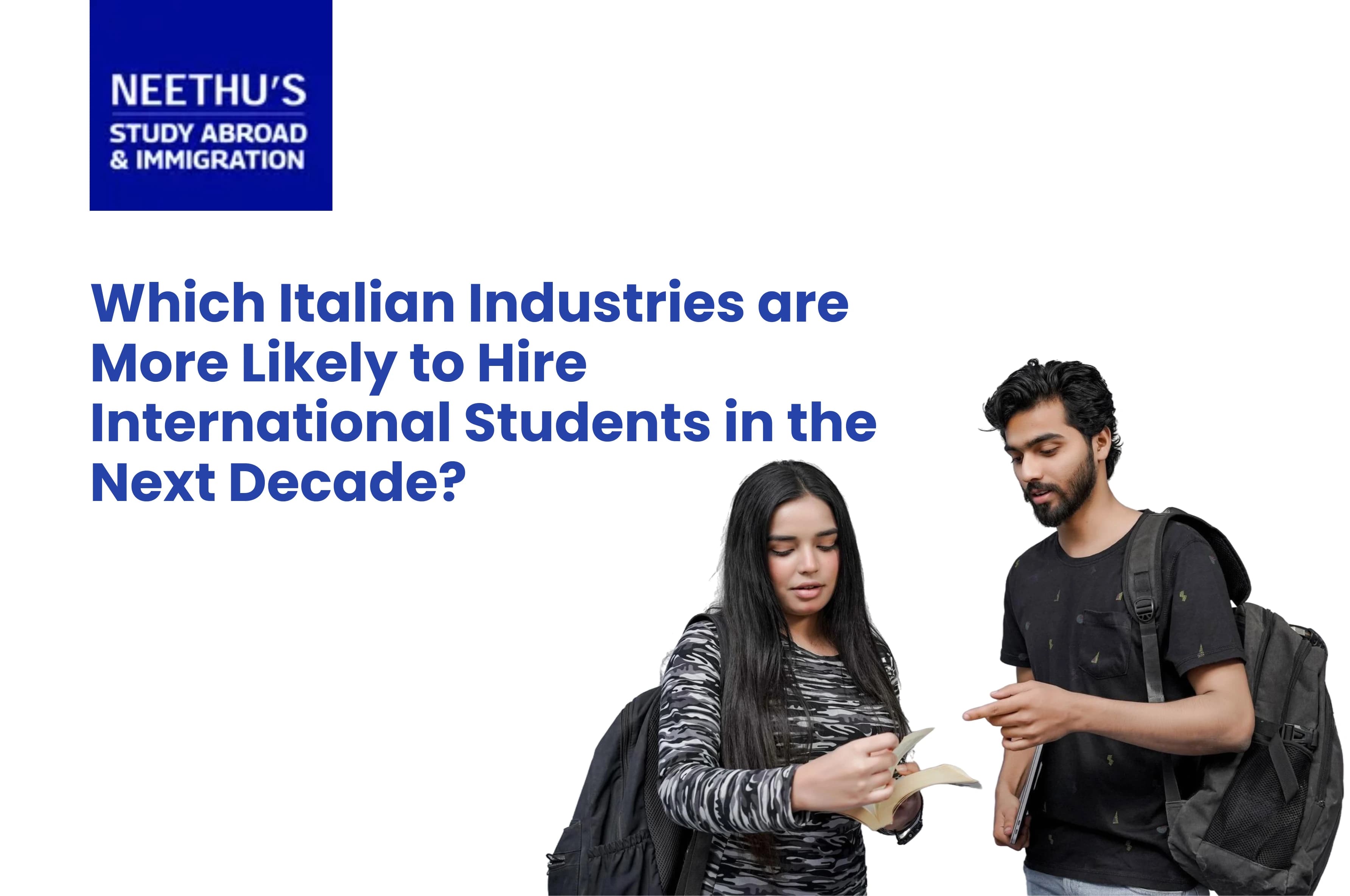
Italy has long been admired for its cultural richness, historic cities, and strong industrial base. But beyond its tourism appeal, the country is gradually reshaping its labor market in response to globalization, technological change, and shifting demographic needs. For international students, this evolution is opening doors that were previously limited or highly competitive.
Over the next decade, jobs in Italy for international students are expected to become more structured and skill-oriented, especially as universities and companies strengthen collaboration. At the same time, broader employment opportunities in Italy are likely to grow in industries that rely on international exposure, digital capability, and multilingual communication.
Understanding which sectors are expanding can help students make informed academic and career choices while studying in Italy.
1. Tourism and Hospitality: Italy’s Most Stable Entry Point
Tourism continues to be one of Italy’s strongest economic pillars, contributing significantly to national revenue and employment. Cities such as Rome, Venice, Florence, and Milan attract millions of visitors every year, ensuring constant demand for hospitality services.
International students often find entry-level roles in hotels, hostels, travel agencies, museums, and event companies. These roles may include front desk assistance, customer service, tour coordination, and event support. Because tourism is highly seasonal in certain regions, students can often balance part-time work with academic schedules.
In the coming decade, luxury tourism, eco-tourism, and digital travel services are expected to grow. This shift will create more structured roles rather than purely seasonal jobs, making the sector even more attractive for global learners.
2. Fashion and Luxury Industry: A Global Creative Hub
Italy is globally recognized for its fashion and luxury industries, with Milan standing as one of the world’s leading fashion capitals. Home to iconic brands and high-end design houses, this sector plays a major role in shaping global style trends.
International students interested in marketing, design, communications, and branding can explore internships in fashion houses, retail companies, and digital agencies. Even non-creative roles such as supply chain coordination, merchandising, and customer engagement are increasingly open to international candidates.
The rise of digital fashion, influencer marketing, and global e-commerce platforms is reshaping the industry. As a result, companies are seeking young professionals who understand global audiences and digital trends. This transformation will continue to strengthen career pathways for students entering the fashion ecosystem.
3. Manufacturing and Automotive Engineering: The Industrial Backbone
Italy’s manufacturing sector is one of the strongest in Europe, particularly in automotive design, machinery, and precision engineering. The northern regions, including Lombardy, Veneto, and Emilia-Romagna, are well-known industrial hubs.
Global automotive brands and engineering firms operate extensively in Italy, producing everything from luxury cars to industrial equipment. International students studying mechanical engineering, industrial design, or logistics often find internships or junior roles within these companies.
As Industry 4.0 technologies continue to develop, automation, robotics, and smart manufacturing are becoming central to production processes. This shift is increasing demand for skilled graduates who can adapt to digital manufacturing systems, improving long-term career pathways in this sector.
4. Food, Agriculture, and Culinary Sector: A Cultural Strength
Food is deeply embedded in Italian identity, making the food and beverage industry one of the most vibrant sectors in the country. From small family-run restaurants to global food export companies, the industry offers diverse career opportunities.
International students frequently work in cafés, restaurants, catering services, and hospitality venues. However, opportunities are not limited to service roles. There is also growing demand in food technology, agricultural research, supply chain management, and international food trade.
With Italian cuisine continuing to dominate global markets, the food sector remains a reliable entry point for students seeking practical work experience while studying.
5. Information Technology and Digital Transformation: The Fastest Growing Field
Italy is undergoing a significant digital transformation, with strong growth in IT services, fintech, artificial intelligence, and digital marketing. Cities like Milan, Turin, and Bologna are becoming emerging tech hubs.
Startups and multinational companies are increasingly hiring talent for roles in software development, cybersecurity, data analysis, and UX/UI design. International students with technical expertise or digital skills are particularly well-positioned in this market.
Remote work trends have also expanded opportunities, allowing companies to collaborate with international talent more easily. This sector is expected to be one of the strongest contributors to future career growth for global students in Italy.
6. Education, Research, and Academic Collaboration
Italy has one of the oldest university systems in the world, and its academic institutions continue to play a central role in research and innovation. Universities such as the University of Bologna and Politecnico di Milano are internationally recognized for their academic excellence.
International students often engage in research assistantships, tutoring, or collaborative academic projects. In STEM fields, particularly engineering, environmental science, and biotechnology, students may participate in EU-funded research initiatives.
As international academic collaboration expands, universities are likely to create more structured programs for global students, making this sector increasingly accessible and valuable for early-career experience.
7. Healthcare and Life Sciences: Expanding Due to Demographic Needs
Italy’s aging population has created increasing demand for healthcare services and medical innovation. Hospitals, pharmaceutical companies, and biotechnology firms are gradually expanding their workforce.
While regulated medical professions require certification, international students in public health, life sciences, and biomedical research can still access internships, laboratory assistant roles, and research-based positions.
The healthcare and biotech sectors are expected to grow steadily, driven by innovation in medical technology and increased investment in healthcare infrastructure.
8. Emerging Trends Shaping Italy’s Job Market
Several macro trends are shaping how industries hire international students:
-
Expansion of digital infrastructure across sectors
-
Growth of sustainability-focused industries
-
Increasing demand for multilingual professionals
-
Rise of remote and hybrid work environments
-
Stronger integration between universities and industry
These changes are gradually transforming how employers approach recruitment and skill development across industries.
9. How Students Can Prepare for the Italian Job Market
International students can improve their chances of success in Italy by focusing on a few key strategies:
First, learning basic Italian significantly improves communication and workplace integration. Even simple conversational skills can make a strong difference in hiring decisions.
Second, gaining internship experience during studies helps build practical exposure. Many companies prefer candidates who already understand workplace expectations.
Third, developing digital, technical, and analytical skills increases competitiveness across multiple sectors, especially IT and manufacturing.
Finally, networking through university programs and career fairs can help students connect with potential employers early.
Conclusion
Italy is gradually transitioning toward a more modern and internationally connected labor market. Industries such as tourism, fashion, manufacturing, technology, education, and healthcare are becoming key drivers of growth and innovation.
For students planning their academic journey in the country, understanding sector-wise demand is essential. The availability of jobs in Italy for international students is expected to increase, especially in urban centers and industrial regions where global collaboration is strongest.
At the same time, improving employment opportunities in Italy will depend heavily on skill development, language ability, and adaptability to evolving industry needs. Students who combine education with practical experience will be best positioned to take advantage of Italy’s changing economic landscape.
Ultimately, Italy is no longer just a destination for cultural and academic enrichment—it is steadily becoming a competitive and promising environment for launching international careers.
Frequently Asked Questions
What are the best industries for international students in Italy?
The most promising sectors include tourism, fashion, manufacturing, information technology, education, and healthcare. These industries regularly hire entry-level workers and interns, especially in major cities like Milan, Rome, and Bologna.
Do international students need to speak Italian to find work in Italy?
While not always mandatory, basic Italian significantly improves job prospects. Many customer-facing roles require at least conversational Italian, though some multinational companies in IT and fashion may use English as the working language.
Can international students work part-time while studying in Italy?
Yes, international students are generally allowed to work part-time while holding a valid student visa. However, there are limits on working hours, and students must ensure their work does not affect academic performance.
Which cities in Italy offer the most job opportunities for students?
Milan, Rome, Turin, and Bologna offer the highest number of opportunities due to their strong economies, universities, and presence of multinational companies across multiple industries.
Are there long-term career prospects after studying in Italy?
Yes, many students transition into full-time roles after graduation, especially in sectors like IT, engineering, fashion, and hospitality. With the right skills and experience, students can access strong long-term career growth opportunities.






































_03-12-2025_01-17-26%20PM.webp&w=3840&q=75)
_02-12-2025_03-07-49%20PM.webp&w=3840&q=75)

_27-11-2025_04-06-24%20PM.webp&w=3840&q=75)
_25-11-2025_04-38-18%20PM.webp&w=3840&q=75)
_24-11-2025_03-20-26%20PM.webp&w=3840&q=75)
_22-11-2025_12-44-47%20PM.webp&w=3840&q=75)
_21-11-2025_04-17-47%20PM.webp&w=3840&q=75)
_20-11-2025_03-55-26%20PM.webp&w=3840&q=75)
_18-11-2025_04-00-40%20PM.webp&w=3840&q=75)
_15-11-2025_10-48-43%20AM.webp&w=3840&q=75)
%20(1)_14-11-2025_03-52-25%20PM.webp&w=3840&q=75)
_13-11-2025_03-02-38%20PM.webp&w=3840&q=75)
_08-11-2025_04-15-36%20PM.webp&w=3840&q=75)
_05-11-2025_04-01-50%20PM.webp&w=3840&q=75)
_05-11-2025_03-46-26%20PM.webp&w=3840&q=75)
_03-11-2025_03-31-09%20PM.webp&w=3840&q=75)
_04-11-2025_.webp&w=3840&q=75)
_04-11-2025_.webp&w=3840&q=75)
_28-10-2025_04-09-08%20PM.webp&w=3840&q=75)
_24-10-2025_05-10-31%20PM.webp&w=3840&q=75)
_24-10-2025_04-55-51%20PM.webp&w=3840&q=75)
_22-10-2025_04-40-20%20PM.webp&w=3840&q=75)
%20(1)_21-10-2025_03-05-46%20PM.webp&w=3840&q=75)
_21-10-2025_02-43-15%20PM.webp&w=3840&q=75)
_17-10-2025_05-08-52%20PM.webp&w=3840&q=75)
_17-10-2025_04-54-54%20PM.webp&w=3840&q=75)
_15-10-2025_03-46-47%20PM.webp&w=3840&q=75)
_14-10-2025_03-42-40%20PM.webp&w=3840&q=75)
_14-10-2025_03-29-48%20PM.webp&w=3840&q=75)
_13-10-2025_03-48-51%20PM.webp&w=3840&q=75)
_11-10-2025_04-28-42%20PM.webp&w=3840&q=75)
%20(1)_09-10-2025_04-12-08%20PM.webp&w=3840&q=75)
_07-10-2025_02-55-25%20PM.webp&w=3840&q=75)
_07-10-2025_02-39-51%20PM.webp&w=3840&q=75)
_06-10-2025_03-42-37%20PM.webp&w=3840&q=75)
_03-10-2025_04-42-59%20PM.webp&w=3840&q=75)
_01-10-2025_11-12-12%20AM.webp&w=3840&q=75)
%20(1)_29-09-2025_02-54-12%20PM.webp&w=3840&q=75)

_26-09-2025_12-14-18%20PM.webp&w=3840&q=75)
_24-09-2025_04-44-26%20PM.webp&w=3840&q=75)
_23-09-2025_04-14-36%20PM.webp&w=3840&q=75)
_22-09-2025_04-08-09%20PM.webp&w=3840&q=75)
_20-09-2025_03-26-03%20PM.webp&w=3840&q=75)
_17-09-2025_04-06-42%20PM.webp&w=3840&q=75)
_15-09-2025_04-43-43%20PM.webp&w=3840&q=75)
_13-09-2025_12-17-49%20PM.webp&w=3840&q=75)
_12-09-2025_04-31-36%20PM.webp&w=3840&q=75)
_12-09-2025_04-17-03%20PM.webp&w=3840&q=75)
_10-09-2025_03-59-59%20PM.webp&w=3840&q=75)
_09-09-2025_04-11-16%20PM.webp&w=3840&q=75)
_09-09-2025_03-53-52%20PM.webp&w=3840&q=75)












































_12-06-2025_03-40-35%20PM.webp&w=3840&q=75)