Is Studying Abroad Worth It in 2026? Benefits, Costs & ROI Explained
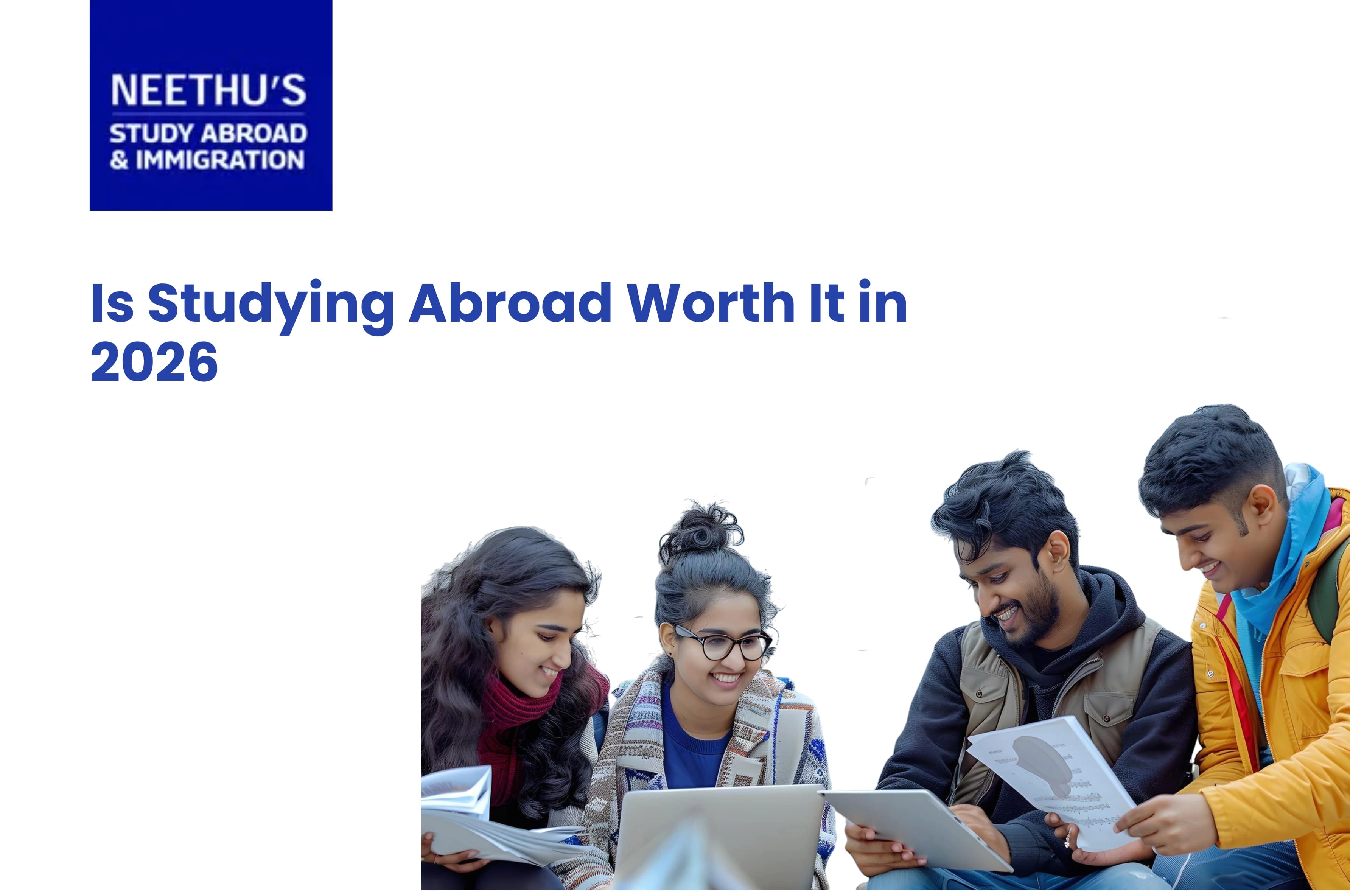
Studying abroad is one of the biggest decisions students make—and one of the most expensive. With rising education costs, changing immigration policies, and increasing global opportunities, many students are asking the same question:
Is studying abroad worth it in 2026?
The answer depends on your goals, budget, career plans, and the country you choose. In this guide, we’ll explore the real benefits, challenges, return on investment (ROI), and whether studying abroad is the right choice for you.
Why Students Still Choose to Study Abroad
Despite changing trends, thousands of Indian students continue to move abroad every year.
Common Reasons:
-
International degree recognition
-
Better career opportunities
-
Global exposure
-
Access to advanced education systems
-
Opportunities for international work experience
Benefits of Studying Abroad
Studying abroad offers more than just a degree.
1. Global Education Exposure
Many universities emphasize practical learning, research, and industry collaboration.
2. Better Career Opportunities
International education can strengthen your resume and open opportunities across countries.
3. Personal Growth
Living abroad develops:
-
Independence
-
Communication skills
-
Adaptability
4. Higher Earning Potential
In many industries, international qualifications can increase long-term earning opportunities.
👉 These are some of the major benefits of studying abroad.
Disadvantages of Studying Abroad
Studying abroad also has challenges.
Higher Costs
Tuition, accommodation, and living expenses can be significant.
Cultural Adjustment
Language barriers and adapting to new environments can take time.
Distance from Family
Being away from home may feel emotionally difficult.
Job Market Competition
Post-study employment is not guaranteed.
Understanding the disadvantages of studying abroad helps set realistic expectations.
ROI of Studying Abroad India – Is It Financially Worth It?
One of the biggest questions is return on investment.
Factors That Affect ROI:
-
Country selected
-
Tuition cost
-
Scholarship opportunities
-
Salary after graduation
-
Time taken to secure employment
Example:
|
Country |
Estimated Total Cost |
Potential Early Career Salary |
|
Germany |
Lower |
Moderate–High |
|
Canada |
Higher |
High |
|
UK |
Higher |
Moderate–High |
|
Australia |
Higher |
High |
The ROI of studying abroad India depends on making smart decisions—not just choosing popular destinations.
Study Abroad vs India – Which is Better?
Study in India if:
✔ You want lower education costs
✔ You prefer staying close to family
✔ Your industry values local experience
Study Abroad if:
✔ You want global exposure
✔ Your career needs international credentials
✔ You plan to work internationally
The study abroad vs India decision depends on personal priorities.
Career After Study Abroad
A degree alone does not guarantee success.
Build These Alongside Your Degree:
-
Internship experience
-
Networking
-
Communication skills
-
Industry certifications
Popular Career Outcomes:
-
International employment
-
Higher studies
-
Global mobility
-
Entrepreneurship
Building a clear career after study abroad strategy is essential.
Questions to Ask Before Deciding
Before applying, ask yourself:
-
Why do I want to study abroad?
-
Can I afford it comfortably?
-
What are my career goals?
-
Does this course improve my future opportunities?
-
What is my backup plan?
Common Mistakes Students Make
-
Choosing country based only on trends
-
Ignoring hidden expenses
-
Following friends’ decisions
-
Expecting guaranteed PR or jobs
-
Not calculating ROI
So… Is Studying Abroad Worth It in 2026?
YES — if:
-
You have a clear career goal
-
You choose the right country and course
-
You understand costs and outcomes
NO — if:
-
You’re going only because everyone else is
-
You haven’t planned finances
-
You expect instant success abroad
Studying abroad works best when it matches your long-term goals.
Conclusion
Studying abroad in 2026 can be an excellent investment—but only when approached strategically. It’s not automatically better than studying in India, and success depends on planning, financial awareness, and career alignment.
Take time to research, compare options, and choose what truly fits your future.
Make your decision based on goals—not trends.
Frequently Asked Questions
Is studying abroad worth it in 2026?
Yes, for students with clear goals, proper financial planning, and strong career direction.
What are the biggest benefits of studying abroad?
Global exposure, international education, career opportunities, and personal growth.
What are the disadvantages of studying abroad?
Higher costs, cultural adjustment, and uncertainty in job outcomes.
Is study abroad better than India?
Neither is universally better—it depends on your goals, budget, and career plans.












































_03-12-2025_01-17-26%20PM.webp&w=3840&q=75)
_02-12-2025_03-07-49%20PM.webp&w=3840&q=75)

_27-11-2025_04-06-24%20PM.webp&w=3840&q=75)
_25-11-2025_04-38-18%20PM.webp&w=3840&q=75)
_24-11-2025_03-20-26%20PM.webp&w=3840&q=75)
_22-11-2025_12-44-47%20PM.webp&w=3840&q=75)
_21-11-2025_04-17-47%20PM.webp&w=3840&q=75)
_20-11-2025_03-55-26%20PM.webp&w=3840&q=75)
_18-11-2025_04-00-40%20PM.webp&w=3840&q=75)
_15-11-2025_10-48-43%20AM.webp&w=3840&q=75)
%20(1)_14-11-2025_03-52-25%20PM.webp&w=3840&q=75)
_13-11-2025_03-02-38%20PM.webp&w=3840&q=75)
_08-11-2025_04-15-36%20PM.webp&w=3840&q=75)
_05-11-2025_04-01-50%20PM.webp&w=3840&q=75)
_05-11-2025_03-46-26%20PM.webp&w=3840&q=75)
_03-11-2025_03-31-09%20PM.webp&w=3840&q=75)
_04-11-2025_.webp&w=3840&q=75)
_04-11-2025_.webp&w=3840&q=75)
_28-10-2025_04-09-08%20PM.webp&w=3840&q=75)
_24-10-2025_05-10-31%20PM.webp&w=3840&q=75)
_24-10-2025_04-55-51%20PM.webp&w=3840&q=75)
_22-10-2025_04-40-20%20PM.webp&w=3840&q=75)
%20(1)_21-10-2025_03-05-46%20PM.webp&w=3840&q=75)
_21-10-2025_02-43-15%20PM.webp&w=3840&q=75)
_17-10-2025_05-08-52%20PM.webp&w=3840&q=75)
_17-10-2025_04-54-54%20PM.webp&w=3840&q=75)
_15-10-2025_03-46-47%20PM.webp&w=3840&q=75)
_14-10-2025_03-42-40%20PM.webp&w=3840&q=75)
_14-10-2025_03-29-48%20PM.webp&w=3840&q=75)
_13-10-2025_03-48-51%20PM.webp&w=3840&q=75)
_11-10-2025_04-28-42%20PM.webp&w=3840&q=75)
%20(1)_09-10-2025_04-12-08%20PM.webp&w=3840&q=75)
_07-10-2025_02-55-25%20PM.webp&w=3840&q=75)
_07-10-2025_02-39-51%20PM.webp&w=3840&q=75)
_06-10-2025_03-42-37%20PM.webp&w=3840&q=75)
_03-10-2025_04-42-59%20PM.webp&w=3840&q=75)
_01-10-2025_11-12-12%20AM.webp&w=3840&q=75)
%20(1)_29-09-2025_02-54-12%20PM.webp&w=3840&q=75)

_26-09-2025_12-14-18%20PM.webp&w=3840&q=75)
_24-09-2025_04-44-26%20PM.webp&w=3840&q=75)
_23-09-2025_04-14-36%20PM.webp&w=3840&q=75)
_22-09-2025_04-08-09%20PM.webp&w=3840&q=75)
_20-09-2025_03-26-03%20PM.webp&w=3840&q=75)
_17-09-2025_04-06-42%20PM.webp&w=3840&q=75)
_15-09-2025_04-43-43%20PM.webp&w=3840&q=75)
_13-09-2025_12-17-49%20PM.webp&w=3840&q=75)
_12-09-2025_04-31-36%20PM.webp&w=3840&q=75)
_12-09-2025_04-17-03%20PM.webp&w=3840&q=75)
_10-09-2025_03-59-59%20PM.webp&w=3840&q=75)
_09-09-2025_04-11-16%20PM.webp&w=3840&q=75)
_09-09-2025_03-53-52%20PM.webp&w=3840&q=75)















































_12-06-2025_03-40-35%20PM.webp&w=3840&q=75)