How to Apply Study Loan for Australia | Study Loan for Australia in India (2026 Guide)
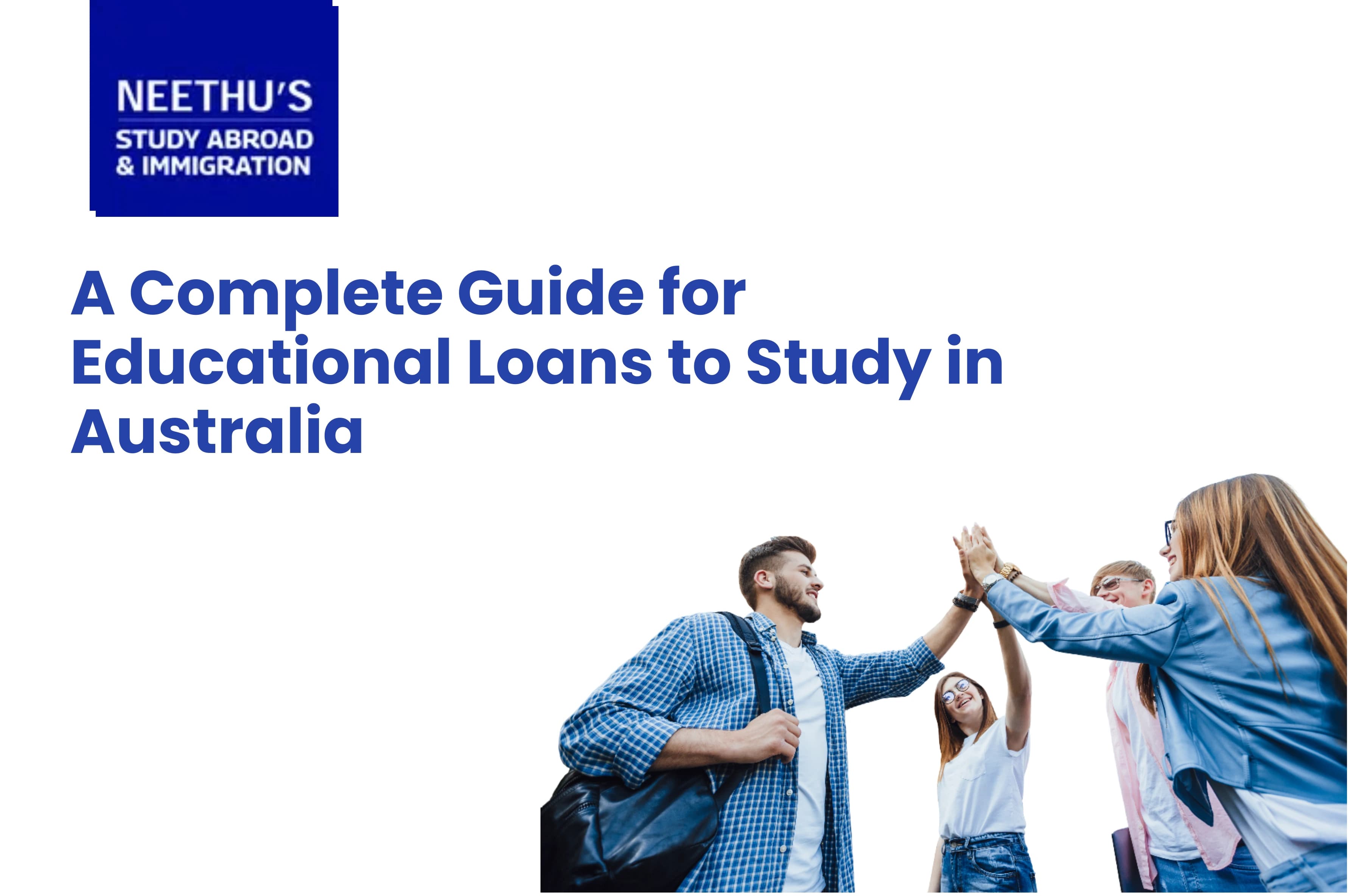
Australia continues to be one of the most preferred destinations for students seeking internationally recognized qualifications and excellent career opportunities. Home to globally ranked universities, cutting-edge research facilities, and a multicultural environment, the country attracts thousands of students from around the world every year. However, studying abroad involves substantial financial commitments, including tuition fees, accommodation, health insurance, travel expenses, and day-to-day living costs.
For many families, educational loans serve as a practical solution to fund these expenses. With the right financial planning, students can pursue their academic goals without placing excessive financial pressure on their families. Understanding loan eligibility, application procedures, repayment terms, and financing options is essential before making any commitments. This comprehensive guide explains everything students need to know about securing an education loan in Australia for International Students and managing their study expenses effectively.
Why Educational Loans Are Important for Studying in Australia
Studying abroad is often considered a long-term investment in personal and professional growth. While scholarships and savings can help cover part of the expenses, they may not be enough to support the entire educational journey.
Educational loans provide financial assistance that allows students to focus on their studies rather than worrying about immediate expenses. They help cover tuition fees, accommodation costs, travel expenses, insurance, and other essential educational needs. By accessing the right loan, students can enroll in their preferred universities and courses without compromising their academic ambitions.
Understanding the Cost of Studying in Australia
Before applying for an educational loan, it is important to estimate the total cost of education.
Tuition Fees
Tuition fees vary depending on the university, course, and level of study.
-
Undergraduate programs: AUD 20,000 – AUD 45,000 per year
-
Postgraduate programs: AUD 22,000 – AUD 50,000 per year
-
MBA programs: AUD 40,000 – AUD 80,000 per year
Professional courses such as medicine, engineering, and business management generally have higher tuition costs than humanities and social science programs.
Living Expenses
Apart from tuition fees, students must budget for living expenses.
These typically include:
-
Accommodation
-
Food and groceries
-
Transportation
-
Utility bills
-
Internet and phone charges
-
Personal expenses
Depending on the city and lifestyle, international students may spend between AUD 1,500 and AUD 2,500 per month.
Types of Educational Loans Available
Students planning to study in Australia can choose between secured and unsecured educational loans.
Secured Educational Loans
Secured loans require collateral in the form of property, fixed deposits, insurance policies, or other valuable assets.
Since the lender has additional security, these loans generally offer lower interest rates and higher borrowing limits. They are often suitable for students pursuing expensive programs or requiring substantial financial support for their studies.
Unsecured Educational Loans
Unsecured loans do not require any collateral but typically require a financially stable co-applicant.
These loans are popular among students who do not have assets to pledge. Although the approval process can be faster, interest rates are usually higher because the lender assumes greater risk.
Eligibility Criteria for Educational Loans
Loan eligibility requirements vary among lenders, but certain criteria are commonly applied.
Academic Qualifications
Students must secure admission to a recognized Australian university or educational institution. Strong academic performance often improves approval chances because lenders view it as an indicator of future earning potential.
Age Requirements
Most lenders require applicants to be at least 18 years old. In some cases, younger students may apply with the support of a parent or legal guardian.
Co-Applicant Requirements
Parents, guardians, or close relatives are often required to act as co-applicants. Their financial stability, income level, and credit history play a significant role in the approval process.
Documents Required for an Educational Loan
Preparing all necessary documents in advance can simplify the application process.
Student Documents
Students are generally required to submit:
-
Admission letter
-
Academic transcripts
-
Passport copy
-
Visa-related documents
-
Passport-sized photographs
-
Standardized test scores where applicable
Financial Documents
Lenders may request:
-
Salary slips
-
Income certificates
-
Bank statements
-
Income tax returns
-
Employment proof of the co-applicant
Collateral Documents
For secured loans, property ownership documents, valuation certificates, and insurance records may also be required.
How to Apply for an Educational Loan
Many students wonder How to apply study loan for Australia effectively. Following a structured approach can improve approval chances and reduce delays.
Step 1: Estimate Total Expenses
Begin by calculating tuition fees, accommodation expenses, travel costs, insurance, and daily living expenses. This helps determine the exact amount of funding required.
Step 2: Compare Loan Providers
Research multiple banks and financial institutions to compare interest rates, processing fees, repayment options, and loan benefits. A careful comparison helps identify the most suitable financing solution.
Step 3: Gather Required Documentation
Ensure all academic, financial, and identification documents are complete and up to date. Missing documents can delay processing and approval.
Step 4: Submit the Application
Applications can usually be submitted online or through a bank branch. Accurate information improves processing speed and minimizes complications.
Step 5: Verification and Assessment
The lender evaluates academic records, university selection, financial background, repayment capacity, and supporting documents.
Step 6: Loan Approval and Disbursement
Once approved, the loan amount is released according to the lender's policies. Funds may be transferred directly to the university or the student's account.
Educational Loans from India for Australia
A significant number of students choose a study loan for australia in india because Indian financial institutions provide specialized education loan products for overseas studies.
Students can explore funding options through:
-
Public sector banks
-
Private banks
-
NBFCs
-
International education finance companies
Many of these lenders offer flexible repayment plans, higher loan limits, and customized solutions for students pursuing international education.
Interest Rates and Repayment Structure
Interest rates depend on factors such as loan type, amount borrowed, university selection, collateral, and the financial profile of the applicant.
Moratorium Period
Most lenders provide a moratorium period during which students are not required to make full loan repayments.
This period generally extends until course completion and may include an additional six months to one year. It allows graduates time to secure employment before beginning repayment.
Repayment Tenure
Repayment periods commonly range between 5 and 15 years.
Longer repayment tenures reduce monthly installment amounts, making repayment more manageable. However, borrowers should note that extended repayment periods may increase the total interest paid over time.
Tips to Improve Educational Loan Approval
Maintain Strong Academic Performance
Good academic records demonstrate commitment and potential for future success. Lenders often view strong academic performance as an indicator that the student is likely to complete the course successfully and secure employment after graduation.
Choose a Recognized University
Admission to a reputable Australian university can significantly strengthen a loan application. Institutions with strong global rankings and graduate employability records are often viewed favorably by lenders.
Ensure Complete Documentation
Incomplete applications are among the leading causes of delays and loan rejections. Double-checking all required documents before submission can help streamline the approval process and improve credibility.
Maintain a Healthy Financial Profile
The financial standing of the co-applicant plays a major role in the lender's assessment. Stable income, consistent employment, and a strong credit history can increase approval chances and may even result in better loan terms.
Apply Well in Advance
Educational loan processing may take several weeks, especially for higher loan amounts or secured loans. Applying early ensures that funds are available before university fee deadlines and visa requirements.
Benefits of Educational Loans
Access to World-Class Education
Educational loans allow students to enroll in leading Australian universities without being limited by immediate financial constraints. This enables them to pursue quality education and improve their long-term career prospects.
Flexible Repayment Options
Many lenders offer flexible repayment structures designed specifically for students. Moratorium periods and extended repayment tenures help graduates manage their finances comfortably after completing their studies.
Reduced Financial Burden on Families
Instead of paying large educational expenses upfront, families can spread the cost over several years. This makes international education more accessible and financially manageable.
Opportunity to Build Financial Responsibility
Managing an educational loan teaches students important financial skills such as budgeting, planning, and responsible borrowing. These habits can be valuable throughout their professional lives.
Support for Comprehensive Educational Expenses
Educational loans often cover more than tuition fees alone. They can also help finance accommodation, travel, insurance, study materials, and other essential expenses associated with studying abroad.
Challenges Students Should Consider
Although educational loans offer valuable support, students should evaluate potential challenges before borrowing.
Interest accumulation can increase the overall repayment amount if the loan remains unpaid for extended periods. Exchange rate fluctuations may also affect costs for students borrowing in one currency while paying expenses in another.
Careful financial planning and realistic budgeting can help minimize these risks and ensure smoother repayment after graduation.
Choosing the Right Loan Provider
Selecting the right lender requires more than simply comparing interest rates.
Students should evaluate factors such as:
-
Processing speed
-
Customer service quality
-
Repayment flexibility
-
Moratorium benefits
-
Early repayment policies
-
Additional charges and fees
Reviewing all terms and conditions carefully can help students avoid unexpected costs and choose a loan that aligns with their financial goals.
Conclusion
Australia offers exceptional educational opportunities, internationally recognized qualifications, and strong career prospects for graduates. While studying abroad requires significant financial investment, educational loans provide a practical pathway for students to achieve their academic aspirations.
An education loan in Australia for International Students can help cover tuition fees, living expenses, travel costs, and other educational requirements while allowing students to focus on their studies. By understanding eligibility criteria, loan types, repayment structures, and lender options, students can make informed financial decisions.
Whether you are exploring How to apply study loan for Australia or searching for a reliable study loan for australia in india, early planning and thorough research can make the process smoother. With the right financial support and careful preparation, studying in Australia can become a rewarding investment in a successful global career.
Frequently Asked Questions
1. Can international students get an education loan to study in Australia?
Yes, international students can obtain educational loans through banks, financial institutions, and specialized education finance providers. Loan approval typically depends on admission to a recognized university, academic performance, and financial eligibility requirements.
2. What expenses are covered by an education loan for studying in Australia?
Most education loans cover tuition fees, accommodation, travel expenses, health insurance, study materials, examination fees, and other education-related costs. Coverage varies depending on the lender and loan type.
3. Do I need collateral for an educational loan?
Not always. Secured loans require collateral such as property or fixed deposits, while unsecured loans do not require collateral but may need a financially stable co-applicant and strong academic credentials.
4. How much loan amount can I get for studying in Australia?
The loan amount depends on factors such as the course, university, total cost of education, academic profile, and the lender's policies. Some lenders may finance up to 100% of eligible education expenses.
5. How to apply for a study loan for Australia?
Students must first secure admission to a recognized Australian institution, compare loan providers, gather required documents, and submit an application. The lender then evaluates the application before approving and disbursing the loan.
6. What documents are required for an educational loan?
Commonly required documents include an admission letter, academic transcripts, a passport, income proof of the co-applicant, bank statements, tax returns, and collateral documents if applying for a secured loan.
7. Can Indian students apply for a study loan for Australia?
Yes, Indian students can apply through public sector banks, private banks, NBFCs, and education finance companies. Many lenders offer specialized overseas education loan schemes for students planning to study in Australia.
8. When do I need to start repaying my education loan?
Most lenders provide a moratorium period that covers the course duration plus an additional six months to one year. Repayment usually begins after this period, allowing students time to secure employment.
9. What factors improve the chances of loan approval?
Strong academic performance, admission to a recognized university, complete documentation, a financially stable co-applicant, and a good credit history can significantly improve the chances of loan approval.
10. Is taking an educational loan for Australia a good investment?
For many students, an educational loan is a worthwhile investment because it provides access to world-class education and global career opportunities. With proper financial planning and responsible repayment, the long-term benefits often outweigh the initial borrowing costs.

















































_03-12-2025_01-17-26%20PM.webp&w=3840&q=75)
_02-12-2025_03-07-49%20PM.webp&w=3840&q=75)

_27-11-2025_04-06-24%20PM.webp&w=3840&q=75)
_25-11-2025_04-38-18%20PM.webp&w=3840&q=75)
_24-11-2025_03-20-26%20PM.webp&w=3840&q=75)
_22-11-2025_12-44-47%20PM.webp&w=3840&q=75)
_21-11-2025_04-17-47%20PM.webp&w=3840&q=75)
_20-11-2025_03-55-26%20PM.webp&w=3840&q=75)
_18-11-2025_04-00-40%20PM.webp&w=3840&q=75)
_15-11-2025_10-48-43%20AM.webp&w=3840&q=75)
%20(1)_14-11-2025_03-52-25%20PM.webp&w=3840&q=75)
_13-11-2025_03-02-38%20PM.webp&w=3840&q=75)
_08-11-2025_04-15-36%20PM.webp&w=3840&q=75)
_05-11-2025_04-01-50%20PM.webp&w=3840&q=75)
_05-11-2025_03-46-26%20PM.webp&w=3840&q=75)
_03-11-2025_03-31-09%20PM.webp&w=3840&q=75)
_04-11-2025_.webp&w=3840&q=75)
_04-11-2025_.webp&w=3840&q=75)
_28-10-2025_04-09-08%20PM.webp&w=3840&q=75)
_24-10-2025_05-10-31%20PM.webp&w=3840&q=75)
_24-10-2025_04-55-51%20PM.webp&w=3840&q=75)
_22-10-2025_04-40-20%20PM.webp&w=3840&q=75)
%20(1)_21-10-2025_03-05-46%20PM.webp&w=3840&q=75)
_21-10-2025_02-43-15%20PM.webp&w=3840&q=75)
_17-10-2025_05-08-52%20PM.webp&w=3840&q=75)
_17-10-2025_04-54-54%20PM.webp&w=3840&q=75)
_15-10-2025_03-46-47%20PM.webp&w=3840&q=75)
_14-10-2025_03-42-40%20PM.webp&w=3840&q=75)
_14-10-2025_03-29-48%20PM.webp&w=3840&q=75)
_13-10-2025_03-48-51%20PM.webp&w=3840&q=75)
_11-10-2025_04-28-42%20PM.webp&w=3840&q=75)
%20(1)_09-10-2025_04-12-08%20PM.webp&w=3840&q=75)

_07-10-2025_02-55-25%20PM.webp&w=3840&q=75)
_07-10-2025_02-39-51%20PM.webp&w=3840&q=75)
_06-10-2025_03-42-37%20PM.webp&w=3840&q=75)
_03-10-2025_04-42-59%20PM.webp&w=3840&q=75)
_01-10-2025_11-12-12%20AM.webp&w=3840&q=75)
%20(1)_29-09-2025_02-54-12%20PM.webp&w=3840&q=75)

_26-09-2025_12-14-18%20PM.webp&w=3840&q=75)
_24-09-2025_04-44-26%20PM.webp&w=3840&q=75)
_23-09-2025_04-14-36%20PM.webp&w=3840&q=75)
_22-09-2025_04-08-09%20PM.webp&w=3840&q=75)
_20-09-2025_03-26-03%20PM.webp&w=3840&q=75)
_17-09-2025_04-06-42%20PM.webp&w=3840&q=75)
_15-09-2025_04-43-43%20PM.webp&w=3840&q=75)
_13-09-2025_12-17-49%20PM.webp&w=3840&q=75)
_12-09-2025_04-31-36%20PM.webp&w=3840&q=75)
_12-09-2025_04-17-03%20PM.webp&w=3840&q=75)
_10-09-2025_03-59-59%20PM.webp&w=3840&q=75)
_09-09-2025_04-11-16%20PM.webp&w=3840&q=75)
_09-09-2025_03-53-52%20PM.webp&w=3840&q=75)



















































_12-06-2025_03-40-35%20PM.webp&w=3840&q=75)