Flying Abroad for Studies? 15 Things Indian Students Must Prepare Before Departure
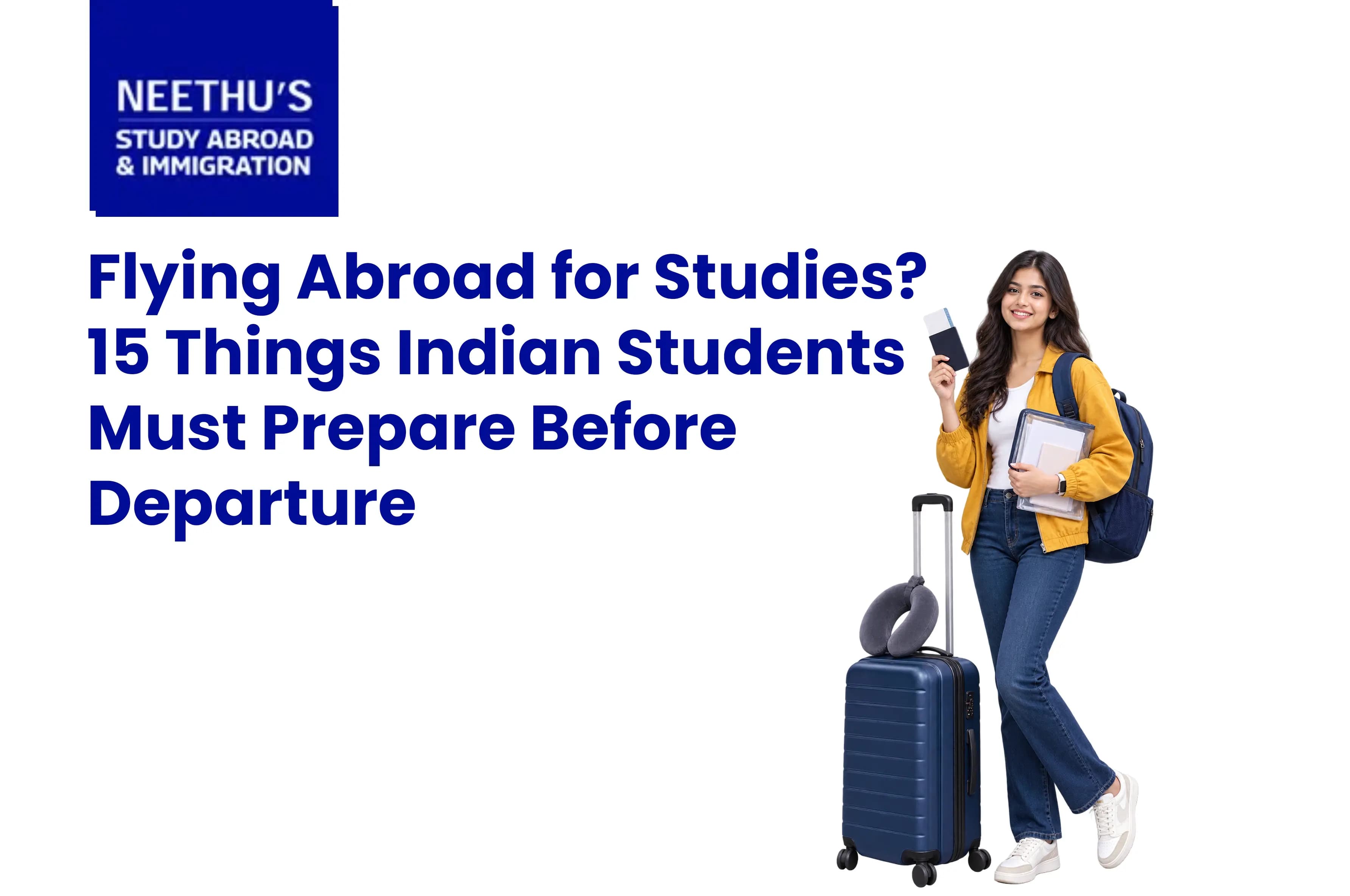
Studying abroad is an exciting milestone for Indian students. After months of researching universities, completing applications, receiving an offer, and arranging finances, the final step is getting ready to leave India. However, the period immediately before departure can become stressful if important documents, travel arrangements or personal essentials are overlooked.
Preparing for an international journey involves much more than packing clothes into a suitcase. Students need to organise their passport, visa, university documents, accommodation, finances, health essentials, and travel plans before reaching the airport.
A well-planned departure can make the first few days in a new country much easier. Here are 15 important things Indian students should prepare before flying abroad for their studies.
1. Check Your Passport and Visa
Your passport is one of the most important documents you will carry. Check that it is valid for the required period and that there are enough blank pages if necessary.
Your student visa should also be checked carefully. Make sure your name, passport number, date of birth, and other details match your passport and university documents.
Keep both physical and digital copies of your passport and visa. Store scanned copies securely online so you can access them if the originals are misplaced.
2. Organise Your University Documents
Create a dedicated folder containing all documents related to your admission. These may include:
-
University offer or admission letter
-
Fee payment receipts
-
Scholarship documents, if applicable
-
Academic certificates and transcripts
-
Accommodation confirmation
-
Health insurance documents
-
Visa documents
-
Student ID information
-
Admission forms
-
Important correspondence from the university
Keep the original documents in your hand luggage rather than your checked baggage.
3. Confirm Your Flight Details
Double-check your flight date, departure time, terminal, and baggage allowance before travelling to the airport.
If you have connecting flights, check the transit requirements as well. Some countries may have specific transit visa rules depending on your nationality, airport and itinerary.
Online check-in can save time at the airport, although baggage drop and document verification may still be required.
It is also wise to arrive at the airport well in advance, particularly for your first international journey.
4. Finalise Your Accommodation
Do not travel without knowing where you will stay after arriving.
If you have university accommodation, keep the confirmation letter and check the procedure for collecting your room keys. Find out whether the accommodation office operates 24 hours or has specific check-in timings.
Students staying in private accommodation should keep the full address, landlord or property manager's contact details and payment records.
Save the accommodation address on your phone and write it down separately as a backup.
5. Prepare Your Finances
Financial planning is essential before departure. Students should have access to sufficient funds for their initial expenses, including transportation, food, accommodation deposits and basic shopping.
Inform your bank about your international travel if required. Check whether your debit or credit cards work in the destination country and understand the applicable foreign transaction charges.
It is also useful to carry a small amount of local currency for immediate expenses after landing.
Avoid carrying unnecessary amounts of physical cash. Use secure banking options and keep emergency funds separately.
6. Arrange Health and Travel Insurance
Check whether your destination country or university requires health insurance as part of the student visa or enrolment process.
Carry your insurance policy details and emergency contact information.
If you regularly use prescribed medicines, speak with your doctor before travelling and carry the necessary medication along with relevant prescriptions or medical documents.
Do not assume that every medicine commonly available in India can be carried freely into another country. Check the destination country's regulations before packing medicines.
7. Pack According to the Climate
Research the weather conditions of your destination before deciding what to pack.
Students moving from India to colder countries may need warm jackets, thermal clothing, gloves and appropriate footwear. Those travelling to warmer destinations may need lighter clothing.
Avoid filling your suitcase with clothes that you may not use. Prioritise essentials and remember that most destinations have shops where you can purchase additional items after arrival.
8. Carry Essential Academic Supplies
You may not need to bring an entire year's worth of stationery from India. However, a few basic supplies can be useful during your first few weeks.
Consider carrying:
-
Notebooks
-
Pens and pencils
-
Laptop and charger
-
USB or external storage
-
Calculator, if required
-
Headphones
-
Required textbooks or study materials
Check your university's course information before purchasing expensive books. Many institutions provide reading lists after enrolment.
9. Prepare Your Electronic Devices
Your smartphone and laptop may become essential tools for communication, study and university administration.
Before leaving India, check that your devices are working properly and back up important files. Carry chargers and suitable adapters for your destination.
A universal travel adapter can be useful if your destination uses different plug types.
Also save important contact numbers, university email addresses and accommodation details on your phone.
10. Download Important Apps
A few useful apps can make your first days abroad easier.
Depending on your destination, consider installing:
-
Maps and navigation apps
-
Public transport apps
-
University apps
-
Banking apps
-
Translation apps
-
Food delivery apps
-
Messaging applications
-
Airline apps
Download offline maps where available, especially if you may not have mobile data immediately after landing.
11. Arrange International Mobile Connectivity
Check how you will stay connected after arriving.
You may choose an international roaming plan from your Indian provider, purchase a local SIM after arrival or use an eSIM if your phone supports it.
Research the available options before departure rather than waiting until you land.
Having working connectivity can help you contact family, reach your accommodation and communicate with university staff during your first few hours.
12. Learn About Your Destination
Before flying, spend some time learning about the city where you will live.
Understand basic information about:
-
Public transportation
-
Local weather
-
Currency
-
Emergency services
-
Grocery stores
-
Healthcare facilities
-
University location
-
Local customs
-
Common laws and regulations
Learning a few basic phrases in the local language can also make everyday communication easier, even if your course is taught in English.
13. Prepare an Arrival Plan
Knowing exactly what you will do after landing can reduce unnecessary stress.
Decide in advance how you will travel from the airport to your accommodation. Depending on the destination, options may include trains, buses, taxis, airport transfers or university-arranged transportation.
Keep the address of your accommodation and university contact details easily accessible.
If your university provides an airport pickup service, confirm the booking before departure and save the relevant instructions.
14. Stay Connected With Family
Moving abroad is a major change, particularly if it is your first time living away from home.
Before leaving, discuss your travel schedule with your family and share your flight details, accommodation address and university contact information.
You can also decide on a convenient time for regular calls after you arrive. This can help everyone stay connected despite the time difference.
At the same time, give yourself time to adjust to your new surroundings and develop your own routine.
15. Create a Final Departure Checklist
A final checklist can help you identify anything you may have forgotten.
Before leaving home, confirm:
-
Passport and visa
-
Flight ticket
-
University documents
-
Accommodation confirmation
-
Insurance documents
-
Bank cards and emergency funds
-
Medicines and prescriptions
-
Phone and laptop
-
Chargers and adapters
-
Essential clothing
-
Important contact numbers
-
Copies of important documents
Pack your hand luggage carefully because some items should never be placed in checked baggage.
What Should Go in Your Hand Luggage?
Your hand luggage should contain the items you may need during the journey or immediately after landing.
Keep your passport, visa, university documents, wallet, phone, laptop, chargers, medicines and other essential items with you.
Avoid putting important certificates, expensive electronics or irreplaceable documents into checked luggage.
It is also helpful to keep a change of clothes and a few basic personal items in your cabin bag in case your checked baggage is delayed.
Common Mistakes Students Should Avoid
Many first-time international students make avoidable mistakes during their departure preparation.
One common mistake is overpacking. Students often carry too many clothes, kitchen items and household products that are readily available in their destination country.
Another mistake is failing to check baggage restrictions. Airlines have specific rules regarding weight, liquids, batteries and other items.
Some students also forget to keep digital backups of important documents. Losing a physical document becomes much easier to manage when a secure digital copy is available.
Finally, avoid leaving everything until the last few days. Preparing gradually gives you enough time to identify missing documents and resolve unexpected issues.
Final Thoughts
Flying abroad for higher education is the beginning of an important new chapter. Good preparation can make the transition smoother and allow students to focus on settling into university life rather than dealing with avoidable problems.
From checking your passport and visa to arranging accommodation, organising finances and preparing your luggage, each step matters. A combination of careful planning, document management and destination research can help Indian students begin their international education journey with greater confidence.
Students who need professional guidance with university selection, applications and pre-departure preparation can consult Best Study Abroad Consultants in Kerala, including Neethus Study Abroad, while also checking official university, embassy and airline information for the latest requirements.
Most importantly, remember that preparation does not end at the airport. Be ready to learn, adapt, manage your responsibilities independently, and experience a new culture. With the right planning, your first flight abroad can mark the start of an exciting and rewarding academic journey.
Frequently Asked Questions
1. What documents should Indian students carry when flying abroad for studies?
Students should carry their passport, student visa, university admission letter, academic certificates, fee receipts, accommodation confirmation, insurance documents and other immigration-related paperwork. Keep important documents in your hand luggage.
2. How much luggage should I carry when travelling abroad for university?
The amount depends on your airline's baggage allowance and destination. Pack essential clothing, academic items, and personal necessities without overpacking. Check the airline's latest baggage rules before departure.
3. Should I carry Indian currency or foreign currency?
It is useful to carry a reasonable amount of local currency for immediate expenses such as transportation and food after arrival. Students should also have access to an international debit or credit card.
4. What medicines should students pack before travelling abroad?
Students who regularly take medication should carry an adequate supply along with their prescription or relevant medical documents. Always check the destination country's rules before carrying prescription or restricted medicines.
5. Should I arrange accommodation before flying abroad?
Yes. It is advisable to have confirmed accommodation before departure. Keep the address, booking confirmation and contact details of the accommodation provider easily accessible.
6. What should I keep in my hand luggage?
Keep your passport, visa, university documents, wallet, phone, laptop, chargers, medicines and other essential items in your hand luggage. Avoid placing important documents or valuable electronics in checked baggage.
7. How can students stay connected with family after moving abroad?
Students can use international roaming, a local SIM card or an eSIM, depending on their destination and phone compatibility. Setting up a regular calling schedule can also help them stay connected with family.
8. What should students do before leaving India for their university?
Students should complete their visa formalities, confirm accommodation and flights, arrange finances and insurance, organise documents, check baggage allowances, and prepare essential items before departure.
9. Should students learn about the country before travelling?
Yes. Understanding the local transport system, weather, currency, customs, laws and emergency services can make the transition easier. Learning a few common local phrases can also be helpful.
10. How early should students start preparing for their international journey?
Students should ideally begin preparing several weeks before departure. Starting early provides enough time to organise documents, arrange finances, purchase essentials, and resolve unexpected issues without last-minute stress.






















































































































































































_03-12-2025_01-17-26%20PM.webp&w=3840&q=75)
_02-12-2025_03-07-49%20PM.webp&w=3840&q=75)

_27-11-2025_04-06-24%20PM.webp&w=3840&q=75)
_25-11-2025_04-38-18%20PM.webp&w=3840&q=75)
_24-11-2025_03-20-26%20PM.webp&w=3840&q=75)
_22-11-2025_12-44-47%20PM.webp&w=3840&q=75)
_21-11-2025_04-17-47%20PM.webp&w=3840&q=75)
_20-11-2025_03-55-26%20PM.webp&w=3840&q=75)
_18-11-2025_04-00-40%20PM.webp&w=3840&q=75)
_15-11-2025_10-48-43%20AM.webp&w=3840&q=75)
%20(1)_14-11-2025_03-52-25%20PM.webp&w=3840&q=75)
_13-11-2025_03-02-38%20PM.webp&w=3840&q=75)
_08-11-2025_04-15-36%20PM.webp&w=3840&q=75)
_05-11-2025_04-01-50%20PM.webp&w=3840&q=75)
_05-11-2025_03-46-26%20PM.webp&w=3840&q=75)
_03-11-2025_03-31-09%20PM.webp&w=3840&q=75)
_04-11-2025_.webp&w=3840&q=75)
_04-11-2025_.webp&w=3840&q=75)
_29-10-2025_04-52-52%20PM.webp&w=3840&q=75)
_28-10-2025_04-09-08%20PM.webp&w=3840&q=75)
_24-10-2025_05-10-31%20PM.webp&w=3840&q=75)
_24-10-2025_04-55-51%20PM.webp&w=3840&q=75)
_22-10-2025_04-40-20%20PM.webp&w=3840&q=75)
%20(1)_21-10-2025_03-05-46%20PM.webp&w=3840&q=75)
_21-10-2025_02-43-15%20PM.webp&w=3840&q=75)
_17-10-2025_05-08-52%20PM.webp&w=3840&q=75)
_17-10-2025_04-54-54%20PM.webp&w=3840&q=75)
_15-10-2025_03-46-47%20PM.webp&w=3840&q=75)
_14-10-2025_03-42-40%20PM.webp&w=3840&q=75)
_14-10-2025_03-29-48%20PM.webp&w=3840&q=75)
_13-10-2025_03-48-51%20PM.webp&w=3840&q=75)
_11-10-2025_04-28-42%20PM.webp&w=3840&q=75)
%20(1)_09-10-2025_04-12-08%20PM.webp&w=3840&q=75)

_07-10-2025_02-55-25%20PM.webp&w=3840&q=75)
_07-10-2025_02-39-51%20PM.webp&w=3840&q=75)
_06-10-2025_03-42-37%20PM.webp&w=3840&q=75)
_03-10-2025_04-42-59%20PM.webp&w=3840&q=75)
_01-10-2025_11-12-12%20AM.webp&w=3840&q=75)
%20(1)_29-09-2025_02-54-12%20PM.webp&w=3840&q=75)

_26-09-2025_12-14-18%20PM.webp&w=3840&q=75)
_24-09-2025_04-44-26%20PM.webp&w=3840&q=75)
_23-09-2025_04-14-36%20PM.webp&w=3840&q=75)
_22-09-2025_04-08-09%20PM.webp&w=3840&q=75)
_20-09-2025_03-26-03%20PM.webp&w=3840&q=75)
_17-09-2025_04-06-42%20PM.webp&w=3840&q=75)
_15-09-2025_04-43-43%20PM.webp&w=3840&q=75)
_13-09-2025_12-17-49%20PM.webp&w=3840&q=75)
_12-09-2025_04-31-36%20PM.webp&w=3840&q=75)
_12-09-2025_04-17-03%20PM.webp&w=3840&q=75)
_10-09-2025_03-59-59%20PM.webp&w=3840&q=75)
_09-09-2025_04-11-16%20PM.webp&w=3840&q=75)
_09-09-2025_03-53-52%20PM.webp&w=3840&q=75)


















































_12-06-2025_03-40-35%20PM.webp&w=3840&q=75)