Study in Australia: Choosing a Course That Actually Qualifies for the Post-Study Work Visa
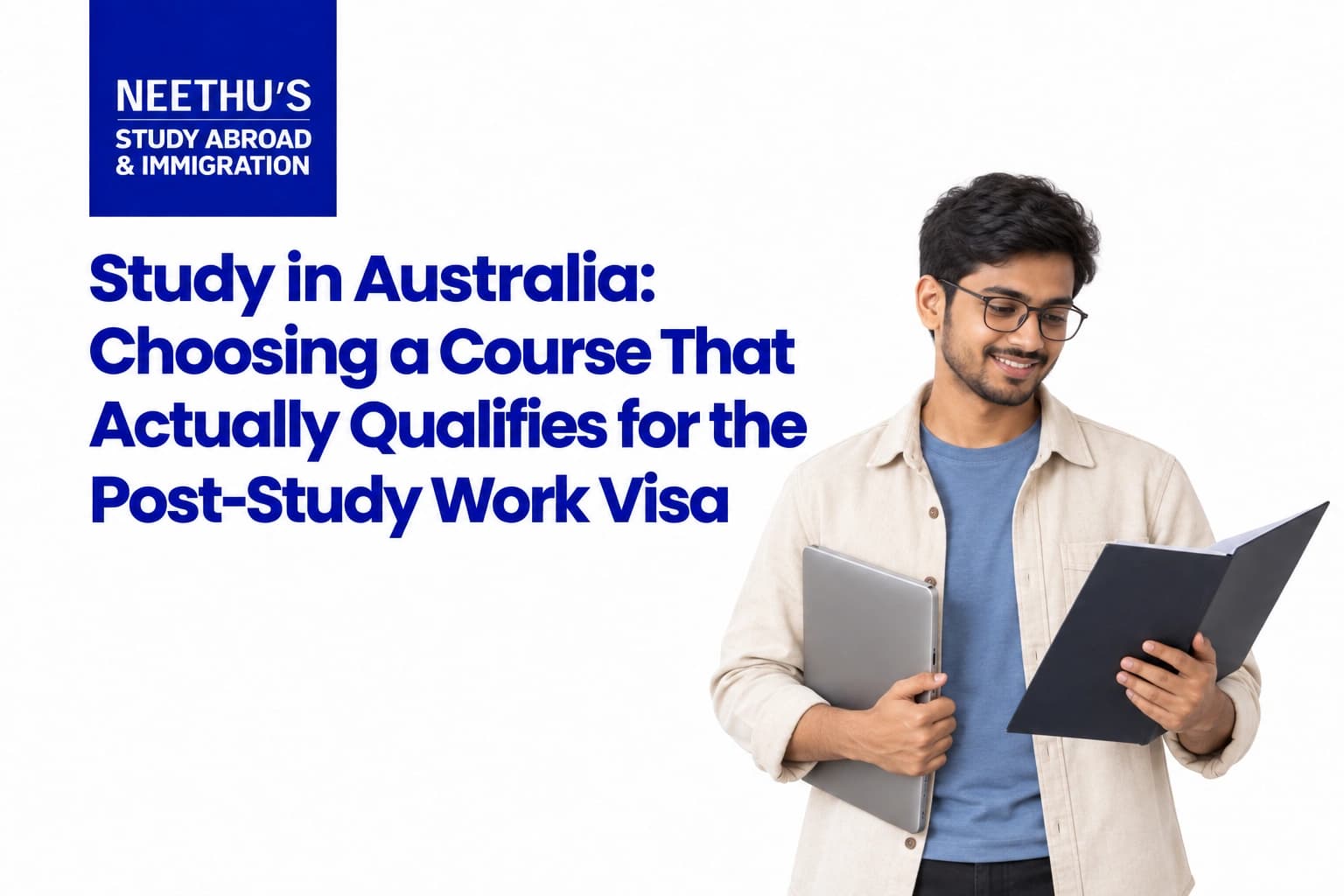
Choosing a course overseas is no longer just about university rankings, tuition fees, or the city you want to live in. For many international students, the bigger question is what happens after graduation. If your plan includes gaining professional experience in Australia, the course you select can have a major impact on your post-study options.
This is especially important for Indian students because not every course automatically leads to a Temporary Graduate visa. The Australian immigration system has specific requirements concerning the qualification, education provider, course registration, and other eligibility conditions.
Therefore, students planning to study in Australia should consider post-study work eligibility before accepting an offer rather than trying to determine their options after graduation.
Understanding the Temporary Graduate Visa
The Temporary Graduate visa (subclass 485) allows eligible international graduates to remain in Australia temporarily after completing an eligible Australian qualification. The visa can provide unrestricted work rights, allowing graduates to gain professional experience after their studies.
The visa has different streams, and the qualification you complete determines which stream may be relevant to you.
For graduates with a degree-level qualification or higher, the Post-Higher Education Work stream is generally the relevant pathway. Students completing an associate degree, diploma or trade qualification may instead fall under the Post-Vocational Education Work stream, subject to additional requirements.
This distinction makes course selection extremely important.
Does Every Australian Course Qualify for Post-Study Work Rights?
No. Simply completing a course in Australia does not guarantee eligibility for a Temporary Graduate visa. The qualification must meet the relevant visa requirements, and the course must generally be registered on CRICOS, the Commonwealth Register of Institutions and Courses for Overseas Students.
For students considering a bachelor's or master's degree, this means checking more than the course title. You should examine:
-
Whether the education provider is CRICOS registered
-
The level and type of qualification
-
The duration and structure of the course
-
Whether the course satisfies the applicable study requirement
-
Whether you are likely to meet the visa requirements when you graduate
-
Whether your chosen qualification fits the appropriate Temporary Graduate visa stream
A university may advertise a course as career-focused or industry-oriented, but that alone does not make it eligible for post-study work rights.
Choose the Qualification Level Carefully
One of the first things students should identify is the qualification level.
The Post-Higher Education Work stream is designed for graduates who have completed a degree-level qualification or higher from an eligible Australian institution. This includes bachelor's degrees, master's degrees and doctoral qualifications, provided the other requirements are satisfied.
A diploma or trade qualification follows a different pathway. Under the Post-Vocational Education Work stream, the qualification must be closely related to the nominated occupation and meet the relevant occupation requirements.
This is why choosing a course simply because it is shorter or cheaper can create problems later.
For example, a student comparing a one-year qualification with a longer degree should not assume that both provide the same post-study opportunities. The qualification level, study requirements, and visa stream need to be assessed together.
Why CRICOS Registration Matters
CRICOS registration is one of the first checks students should make before selecting an Australian course.
CRICOS is the official register of Australian education providers and courses available to international students. Australian student visa holders can study courses that are government-registered and meet the applicable quality requirements.
Before paying a deposit, check the exact course rather than relying only on the university's general reputation.
A practical approach is to verify:
-
The institution's CRICOS registration
-
The exact course name
-
The qualification awarded
-
The course duration
-
The location where the course is delivered
-
Whether the course is a standalone qualification or part of a package
These details can matter when determining whether your studies satisfy visa requirements.
Popular Course Areas for International Students
Australia offers degrees across technology, engineering, healthcare, business, education, construction, science and many other fields. However, students should avoid choosing a course solely because an occupation appears popular or appears on a skills list.
Immigration rules and skilled occupation requirements are separate from the basic eligibility for the Post-Higher Education Work stream.
A degree may qualify you for the Temporary Graduate visa even though the occupation you eventually want to pursue has different requirements. Conversely, a qualification at a lower level may require a closer relationship between the qualification and nominated occupation.
Therefore, students should separate two questions:
Question one: Is the qualification potentially eligible for the Temporary Graduate visa?
Question two: Does the qualification support my longer-term career or skilled migration plans?
The answers are not necessarily the same.
What Indian Students Should Know About Post-Study Work Rights
The Australia post-study work visa for indian students is not a separate visa subclass. Indian graduates generally use the Temporary Graduate visa framework, provided they meet the relevant eligibility requirements.
There are also arrangements affecting eligible Indian nationals under the Australia-India Economic Cooperation and Trade Agreement. Current government information indicates that eligible Indian graduates can have longer stay periods than some other applicants, depending on the qualification. For example, eligible Indian bachelor's graduates may receive two years, while certain master's and doctoral graduates may have longer periods.
However, these periods should not be treated as an automatic entitlement. Your individual qualification, circumstances, passport, visa history and the rules in force when you apply all matter.
Students should therefore check the latest Department of Home Affairs requirements before making a final decision.
Think About Course Duration Before Applying
Course duration can also influence your planning.
Students need to satisfy the Temporary Graduate visa study requirement, so completing a qualification is not simply a matter of receiving a graduation certificate. The way your studies are structured can affect whether the applicable study requirement is met.
This becomes particularly important when students:
-
Change courses
-
Transfer between institutions
-
Take credit for previous studies
-
Complete packaged courses
-
Study multiple qualifications
-
Interrupt their studies
-
Graduate earlier than expected
If you are considering a pathway program followed by a degree, understand how the complete study plan fits the visa requirements before enrolling.
Consider the Cost, Not Just the Visa Outcome
Post-study work opportunities can be attractive, but they should not be the only reason for choosing a particular course.
The cost of studying in Australia for Indian students can vary considerably depending on the university, qualification, location and lifestyle. Tuition is only one part of the budget. Students should also account for accommodation, food, transportation, health insurance, study materials and other living expenses.
Financial planning should begin before the student visa application. Australian authorities require applicants to demonstrate sufficient financial capacity for relevant expenses, including travel, living costs, tuition, and certain dependent-related expenses.
Therefore, compare the complete cost of your study plan rather than choosing a course simply because its tuition fee is lower.
Do Not Ignore the Student Visa Requirements
Being interested in post-study work does not remove the requirements for obtaining a Student visa.
Applicants must satisfy the Genuine Student requirement. This includes explaining why they want to study the chosen course with the particular provider and how completing the course will benefit them. The Department also considers factors such as previous education, circumstances, immigration history and the applicant's understanding of the proposed course.
The Australia student visa financial requirement should also be considered early. Students may need to provide evidence showing that they have enough funds for travel, living expenses, tuition and applicable expenses for accompanying family members.
A sensible course choice should therefore make academic, career and financial sense—not just immigration sense.
Check English Requirements Too
English language requirements can apply at both the student visa and Temporary Graduate visa stages, depending on the applicant and visa.
Australia's approved English testing rules have changed in recent years. The Department of Home Affairs currently lists approved tests and specifies different score requirements depending on the visa and level of English required. Tests taken completely online or remotely may not be accepted for Australian visa purposes.
Students should therefore avoid relying on old IELTS, PTE or TOEFL information found on unofficial websites.
Always check the requirement applicable to your visa at the time you apply.
Should You Study in a Regional Area?
Location can also form part of your long-term planning.
Some graduates may have opportunities for a second Temporary Graduate visa if they meet the applicable regional requirements. The second Post-Higher Education Work stream is linked to graduating from an eligible institution in a designated regional area and meeting residence requirements.
However, choosing a regional university solely for the possibility of an additional visa period may not be sensible.
Look at the complete picture:
-
Course quality
-
Industry connections
-
Internship opportunities
-
Employment prospects
-
Living costs
-
Location
-
Personal preferences
-
Regional visa conditions
The best choice is one that works academically and professionally, not merely one that appears attractive from an immigration perspective.
Common Mistakes Students Should Avoid
Several mistakes can make course selection unnecessarily risky.
Choosing based only on migration rumours: Rules can change, so do not select a course because someone claims it guarantees permanent residency.
Assuming every diploma provides the same pathway: Vocational qualifications are subject to different requirements under the Temporary Graduate visa framework.
Ignoring CRICOS status: Always verify the exact course and provider.
Looking only at tuition fees: A cheaper course may not provide the academic or career outcome you need.
Following outdated visa advice: Australian visa policies, fees, and eligibility conditions can change.
Treating post-study work as permanent residency: The Temporary Graduate visa is temporary. Graduates need to consider other options if they eventually want to remain in Australia.
How to Select the Right Course Before Applying
A simple checklist can make the decision easier.
First, identify the career you want to pursue. Then shortlist qualifications that genuinely support that career.
Next, verify the course on CRICOS and determine the qualification level. Check whether the course structure can satisfy the relevant Temporary Graduate visa study requirements.
After that, calculate the complete study budget and confirm that you can meet the Student visa financial and documentation requirements.
Finally, review the latest Temporary Graduate visa rules before making your final decision.
Professional guidance can also be useful when comparing multiple universities or complicated study pathways. Reputable study abroad consultants in Kerala can help students understand course options, admission requirements and application procedures, but students should still verify visa information through official Australian Government sources.
Final Thoughts
The smartest way to plan your Australian education is to think beyond admission. Your course should fit your academic background, career goals, finances, and potential post-study plans.
The Australia post-study work visa for Indian students can give eligible graduates an opportunity to remain in Australia temporarily and gain valuable work experience. Still, eligibility depends on meeting the visa rules at the time of application. A degree, a recognised provider and careful planning can put you in a stronger position, but no course should be presented as an automatic visa or permanent residency pathway.
Before you accept an offer, verify the course, qualification level, CRICOS registration, study duration and current visa requirements. Most importantly, choose a qualification because it makes sense for your career—not simply because you expect a visa at the end of it.
That approach can make your Australian education investment more practical, informed and future-focused.
Frequently Asked Questions
1. Does every course in Australia qualify for a post-study work visa?
No. Eligibility depends on factors such as the qualification, course level, study requirements, education provider and the Temporary Graduate visa stream that applies to you.
2. Which courses are generally considered for Australia's Post-Higher Education Work stream?
Degree-level qualifications such as bachelor's degrees, master's degrees and doctoral qualifications may be eligible, provided the graduate satisfies all applicable Temporary Graduate visa requirements.
3. Can Indian students apply for a post-study work visa after completing a master's degree in Australia?
Yes, eligible Indian graduates who complete a qualifying master's degree may apply for the Temporary Graduate visa, subject to meeting the requirements that apply when they submit their application.
4. Is CRICOS registration important when choosing an Australian course?
Yes. Students should verify that their chosen course and education provider are registered on CRICOS before enrolling, particularly when planning to study on an Australian Student visa.
5. Does studying in a regional area provide additional post-study work opportunities?
Potentially. Eligible graduates who meet the relevant regional study and residence requirements may qualify for a second Temporary Graduate visa. Regional eligibility rules should be checked before making a decision.
6. How much does it cost for Indian students to study in Australia?
Costs vary according to the university, course, city, and lifestyle. Students should budget for tuition, accommodation, food, transportation, health insurance, study materials and other living expenses.
7. What financial proof is required for an Australian Student visa?
Applicants may need to demonstrate access to sufficient funds for expenses such as tuition, living costs, travel, and applicable costs for accompanying family members. The required amount can change, so current Department of Home Affairs requirements should be checked.
8. Can I choose a course only because it may help me get permanent residency?
It is not advisable. Post-study work and permanent residency are separate immigration pathways. Your course should primarily match your academic background, career objectives, and genuine study plans.
9. Can I change my course after arriving in Australia?
Changing courses may be possible, but visa and education-provider rules can apply. A course change can also affect your future visa eligibility, so students should understand the consequences before making the change.
10. How can Indian students choose the right course for their future plans?
Start by identifying your intended career, then compare suitable qualifications, CRICOS registration, course duration, tuition and living costs, career opportunities and current visa requirements. Professional education guidance can also help you compare different study pathways.













































































































































_03-12-2025_01-17-26%20PM.webp&w=3840&q=75)
_02-12-2025_03-07-49%20PM.webp&w=3840&q=75)

_27-11-2025_04-06-24%20PM.webp&w=3840&q=75)
_25-11-2025_04-38-18%20PM.webp&w=3840&q=75)
_24-11-2025_03-20-26%20PM.webp&w=3840&q=75)
_22-11-2025_12-44-47%20PM.webp&w=3840&q=75)
_21-11-2025_04-17-47%20PM.webp&w=3840&q=75)
_20-11-2025_03-55-26%20PM.webp&w=3840&q=75)
_18-11-2025_04-00-40%20PM.webp&w=3840&q=75)
_15-11-2025_10-48-43%20AM.webp&w=3840&q=75)
%20(1)_14-11-2025_03-52-25%20PM.webp&w=3840&q=75)
_13-11-2025_03-02-38%20PM.webp&w=3840&q=75)
_08-11-2025_04-15-36%20PM.webp&w=3840&q=75)
_05-11-2025_04-01-50%20PM.webp&w=3840&q=75)
_05-11-2025_03-46-26%20PM.webp&w=3840&q=75)
_03-11-2025_03-31-09%20PM.webp&w=3840&q=75)
_04-11-2025_.webp&w=3840&q=75)
_04-11-2025_.webp&w=3840&q=75)
_29-10-2025_04-52-52%20PM.webp&w=3840&q=75)
_28-10-2025_04-09-08%20PM.webp&w=3840&q=75)
_24-10-2025_05-10-31%20PM.webp&w=3840&q=75)
_24-10-2025_04-55-51%20PM.webp&w=3840&q=75)
_22-10-2025_04-40-20%20PM.webp&w=3840&q=75)
%20(1)_21-10-2025_03-05-46%20PM.webp&w=3840&q=75)
_21-10-2025_02-43-15%20PM.webp&w=3840&q=75)
_17-10-2025_05-08-52%20PM.webp&w=3840&q=75)
_17-10-2025_04-54-54%20PM.webp&w=3840&q=75)
_15-10-2025_03-46-47%20PM.webp&w=3840&q=75)
_14-10-2025_03-42-40%20PM.webp&w=3840&q=75)
_14-10-2025_03-29-48%20PM.webp&w=3840&q=75)
_13-10-2025_03-48-51%20PM.webp&w=3840&q=75)
_11-10-2025_04-28-42%20PM.webp&w=3840&q=75)
%20(1)_09-10-2025_04-12-08%20PM.webp&w=3840&q=75)

_07-10-2025_02-55-25%20PM.webp&w=3840&q=75)
_07-10-2025_02-39-51%20PM.webp&w=3840&q=75)
_06-10-2025_03-42-37%20PM.webp&w=3840&q=75)
_03-10-2025_04-42-59%20PM.webp&w=3840&q=75)
_01-10-2025_11-12-12%20AM.webp&w=3840&q=75)
%20(1)_29-09-2025_02-54-12%20PM.webp&w=3840&q=75)
_26-09-2025_12-14-18%20PM.webp&w=3840&q=75)
_24-09-2025_04-44-26%20PM.webp&w=3840&q=75)
_23-09-2025_04-14-36%20PM.webp&w=3840&q=75)
_22-09-2025_04-08-09%20PM.webp&w=3840&q=75)
_20-09-2025_03-26-03%20PM.webp&w=3840&q=75)
_17-09-2025_04-06-42%20PM.webp&w=3840&q=75)
_15-09-2025_04-43-43%20PM.webp&w=3840&q=75)
_13-09-2025_12-17-49%20PM.webp&w=3840&q=75)
_12-09-2025_04-31-36%20PM.webp&w=3840&q=75)
_12-09-2025_04-17-03%20PM.webp&w=3840&q=75)
_10-09-2025_03-59-59%20PM.webp&w=3840&q=75)
_09-09-2025_04-11-16%20PM.webp&w=3840&q=75)
_09-09-2025_03-53-52%20PM.webp&w=3840&q=75)















































_12-06-2025_03-40-35%20PM.webp&w=3840&q=75)