Malta Scholarships for International Students: Types, Eligibility & Application Guide
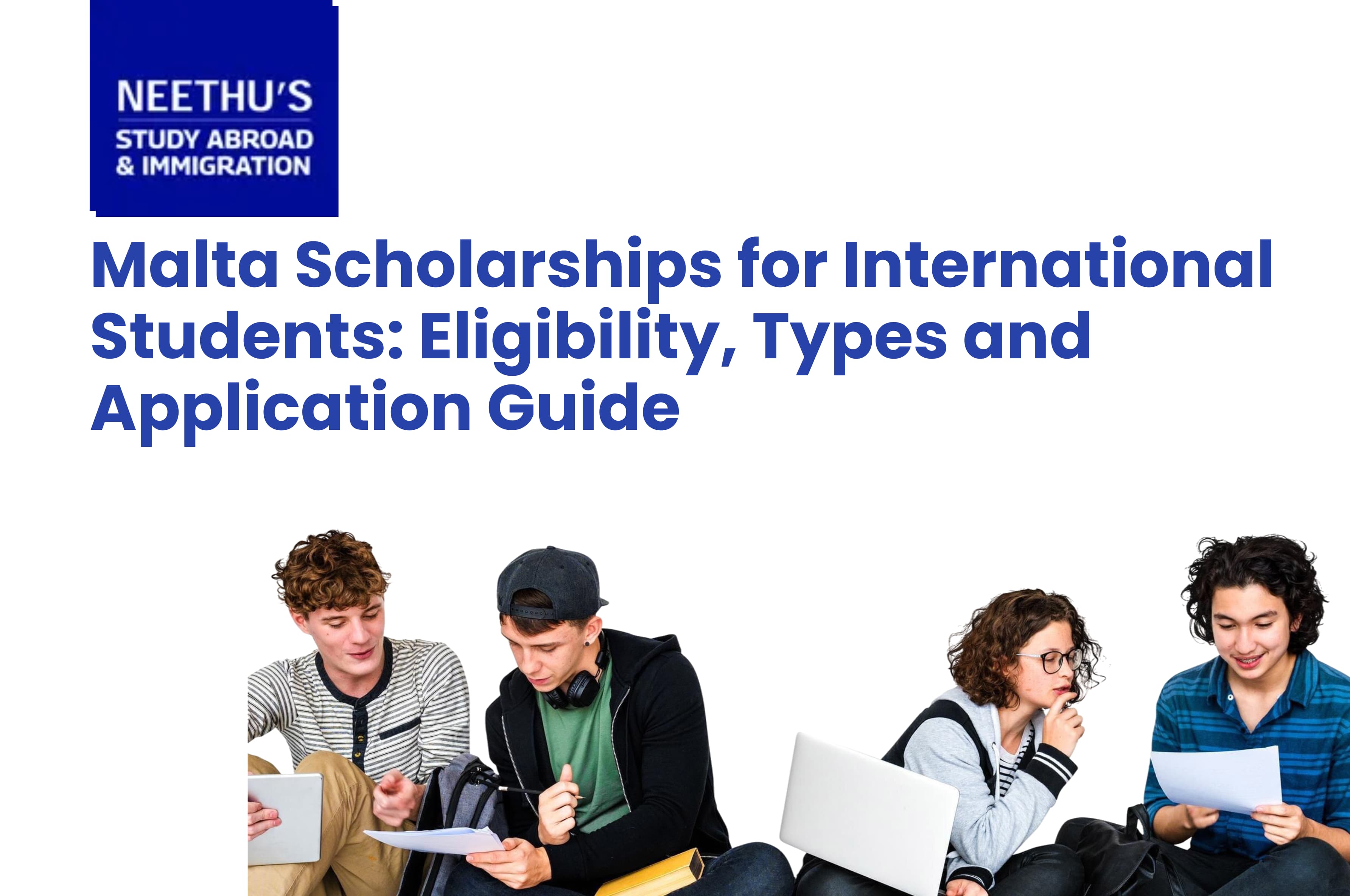
Studying in Malta gives international students the opportunity to experience European higher education in an English-speaking environment. The country has developed into an attractive destination for students interested in subjects such as business, information technology, engineering, healthcare, tourism, finance, and research.
Although Malta can offer a valuable academic experience, tuition fees and everyday expenses need to be considered when planning to study abroad. Scholarships and other forms of financial assistance can help eligible students manage some of these expenses.
Funding opportunities may come from universities, educational institutions, research programmes, government initiatives, and other organisations. Each opportunity has its own conditions, funding limits, and application process. Students who start their search early can identify options that better match their academic qualifications and financial requirements.
Why Study in Malta?
Malta offers an interesting combination of European education and a multicultural lifestyle. English is an official language of the country and is widely used in education, making it easier for international students to follow courses without having to learn an entirely new language before beginning their studies.
The country also provides programmes at different academic levels, including undergraduate, postgraduate, and research-based qualifications. Depending on the institution and course, students may have opportunities to develop academic knowledge alongside practical and professional skills.
Malta's location in the Mediterranean also makes it a culturally diverse environment. International students can interact with people from different backgrounds while developing experience in an international setting.
What Scholarship Opportunities Can Students Find?
There is no single scholarship system that applies to every international student in Malta. Funding depends on the institution, course, academic level, nationality, and other eligibility factors.
University Scholarships
Higher education institutions may provide scholarships or fee reductions to students who satisfy particular requirements. These awards can be linked to academic performance, programme-specific criteria, financial circumstances, or other factors.
Some awards may cover a percentage of tuition fees rather than the entire cost of education. Students should therefore check the exact terms before assuming that a scholarship will cover all study expenses.
Research Funding
Research-oriented students may find financial support through postgraduate research programmes or projects. Master's and doctoral students can sometimes access funding associated with a specific research area or academic project.
Applicants for research funding may need to demonstrate previous academic performance and submit a detailed proposal. In some cases, they may also need to identify a supervisor or demonstrate that their proposed research fits within an existing project.
Academic Merit Awards
Students with strong academic records may qualify for merit-based financial assistance. Selection can depend on examination results, previous qualifications, academic achievements, professional experience, or other accomplishments.
A high academic score can strengthen an application, but students should also pay attention to other selection criteria. Some scholarship providers assess the applicant's overall profile rather than grades alone.
Financial Assistance Based on Need
Some institutions may provide assistance to students who can demonstrate financial difficulty. Such support is generally subject to specific rules and documentation requirements.
Applicants may need to provide financial information or supporting evidence. Because these requirements can vary, students should carefully review the conditions before preparing their application.
Subject-Specific Funding
Certain scholarships are associated with particular areas of study. Funding may be available for disciplines connected with technology, science, research, business, sustainability, healthcare, or other specialised fields.
Students should search according to both their chosen subject and academic level. This can help them discover opportunities that may not appear in general scholarship searches.
Who Can Apply?
There is no universal eligibility standard for every scholarship. Each provider establishes its own conditions. However, applicants may commonly need to satisfy requirements such as:
-
Holding an appropriate academic qualification.
-
Meeting the admission criteria for the selected course.
-
Achieving the minimum academic performance specified by the provider.
-
Demonstrating English-language ability where required.
-
Meeting nationality or residency conditions.
-
Applying within the specified period.
-
Providing a motivation letter or personal statement.
-
Supplying references when requested.
-
Meeting additional requirements for research programmes.
Some scholarships may have further restrictions relating to the applicant's chosen course, degree level, previous education, or professional background.
Students should never assume that admission to a Maltese institution automatically makes them eligible for every available scholarship.
Documents Required for Scholarship Applications
Having the necessary paperwork ready can make the application process more efficient. Although requirements differ, international applicants may be asked to provide:
-
Valid passport or identification document
-
Academic certificates
-
Marksheets or transcripts
-
Curriculum vitae
-
Personal statement
-
Motivation letter
-
English-language test results, if applicable
-
Recommendation letters
-
Research proposal for research programmes
-
University admission letter or application details
-
Evidence of financial circumstances where applicable
-
Portfolio for selected creative programmes
Applicants should check whether documents need to be translated, certified, or submitted in a particular format. It is also important to ensure that personal information is identical across different documents.
Steps to Apply for Scholarships
Finding an appropriate scholarship is only the first part of the process. Students should approach the application carefully.
Identify Relevant Scholarships
Begin by making a list of scholarships that correspond to your nationality, academic level, course, and chosen institution. Avoid spending time on opportunities for which you clearly do not meet the eligibility requirements.
Read the Conditions Carefully
Pay attention to academic requirements, application deadlines, funding coverage, required documents, and any conditions attached to the award.
Organise Your Paperwork
Prepare certificates, transcripts, identification documents, references, test results, and other supporting material well ahead of the deadline.
Prepare a Personal Statement
A good personal statement should explain your academic interests, career plans, reasons for selecting the course, and the value of receiving financial assistance.
Instead of repeating information already included in your CV, use the statement to demonstrate your motivation and explain how your educational plans connect with your future ambitions.
Complete the Application
Enter information accurately and upload documents in the requested format. Review the application before submitting it to ensure that nothing has been left incomplete.
Track the Outcome
After applying, monitor your email and scholarship portal for updates. Some providers may request additional information or invite shortlisted candidates for an interview.
How to Build a Strong Application
Scholarship selection can be competitive, particularly when funding is limited. Students should therefore present a well-rounded profile.
Good academic results can help, but other achievements may also be valuable. Relevant internships, research projects, volunteering, leadership activities, competitions, professional experience, and extracurricular involvement can demonstrate initiative and commitment.
The application should also be tailored to the particular scholarship. A generic personal statement may not effectively explain why the applicant deserves that specific award.
Recommendation letters should ideally come from people who can provide meaningful information about the applicant's academic abilities, professional potential, or relevant achievements.
Does a Scholarship Cover All Study Expenses?
Students should not automatically assume that receiving a scholarship means studying in Malta will be completely free.
Different awards can provide different forms of assistance. One scholarship might reduce tuition fees, while another could provide a fixed grant or stipend. Some funding may support research-related costs rather than everyday living expenses.
Students may still have to budget for accommodation, food, transportation, health insurance, study materials, visa expenses, and personal spending.
Before accepting an award, applicants should carefully check what is included and what expenses remain their responsibility.
Tips for International Students
Students planning to apply for scholarships should begin their research well before the intended intake. Some opportunities have deadlines that fall before university admission deadlines, while others may be available only during particular periods.
Applying for several suitable scholarships can also improve the overall chances of receiving funding, provided the applicant meets the conditions for each opportunity.
It is equally important to verify information through official sources. Scholarship amounts, eligibility rules, deadlines, and available programmes can change. Students should therefore avoid relying solely on old articles or unverified social media posts.
Keeping a spreadsheet or organised record of scholarship names, deadlines, eligibility criteria, documents, and application status can also make the process easier to manage.
Malta Scholarships for International Students: Final Thoughts
Malta can be an appealing choice for students seeking international education in an English-speaking European environment. Scholarships can help reduce the financial pressure associated with studying overseas, but funding availability and eligibility vary significantly between programmes and institutions.
Students researching malta scholarships should begin by identifying suitable courses and then explore funding options that correspond to their academic profile. Preparing documents early, writing a focused personal statement, and meeting every deadline can make the application process smoother.
Those searching for scholarships in malta for international students should also examine the exact financial coverage of each award. Understanding whether the funding applies to tuition, living expenses, research costs, or only a portion of these expenses is essential for creating a realistic study-abroad budget.
With proper research and advance preparation, international students can identify financial support opportunities that may make their Maltese education plans more manageable.
FAQS
1. Are scholarships available for international students in Malta?
Yes. International students may find scholarship and financial assistance opportunities through universities, research programmes, institutions, and other funding organisations. Eligibility and funding depend on the specific scholarship.
2. Who can apply for scholarships in Malta?
Eligibility varies by scholarship. Students may need to meet academic requirements, gain admission to an eligible programme, satisfy nationality conditions, and provide the required supporting documents.
3. Can Indian students apply for scholarships in Malta?
Yes, Indian students can apply for suitable scholarships if they meet the eligibility criteria established by the university or funding organisation. Requirements can differ according to the programme and scholarship.
4. What types of scholarships are available in Malta?
Students may find merit-based awards, university scholarships, research funding, tuition-fee reductions, need-based assistance, and scholarships linked to particular academic subjects or programmes.
5. What documents are generally required for a scholarship application?
Common documents include academic transcripts, certificates, a valid passport, CV, personal statement, recommendation letters, proof of English proficiency where applicable, and a research proposal for certain postgraduate programmes.
6. Do Malta scholarships cover the full cost of studying?
Not necessarily. Some scholarships may cover part or all of the tuition fee, while others may provide a fixed grant or stipend. Students should check whether accommodation, living expenses, insurance, and other costs are included.
7. How can students improve their chances of receiving a scholarship?
Strong academic performance, relevant work or internship experience, research activities, extracurricular achievements, leadership experience, and a well-written personal statement can strengthen an application.
8. When should students apply for scholarships in Malta?
Students should begin researching funding opportunities several months before their planned intake. Each scholarship has its own deadline, and some may close before the university admission deadline.
9. Can postgraduate students receive scholarships in Malta?
Yes. Postgraduate and research students may find funding opportunities, particularly for master's research and doctoral programmes. Some awards may be connected to specific research projects or academic fields.
10. Where can students find reliable scholarship information?
Students should check the official websites of Maltese universities, higher education institutions, and scholarship providers. Official sources provide the most reliable information about eligibility, deadlines, application procedures, and funding.




















































































































































_03-12-2025_01-17-26%20PM.webp&w=3840&q=75)
_02-12-2025_03-07-49%20PM.webp&w=3840&q=75)

_27-11-2025_04-06-24%20PM.webp&w=3840&q=75)
_25-11-2025_04-38-18%20PM.webp&w=3840&q=75)
_24-11-2025_03-20-26%20PM.webp&w=3840&q=75)
_22-11-2025_12-44-47%20PM.webp&w=3840&q=75)
_21-11-2025_04-17-47%20PM.webp&w=3840&q=75)
_20-11-2025_03-55-26%20PM.webp&w=3840&q=75)
_18-11-2025_04-00-40%20PM.webp&w=3840&q=75)
_15-11-2025_10-48-43%20AM.webp&w=3840&q=75)
%20(1)_14-11-2025_03-52-25%20PM.webp&w=3840&q=75)
_13-11-2025_03-02-38%20PM.webp&w=3840&q=75)
_08-11-2025_04-15-36%20PM.webp&w=3840&q=75)
_05-11-2025_04-01-50%20PM.webp&w=3840&q=75)
_05-11-2025_03-46-26%20PM.webp&w=3840&q=75)
_03-11-2025_03-31-09%20PM.webp&w=3840&q=75)
_04-11-2025_.webp&w=3840&q=75)
_04-11-2025_.webp&w=3840&q=75)
_28-10-2025_04-09-08%20PM.webp&w=3840&q=75)
_24-10-2025_05-10-31%20PM.webp&w=3840&q=75)
_24-10-2025_04-55-51%20PM.webp&w=3840&q=75)
_22-10-2025_04-40-20%20PM.webp&w=3840&q=75)
%20(1)_21-10-2025_03-05-46%20PM.webp&w=3840&q=75)
_21-10-2025_02-43-15%20PM.webp&w=3840&q=75)
_17-10-2025_05-08-52%20PM.webp&w=3840&q=75)
_17-10-2025_04-54-54%20PM.webp&w=3840&q=75)
_15-10-2025_03-46-47%20PM.webp&w=3840&q=75)
_14-10-2025_03-42-40%20PM.webp&w=3840&q=75)
_14-10-2025_03-29-48%20PM.webp&w=3840&q=75)
_13-10-2025_03-48-51%20PM.webp&w=3840&q=75)
_11-10-2025_04-28-42%20PM.webp&w=3840&q=75)
%20(1)_09-10-2025_04-12-08%20PM.webp&w=3840&q=75)

_07-10-2025_02-55-25%20PM.webp&w=3840&q=75)
_07-10-2025_02-39-51%20PM.webp&w=3840&q=75)
_06-10-2025_03-42-37%20PM.webp&w=3840&q=75)
_03-10-2025_04-42-59%20PM.webp&w=3840&q=75)
_01-10-2025_11-12-12%20AM.webp&w=3840&q=75)
%20(1)_29-09-2025_02-54-12%20PM.webp&w=3840&q=75)

_26-09-2025_12-14-18%20PM.webp&w=3840&q=75)
_24-09-2025_04-44-26%20PM.webp&w=3840&q=75)
_23-09-2025_04-14-36%20PM.webp&w=3840&q=75)
_22-09-2025_04-08-09%20PM.webp&w=3840&q=75)
_20-09-2025_03-26-03%20PM.webp&w=3840&q=75)
_17-09-2025_04-06-42%20PM.webp&w=3840&q=75)
_15-09-2025_04-43-43%20PM.webp&w=3840&q=75)
_13-09-2025_12-17-49%20PM.webp&w=3840&q=75)
_12-09-2025_04-31-36%20PM.webp&w=3840&q=75)
_12-09-2025_04-17-03%20PM.webp&w=3840&q=75)
_10-09-2025_03-59-59%20PM.webp&w=3840&q=75)
_09-09-2025_04-11-16%20PM.webp&w=3840&q=75)
_09-09-2025_03-53-52%20PM.webp&w=3840&q=75)

















































_12-06-2025_03-40-35%20PM.webp&w=3840&q=75)