Ireland and New Zealand: Alternative Study Destinations for Indian Students
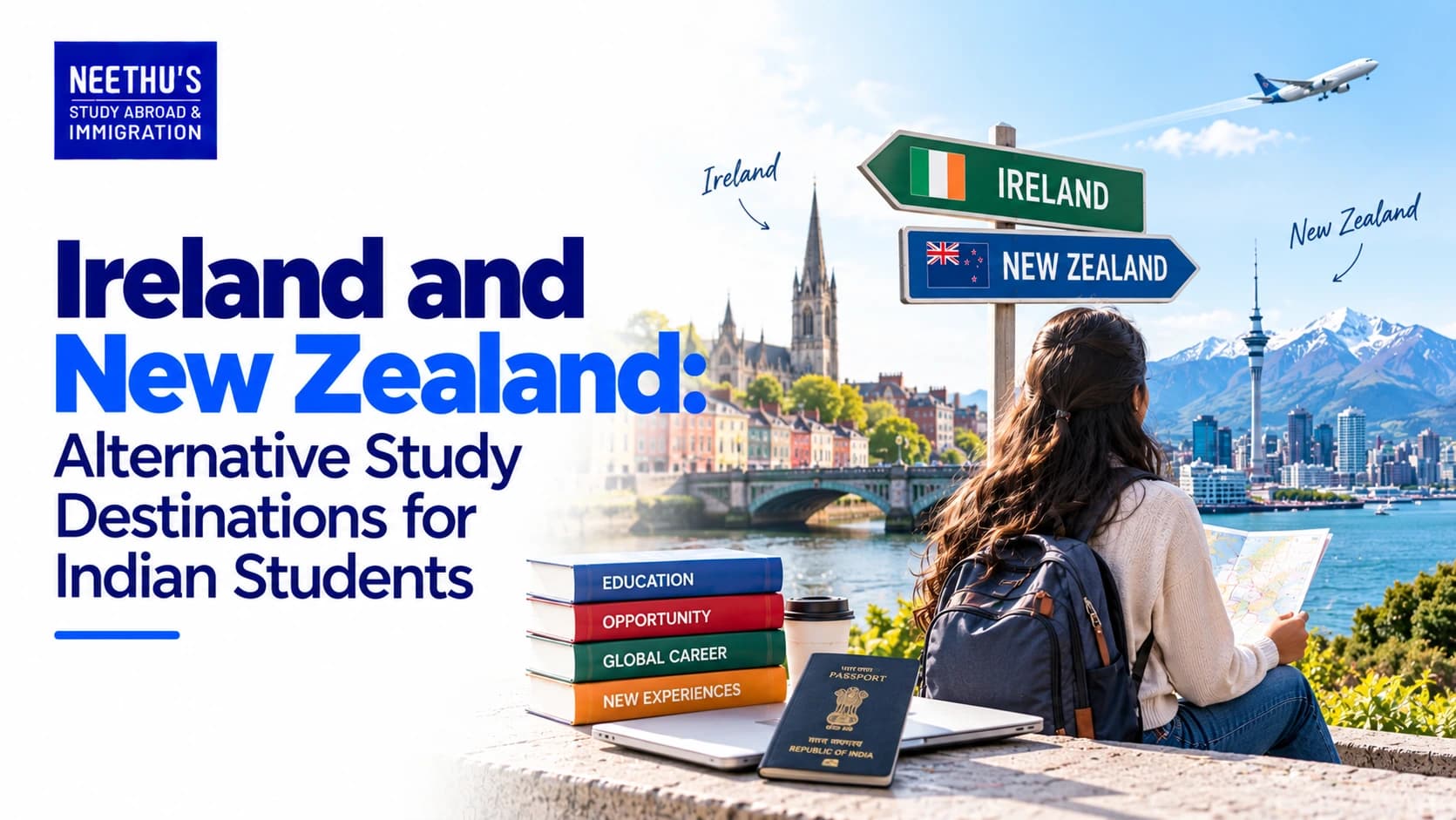
For Indian students planning to pursue higher education overseas, choosing the right destination involves more than selecting a university. Course quality, tuition fees, living expenses, employment opportunities, and future career prospects all play an important role in the decision. Although traditional study destinations remain popular, Ireland and New Zealand are attracting students looking for different academic experiences and international career opportunities.
Both countries offer English-taught programmes, internationally recognised qualifications, and opportunities to develop practical skills. However, they differ in their educational strengths, living environments, employment markets, and immigration policies. Understanding these differences can help students identify which destination aligns with their personal and professional ambitions.
Before submitting applications, students should examine the complete study experience, including admission requirements, financial commitments, and the conditions that apply after graduation. Making an informed decision can help students avoid unrealistic expectations and prepare more effectively for life abroad.
Why Are Indian Students Considering Ireland and New Zealand?
Ireland and New Zealand provide different advantages for international learners. The right option depends on the student's preferred subject, financial resources, and long-term career plans.
Ireland: Opportunities in Technology, Business, and Research
Ireland has developed a strong reputation in higher education, particularly in areas connected with technology, financial services, pharmaceuticals, and scientific research. Its universities and technological institutions offer programmes ranging from undergraduate degrees to specialised postgraduate qualifications.
Students interested in software development, business analytics, finance, biotechnology, and related fields may find courses that align with their career objectives. The presence of international companies also makes Ireland an interesting destination for graduates seeking exposure to global business environments.
However, the availability of employment depends on factors such as qualifications, professional skills, work experience, and market conditions. Students planning to study in Ireland should therefore investigate the curriculum, internship opportunities, graduate outcomes, and industry connections of individual institutions before making a commitment.
New Zealand: Education with a Practical Focus
New Zealand offers a variety of academic pathways in engineering, agriculture, environmental studies, information technology, healthcare, and business. Many programmes incorporate practical assignments, research activities, and industry-related learning to help students develop skills relevant to their chosen fields.
The country may appeal to students who prefer a learning environment that combines academic development with practical experience. Its multicultural communities and outdoor lifestyle can also contribute to the overall international student experience.
Students intending to study in New Zealand should compare universities and other approved education providers based on course structure, facilities, teaching methods, and professional recognition. The suitability of a qualification matters more than choosing an institution simply because the destination is popular.
Which Courses Can Indian Students Consider?
Course selection should reflect a student's previous education, interests, and intended career. Both destinations offer diverse programmes, but students should examine the specific subjects available at each institution.
In-Demand Study Areas in Ireland
Students researching Irish institutions can explore programmes in:
-
Computer science, software engineering, and data analytics
-
Business management, accounting, and finance
-
Pharmaceutical science and biotechnology
-
Electrical, mechanical, and other engineering disciplines
-
Digital marketing and international business
-
Selected healthcare and public health programmes
Ireland's technology and life sciences industries may create opportunities for graduates with relevant qualifications. Nevertheless, completing a course does not guarantee employment. Students should review current recruitment trends and check whether their preferred occupation requires professional registration or additional certification.
Study Options in New Zealand
New Zealand institutions offer programmes across several academic and professional areas, including:
-
Information technology and cybersecurity
-
Environmental science and agricultural studies
-
Civil, mechanical, and electrical engineering
-
Business management and supply chain operations
-
Healthcare and public health
-
Tourism and hospitality management
Applicants should examine entry criteria, practical training opportunities, course duration, and the skills developed throughout the programme. Students considering regulated careers should also verify whether their chosen qualification meets the relevant professional requirements.
Tuition Fees and Living Expenses
The financial commitment associated with international education includes more than tuition. Students must plan for accommodation, groceries, transport, insurance, study materials, visa expenses, and personal needs.
Financial Planning for Ireland
Tuition fees in Ireland vary according to the institution, qualification, subject, and duration of the course. Some specialised programmes may have higher fees because of laboratory facilities, equipment, or professional training requirements.
Accommodation is another significant consideration. Students should investigate rental availability, utility bills, commuting expenses, and the distance between their housing and campus before selecting a location.
Preparing a detailed budget can help students compare institutions more accurately. They should also allow for unexpected costs and avoid assuming that part-time earnings will be sufficient to cover their expenses from the first month.
Financial Planning for New Zealand
The cost of education in New Zealand depends on the selected provider, academic level, and field of study. Students should obtain the latest fee information directly from their institution and check whether additional charges apply.
Living expenses vary by city and accommodation type. Shared housing may help reduce rent, while access to public transport can influence the total cost of living. Choosing a less expensive location should not come at the expense of course suitability or access to essential services.
Students should compare the estimated cost of the entire programme, rather than tuition for a single year. They should also consider currency fluctuations and possible increases in accommodation or everyday expenses.
Part-Time Employment While Studying
Part-time work can help eligible students supplement their finances and gain experience in a new professional environment. Common opportunities may include retail, hospitality, customer service, and certain university-based positions.
In Ireland, employment eligibility and permitted working hours depend on the student's immigration permission and applicable conditions. New Zealand also has specific rules governing student employment, with individual visa conditions determining what work is permitted.
Students should verify these requirements before accepting a position. They should also assess their academic workload, as practical classes, assignments, and examinations may limit the time available for paid employment.
Part-time work should be treated as additional income rather than a guaranteed way to finance an entire international education. Having sufficient funds before departure remains essential.
Understanding Post-Study Work Visa Options in Ireland
The opportunity to gain professional experience after graduation is an important factor for students comparing international destinations. Ireland operates the Third Level Graduate Programme, which allows eligible graduates from recognised Irish higher education institutions to remain in the country temporarily while seeking graduate-level employment.
Under the programme, eligible graduates holding a Level 8 qualification may receive up to 12 months of permission. Eligible graduates with Level 9 or Level 10 qualifications may qualify for up to 24 months, subject to the programme's requirements and applicable immigration conditions.
Students exploring Post-study work visa options in Ireland should understand that the permission is temporary and does not automatically lead to permanent residence. Graduates who want to continue working beyond the applicable graduate permission may need to qualify for an employment permit or another suitable immigration route.
Eligibility depends on factors such as the qualification obtained, the institution, the student's immigration status, and application requirements. Students should consult the official Irish immigration website before choosing a programme based on its potential post-study benefits.
They should also assess whether the qualification provides useful skills for their preferred occupation. A recognised degree with relevant practical experience may support career development, but employment outcomes depend on the individual and the labour market.
Post-Study Work Opportunities in New Zealand
New Zealand provides a Post Study Work Visa pathway for eligible international graduates. The duration and conditions depend on the qualification, the study undertaken in the country, and the immigration rules that apply when an application is submitted.
Eligible graduates with a qualifying master's or doctoral degree who complete at least 30 weeks of full-time study in New Zealand may be able to obtain up to three years of post-study work permission. Other qualifications can have different eligibility requirements and durations.
For students researching Study in New Zealand for Indian Students, it is important to confirm whether the intended programme qualifies for the relevant visa. Some qualifications have additional restrictions concerning the type of employment a graduate can undertake.
New Zealand has also announced immigration changes scheduled to begin on 16 November 2026, including provisions affecting certain Level 7 graduate diploma holders who also hold a bachelor's degree and a new Short-Term Graduate Work Visa for eligible graduates. Applicants should check the latest official guidance to understand the final requirements applicable to their circumstances.
A post-study work visa provides an opportunity to pursue employment under the relevant conditions. It does not guarantee a job offer, employer sponsorship, or permanent residency.
Ireland or New Zealand: How Can Students Decide?
Neither country is the ideal choice for every student. A suitable destination should offer a programme that matches the applicant's academic background, financial capacity, and professional ambitions.
Ireland may be worth exploring for students interested in technology, pharmaceuticals, finance, research, and international business. New Zealand may appeal to those considering agriculture, environmental science, engineering, applied learning, healthcare, or other available specialisations.
Before deciding, compare these important factors:
-
Academic suitability: Examine course content, teaching methods, entry requirements, and programme duration.
-
Institutional recognition: Confirm that the qualification is recognised for your intended academic or professional pathway.
-
Total budget: Include tuition, rent, transport, insurance, and other essential costs.
-
Career opportunities: Research current job advertisements and the qualifications employers expect.
-
Immigration policies: Check student work permissions and post-study eligibility through official government resources.
-
Lifestyle preferences: Consider climate, distance from family, accommodation, and the local community.
Students can approach the Best study abroad consultants in kerala for support with destination comparisons, university applications, document preparation, and pre-departure planning. However, applicants should independently confirm university details, financial requirements, and immigration conditions before paying fees or accepting an offer.
Conclusion
Ireland and New Zealand offer Indian students two distinct pathways to international education. Ireland may be particularly relevant to students interested in technology, finance, pharmaceuticals, and global business, while New Zealand provides a broad range of opportunities in applied sciences, engineering, agriculture, healthcare, and other fields.
The most appropriate destination depends on the student's preferred course, budget, career objectives, and expectations for life overseas. Comparing institutions, calculating the complete cost of education, and understanding post-study work requirements can help students make decisions based on reliable information.
Students should avoid choosing a destination solely because of promises about employment or long-term settlement. Instead, they should prioritise recognised qualifications, practical skills, realistic financial planning, and current immigration guidance. With careful research and preparation, studying in either country can become a valuable step towards personal growth and an international career.
FAQs
1. Why should Indian students consider Ireland and New Zealand for higher education?
Ireland and New Zealand offer internationally recognised qualifications, English-taught programmes, and opportunities to develop practical skills. Both destinations provide diverse courses and potential career pathways for international graduates.
2. Which is better for Indian students: Ireland or New Zealand?
The better option depends on the student's preferred course, budget, and career goals. Ireland may appeal to students interested in technology, finance, and pharmaceuticals, while New Zealand offers opportunities in engineering, agriculture, environmental science, and other disciplines.
3. What are the popular courses to study in Ireland?
Popular study areas include computer science, data analytics, business management, finance, biotechnology, pharmaceutical science, and engineering. Students should compare course content and employment prospects before selecting a programme.
4. What can Indian students study in New Zealand?
Students can explore information technology, cybersecurity, engineering, agricultural science, environmental management, healthcare, business, and hospitality management, depending on the institutions and programmes available.
5. How much does it cost to study in Ireland or New Zealand?
The total cost depends on tuition fees, accommodation, location, course duration, and personal spending. Students should check current university fees and estimate their annual living expenses before preparing a financial plan.
6. Can Indian students work part-time while studying in Ireland and New Zealand?
Eligible international students may work part-time subject to their visa conditions and applicable immigration regulations. Students should verify permitted working hours and employment restrictions through official government websites.
7. What are the post-study work visa options in Ireland?
Ireland's Third Level Graduate Programme allows eligible graduates to remain temporarily to seek graduate-level employment. Eligible Level 8 graduates may receive up to 12 months, while eligible Level 9 and Level 10 graduates may qualify for up to 24 months, subject to current requirements.
8. Can Indian students stay and work in New Zealand after graduation?
Eligible graduates may apply for a New Zealand Post Study Work Visa. The duration and employment conditions depend on the qualification and applicable immigration rules. Approval is not guaranteed, so students should verify their eligibility before enrolling.
9. How can students choose the right university in Ireland or New Zealand?
Students should compare course content, institutional recognition, tuition fees, entry requirements, internship opportunities, accommodation costs, and graduate career pathways. They should also check whether their chosen qualification supports their intended profession.
10. Can study abroad consultants help students apply to Ireland and New Zealand?
Yes. The Best study abroad consultants in kerala can assist with destination selection, university applications, documentation, and pre-departure preparation. Students should independently verify admission requirements, financial obligations, and current visa regulations before making a final decision.