Latvia Post-Study Work Visa & Residence Options for International Students
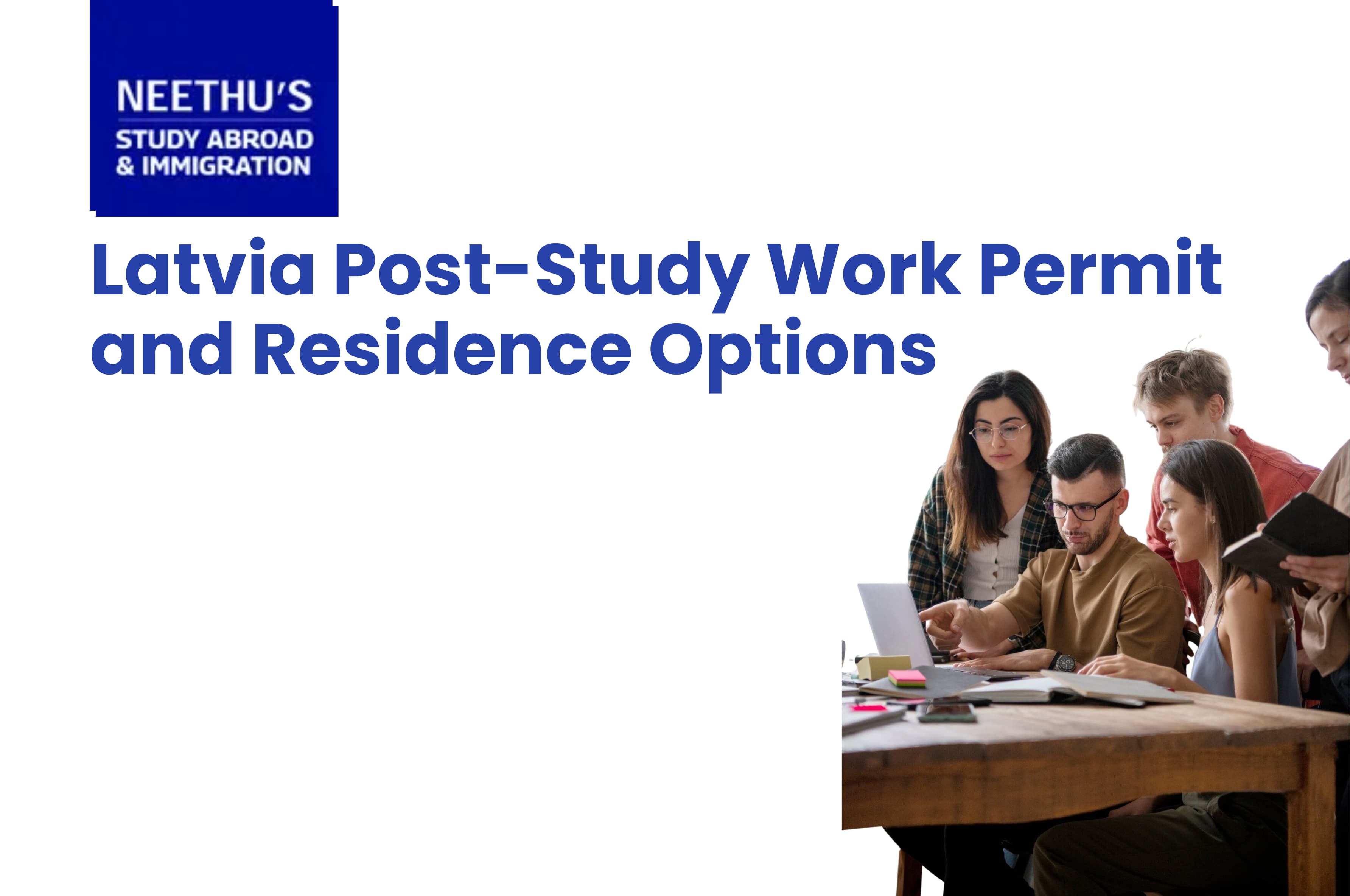
Latvia offers international students an opportunity to gain a European education and potentially continue their professional journey after graduation. For students from outside the European Union, however, completing a degree does not automatically provide an unlimited right to stay or work in the country. The next residence status must be arranged according to Latvian immigration rules.
Students often search for a latvia post study work visa, but Latvia's system is primarily based on residence permits and specific employment rights rather than a single visa designed for every international graduate. Eligible graduates can use a post-study residence route and then move to employment or another qualifying residence category.
Understanding these options before graduation can help students avoid gaps in their legal residence and make better decisions about employment, further education, or long-term settlement.
What Can International Students Do After Graduation?
The options available after completing studies depend on the type of programme completed and the student's plans.
Under Latvia's current Immigration Law, a foreign national who has completed a full-time master's or doctoral programme and obtained a state-recognised higher education diploma can apply for a temporary residence permit for a period of up to nine months after completing the programme. The application must be submitted no later than three months after the expiry of the temporary residence permit issued for studies.
This period can give eligible graduates additional time to plan their next step. However, it is important to understand that the post-study permit itself does not automatically provide the right to employment. The Latvian Office of Citizenship and Migration Affairs (OCMA) specifically states this on its guidance for graduates.
Therefore, graduates who secure employment generally need to move to the appropriate residence and employment arrangement.
Who Is Eligible for the Post-Study Residence Route?
The specific graduate provision is aimed at students who have:
-
Completed a full-time master's programme in Latvia; or
-
Completed a full-time doctoral programme;
-
Received a state-recognised higher education diploma;
-
Held lawful student residence in Latvia; and
-
Applied within the required immigration timeframe.
The legislation currently provides the post-study residence period for graduates of full-time master's and doctoral programmes. Students completing other types of qualifications should not assume that the same route automatically applies to them.
This distinction is particularly important for bachelor's degree students. A bachelor's graduate may need to qualify through another residence basis, such as employment, further studies, or another category permitted under Latvian law.
Latvia Post Study Work Permit: What Does It Actually Mean?
The phrase latvia post study work permit is frequently used when discussing opportunities after graduation. However, students should distinguish between a graduate residence permit and a residence permit that provides employment rights.
The graduate residence option gives eligible master's and doctoral graduates additional legal residence after completing their studies, but OCMA confirms that this particular permit does not include the right to work.
If a graduate receives a job offer, the employer generally has to complete the relevant immigration procedures. For long-term employment of a third-country national, an approved sponsorship can provide the basis for obtaining a residence permit and employment rights.
This means students should not treat the post-study period as an automatic work authorisation period. Instead, it should be viewed as an opportunity to arrange an appropriate next status.
Finding Employment After Graduation
Employment is one of the most practical routes for graduates who want to remain in Latvia.
A third-country national planning to work in Latvia for a long-term period generally requires a residence permit with the appropriate employment rights. The employer plays an important role by completing the required invitation or sponsorship process with OCMA.
Students can improve their employment prospects by beginning their search before completing their programme. Internships, university career services, professional networking, and part-time experience can help graduates understand the Latvian labour market.
It is also useful to research whether the intended profession is regulated. In some professions, qualification recognition or additional documentation may be necessary before employment can begin.
Latvia Post Study Work Visa: Visa or Residence Permit?
Another common source of confusion is the term latvia post study work visa.
Latvia distinguishes between visas and residence permits. A residence permit is generally required when a foreign national intends to stay in Latvia for more than 90 days within a six-month period. Residence permits can be temporary or permanent.
For long-term employment, a residence permit with the relevant employment rights is generally the more important immigration document. Latvia also has visas that can carry employment rights for certain short-term or specific situations. A long-stay D visa with employment rights can, for example, be issued for employment for a period not exceeding one year in applicable cases.
Consequently, students should use the official name of the immigration category that applies to their circumstances rather than assuming that every post-study option is a separate work visa.
Documents Graduates May Need
The exact paperwork depends on the residence category, but applicants for the graduate residence route should be prepared to provide supporting documents.
OCMA's graduate guidance lists documents including:
-
Valid passport
-
Residence permit application
-
Recent photograph
-
State-recognised higher education diploma
-
Evidence of sufficient means of subsistence
-
Proof of payment of the applicable state fee
-
Criminal-record documentation where applicable
OCMA also provides requirements for eligible family members accompanying the graduate, including documents proving family relationships.
Students should check the latest requirements before applying because financial thresholds, fees, forms, and administrative procedures can change.
Moving From Graduate Status to Employment
Once a graduate finds a suitable job, the next step is to determine which employment-based residence category applies.
For long-term employment, the employer normally submits the relevant sponsorship request to OCMA. The employer may also need to provide information about the position, salary, employment conditions, and the qualifications required for the role.
Current financial requirements should also be considered. OCMA states that, from April 1, 2026, certain employment-based residence applications are subject to a required subsistence level linked to Latvia's wage statistics. For specified employment categories, the amount is currently €3,630 per month, while the EU Blue Card threshold is €2,723 per month under the relevant calculation.
Because these requirements depend on the immigration category and can change, applicants should verify the figures applicable to their individual case.
Other Residence Options After Graduation
Employment is not the only possible route for international graduates.
EU Blue Card
Highly qualified professionals may explore the EU Blue Card if they obtain employment that meets the applicable requirements. The scheme is designed for qualified non-EU nationals and has specific conditions relating to employment, qualifications, and remuneration.
Traineeship
Latvian immigration law provides a temporary residence route for certain trainees who obtained higher education no more than two years before applying and whose qualification corresponds to the intended traineeship. This residence category can generally be issued for up to one year, subject to the applicable conditions.
Start-Up Residence
Graduates interested in entrepreneurship can investigate Latvia's start-up residence provisions. Eligible founders can receive temporary residence for up to three years when the requirements relating to the innovative business and company structure are fulfilled.
Further Studies
Students who want to continue their education may also explore another study programme. A residence permit for studies is available for qualifying students enrolled at accredited higher education institutions, subject to the applicable documentation and financial requirements.
Latvia PR After Study: Can Graduates Get Permanent Residence?
Students planning pr after study should understand that completing a Latvian degree does not automatically result in permanent residence.
Latvia generally requires a foreign national to establish a qualifying period of continuous legal residence before becoming eligible for permanent residence or EU long-term resident status. OCMA states that third-country nationals generally move from temporary residence to permanent residence after five years of continuous residence and must meet the applicable official-language requirement.
The exact calculation of qualifying residence can depend on the type of permit held. In particular, study periods may not count in the same way as employment-based residence when calculating eligibility for EU long-term resident status. Students therefore need to examine how their specific residence history will be treated.
Knowledge of Latvian can also become important. For the EU long-term resident route, applicants generally need to demonstrate Latvian language knowledge at the required level, alongside meeting residence and financial conditions.
Planning for Latvia PR After Study
For students considering pr after study, long-term planning should begin well before graduation.
A sensible approach is to:
-
Check when the current student residence permit expires.
-
Confirm whether the graduate residence route applies.
-
Begin searching for relevant employment early.
-
Research occupations and employers that hire international graduates.
-
Keep academic and immigration documents organised.
-
Understand the employment residence procedure.
-
Start learning Latvian if permanent residence is a long-term objective.
-
Check residence-period requirements before changing immigration categories.
This planning can make the transition from student life to professional life much smoother.
Can Students Work During Their Studies?
International students should also distinguish their work rights while studying from their rights after graduation.
The conditions for student employment depend on the student's residence status and applicable rules. Therefore, students should verify their specific employment entitlement rather than assuming that permission to work during studies continues after the study programme ends.
Once studies are completed, the graduate should make sure the next residence status also provides the required employment rights before starting a new job.
Conclusion
Latvia can offer international graduates several pathways to continue their stay after completing higher education. Eligible full-time master's and doctoral graduates can apply for a post-study temporary residence permit for up to nine months, but this status does not itself provide employment rights.
Graduates who want to build a career in Latvia may transition to an employment-based residence permit, while qualified professionals can explore options such as the EU Blue Card. Traineeships, further studies, and qualifying start-up activities may provide additional possibilities depending on individual circumstances.
For students considering latvia pr, permanent residence should be viewed as a longer-term objective rather than an automatic benefit of graduation. Residence history, employment, language ability, financial requirements, and other legal conditions can all influence eligibility.
Most importantly, students should begin planning before their study residence permit expires. Since Latvian immigration regulations and administrative requirements can change, applicants should always confirm the latest conditions directly with OCMA or another qualified immigration professional before submitting an application.
Frequently Asked Questions
1. Is there a Latvia post-study work visa for international students?
Latvia does not have one universal post-study work visa for all graduates. Eligible full-time master's and doctoral graduates can apply for a temporary residence permit after graduation, but this specific permit does not itself provide employment rights.
2. How long can master's and doctoral graduates stay in Latvia after completing their studies?
Eligible graduates can obtain a temporary residence permit for up to nine months after completing their studies, subject to the applicable immigration requirements and application deadlines.
3. Does the Latvia post study work permit allow graduates to work?
No. The specific residence permit available to eligible graduates after completing a full-time master's or doctoral programme does not include the right to employment. Graduates who want to work must obtain the appropriate employment-based status.
4. Can bachelor's graduates stay in Latvia after completing their degree?
The specific post-graduation residence provision applies to graduates of full-time master's and doctoral programmes. Bachelor's graduates should explore other qualifying options, such as employment, further studies, or another applicable residence category.
5. What documents are required for the post-study residence permit in Latvia?
Typical documents include a valid passport, residence permit application, photograph, state-recognised higher education diploma, proof of sufficient financial means, payment of the applicable state fee, and criminal-record documentation where required.
6. Can international graduates apply for permanent residence in Latvia after studying?
Yes, permanent or EU long-term resident status may be possible, but graduation alone does not provide permanent residence. Applicants must meet requirements concerning qualifying residence, financial resources, language proficiency, and other conditions.
7. How long does it generally take to qualify for long-term resident status in Latvia?
EU long-term resident status generally requires five years of continuous and lawful residence, subject to the applicable conditions. Importantly, for someone who studied in Latvia and subsequently stays through work or family reunification, only half of the study period is counted toward the five-year requirement.
8. Is Latvian language knowledge required for permanent residence?
Yes. Applicants for EU long-term resident status generally need to demonstrate knowledge of the Latvian state language at least at A2 level, along with meeting the other eligibility requirements.
9. Can graduates switch from student residence to an employment-based residence permit?
Yes, graduates who obtain suitable employment may be able to transition to an employment-based residence status. For long-term employment, an employer generally submits the required sponsorship request, which can provide the basis for a residence permit and employment rights.
10. What should students do before their Latvian student residence permit expires?
Students should identify their next qualifying residence route well in advance, gather the necessary documents, and submit the relevant application within the required timeframe. Planning early is especially important for graduates who intend to remain in Latvia for employment or eventually pursue permanent residence.






































_03-12-2025_01-17-26%20PM.webp&w=3840&q=75)
_02-12-2025_03-07-49%20PM.webp&w=3840&q=75)
_27-11-2025_04-06-24%20PM.webp&w=3840&q=75)
_25-11-2025_04-38-18%20PM.webp&w=3840&q=75)
_24-11-2025_03-20-26%20PM.webp&w=3840&q=75)
_22-11-2025_12-44-47%20PM.webp&w=3840&q=75)
_21-11-2025_04-17-47%20PM.webp&w=3840&q=75)
_20-11-2025_03-55-26%20PM.webp&w=3840&q=75)
_18-11-2025_04-00-40%20PM.webp&w=3840&q=75)
_15-11-2025_10-48-43%20AM.webp&w=3840&q=75)
%20(1)_14-11-2025_03-52-25%20PM.webp&w=3840&q=75)
_13-11-2025_03-02-38%20PM.webp&w=3840&q=75)
_08-11-2025_04-15-36%20PM.webp&w=3840&q=75)
_05-11-2025_04-01-50%20PM.webp&w=3840&q=75)
_05-11-2025_03-46-26%20PM.webp&w=3840&q=75)
_03-11-2025_03-31-09%20PM.webp&w=3840&q=75)
_04-11-2025_.webp&w=3840&q=75)
_04-11-2025_.webp&w=3840&q=75)
_28-10-2025_04-09-08%20PM.webp&w=3840&q=75)
_24-10-2025_05-10-31%20PM.webp&w=3840&q=75)
_24-10-2025_04-55-51%20PM.webp&w=3840&q=75)
_22-10-2025_04-40-20%20PM.webp&w=3840&q=75)
%20(1)_21-10-2025_03-05-46%20PM.webp&w=3840&q=75)
_21-10-2025_02-43-15%20PM.webp&w=3840&q=75)
_17-10-2025_05-08-52%20PM.webp&w=3840&q=75)
_17-10-2025_04-54-54%20PM.webp&w=3840&q=75)
_15-10-2025_03-46-47%20PM.webp&w=3840&q=75)
_14-10-2025_03-42-40%20PM.webp&w=3840&q=75)
_14-10-2025_03-29-48%20PM.webp&w=3840&q=75)
_13-10-2025_03-48-51%20PM.webp&w=3840&q=75)
_11-10-2025_04-28-42%20PM.webp&w=3840&q=75)
%20(1)_09-10-2025_04-12-08%20PM.webp&w=3840&q=75)
_07-10-2025_02-55-25%20PM.webp&w=3840&q=75)
_07-10-2025_02-39-51%20PM.webp&w=3840&q=75)
_06-10-2025_03-42-37%20PM.webp&w=3840&q=75)
_03-10-2025_04-42-59%20PM.webp&w=3840&q=75)
_01-10-2025_11-12-12%20AM.webp&w=3840&q=75)
%20(1)_29-09-2025_02-54-12%20PM.webp&w=3840&q=75)
_26-09-2025_12-14-18%20PM.webp&w=3840&q=75)
_24-09-2025_04-44-26%20PM.webp&w=3840&q=75)
_23-09-2025_04-14-36%20PM.webp&w=3840&q=75)
_22-09-2025_04-08-09%20PM.webp&w=3840&q=75)
_20-09-2025_03-26-03%20PM.webp&w=3840&q=75)
_17-09-2025_04-06-42%20PM.webp&w=3840&q=75)
_15-09-2025_04-43-43%20PM.webp&w=3840&q=75)
_13-09-2025_12-17-49%20PM.webp&w=3840&q=75)
_12-09-2025_04-31-36%20PM.webp&w=3840&q=75)
_12-09-2025_04-17-03%20PM.webp&w=3840&q=75)
_10-09-2025_03-59-59%20PM.webp&w=3840&q=75)
_09-09-2025_04-11-16%20PM.webp&w=3840&q=75)
_09-09-2025_03-53-52%20PM.webp&w=3840&q=75)





















_12-06-2025_03-40-35%20PM.webp&w=3840&q=75)