Study MBBS in Bulgaria: Fees, Eligibility and Admission Process
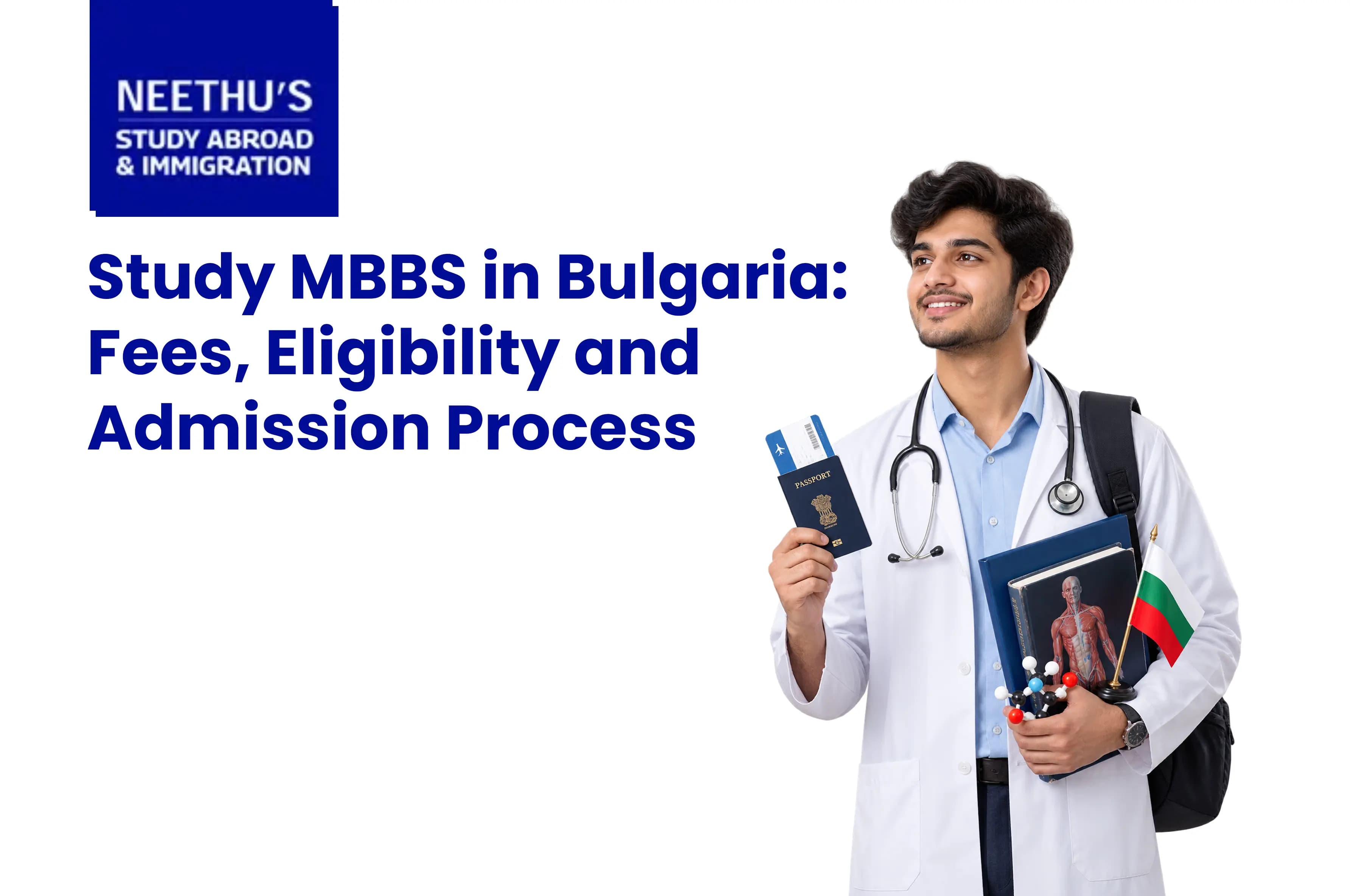
Bulgaria is attracting attention from international students who are looking for medical education in Europe. The country has medical universities that offer Medicine programmes in English, allowing international applicants to pursue their studies without having to complete the entire programme in the local language.
For Indian students, choosing a medical university abroad requires careful research. Tuition fees, academic requirements, entrance examinations, accommodation, living costs, and future medical registration requirements all need to be considered before making a decision.
If you are planning to study MBBS in Bulgaria, understanding the admission process and total expenses can help you evaluate whether the country matches your academic and financial plans. This guide covers the major points Indian students should know for the 2026 intake.
Why Choose Bulgaria for Medical Studies?
Bulgaria offers medical education within the European higher education system and has several institutions with English-language medical programmes. International students can study alongside learners from different countries, creating a multicultural academic environment.
Medical programmes combine classroom-based learning with laboratory work and practical training. As students progress through the programme, clinical education becomes an increasingly important part of their studies.
The country's European location can also appeal to students who want international exposure while completing their medical education.
However, students should not choose a medical university simply because it appears affordable. The institution's recognition, curriculum, clinical training, admission standards, and the requirements for practising medicine after graduation should be carefully checked.
MBBS Universities in Bulgaria
Bulgaria has several medical institutions that accept international students for English-taught Medicine programmes. Some universities that prospective students may research include the following.
Medical University – Sofia
Medical University – Sofia is one of the country's established medical institutions and offers Medicine in English to international applicants.
For the 2026/27 academic year, the university lists tuition for foreign students enrolled in Medicine in English at €9,950 per year, which is approximately ₹10.98 lakh, using an indicative conversion of €1 = ₹110.38.
The university's admission information for non-EU/EEA applicants includes an entrance assessment covering English, Biology, and Chemistry. Applicants should check the university's official admission calendar for current dates and requirements.
Medical University – Plovdiv
Medical University – Plovdiv is another institution offering Medicine in English for international students.
For newly admitted students in the 2026/27 academic year, the published tuition fee for the English-language Medicine programme is €10,000 per year, equivalent to approximately ₹11.04 lakh at the same indicative exchange rate.
The university also publishes information regarding admission requirements and entrance assessment procedures for international applicants.
Medical University – Varna
Medical University – Varna offers English-language programmes including Medicine, Dental Medicine and Pharmacy. International applicants may need to complete entrance tests in subjects such as Biology and Chemistry.
Students should review the university's latest admission information because examination dates, application requirements and other conditions can change between intakes.
Burgas State University
Burgas State University "Prof. Dr. Assen Zlatarov" also offers Medicine for international students. Its published information for the 2026/27 academic year indicates a tuition fee of €5,000 per semester for the English-language programme.
This works out to approximately ₹5.52 lakh per semester, based on the indicative €1 = ₹110.38 conversion.
The exact fee payable by an individual student should always be confirmed with the university before making a payment.
MBBS Fees in Bulgaria
The tuition fee for studying MBBS in Bulgaria generally ranges from €7,000 to €10,000 per year, depending on the university and programme. Over the standard six-year course, the total tuition expense can be approximately €42,000 to €60,000. In Indian currency, this is roughly ₹46 lakh to ₹66 lakh, depending on the prevailing euro-to-rupee exchange rate. In addition to tuition, students should budget around €250 to €350 per month for living expenses, covering necessities such as accommodation, food, transportation, and personal costs. Since exchange rates and individual spending habits can vary, students should treat these figures as approximate and prepare their budget accordingly.
Eligibility for MBBS in Bulgaria
Admission conditions vary between medical universities. Indian students should check the exact criteria of the institution and programme they intend to join.
Generally, applicants need to have completed their secondary education with the required science subjects. Biology, Physics, and Chemistry are particularly important for medical admission, as these subjects can be part of the entrance assessment.
Universities may also ask students to demonstrate English-language proficiency. The accepted qualifications and minimum scores depend on the institution.
For example, some universities may accept IELTS, TOEFL, or PTE results, while others may have their own English assessment procedures.
Indian students should also investigate the requirements of the National Medical Commission (NMC) before enrolling. Admission to a foreign university and eligibility to practise medicine in India are separate matters, so students should understand the applicable rules before making a final choice.
Entrance Exam Requirements
Entrance examinations are an important part of the application process at several Bulgarian medical universities.
Depending on the institution, the assessment may include:
-
Biology
-
Chemistry
-
English language
Medical University – Sofia, for example, includes English, Biology, and Chemistry in its entrance examination requirements for relevant non-EU/EEA applicants.
Other universities may use different examination formats or admission criteria. Students should therefore prepare using the official syllabus and instructions provided by their selected university.
Strong preparation in Biology and Chemistry can be particularly important because these subjects form the foundation of medical education.
Documents Required for Admission
Although requirements differ between institutions, international applicants may commonly be asked to provide:
-
Valid passport
-
Secondary school certificate
-
Academic transcripts
-
Birth certificate
-
Medical certificate
-
Passport photographs
-
English-language proficiency evidence, where applicable
-
Entrance examination results
-
Educational document recognition paperwork
-
University-specific application forms
Some documents may need to be translated, notarised, legalised or submitted through a prescribed recognition procedure.
Applicants should not assume that documents accepted by one university will automatically be accepted by another. Following the selected institution's document instructions carefully can help avoid delays.
Admission Process for Indian Students
The application journey generally starts with identifying universities that offer an English-language Medicine programme and checking their academic requirements.
A typical process can involve:
-
Research suitable medical universities.
-
Compare tuition fees and programme structures.
-
Check academic eligibility.
-
Prepare educational and personal documents.
-
Complete any required document recognition procedure.
-
Submit the university application.
-
Register for the entrance examination if applicable.
-
Prepare for Biology, Chemistry and English assessments.
-
Complete the entrance examination.
-
Wait for the admission decision or ranking.
-
Pay the required enrolment or tuition amount.
-
Apply for the appropriate visa and complete residence formalities.
-
Travel to Bulgaria and complete university registration.
Application deadlines are not identical across all institutions. Students should therefore follow the admission calendar of their chosen university rather than relying on a general deadline.
Cost of Living in Bulgaria
Students should budget for more than tuition fees. Daily living expenses can include accommodation, food, transportation, study materials, communication services and personal spending.
The amount required each month depends on the city and lifestyle. Students living in university accommodation may have different expenses from those renting private apartments.
A sensible budget should include:
-
Accommodation
-
Food and groceries
-
Public transportation
-
Books and study materials
-
Mobile and internet services
-
Personal expenses
-
Health and insurance-related costs
-
Travel and miscellaneous expenses
Keeping an emergency reserve is also recommended, particularly during the first few months after arrival.
Study MBBS in Bulgaria for Indian Students
Indian applicants should evaluate both the university and their long-term professional plans before enrolling. A medical degree earned abroad may involve additional requirements before a graduate can practise in India.
Students should verify the institution's status, course structure, duration, clinical training and other requirements relevant to their future plans.
It is also important to understand that meeting the admission requirements of a Bulgarian university does not automatically establish eligibility for medical practice in India. NMC rules and other applicable regulations should be checked before admission.
How to Select the Right Medical University
The cheapest university is not necessarily the most suitable option. Students should compare institutions across several factors, including:
-
Recognition and regulatory status
-
Course structure
-
Medium of instruction
-
Entrance examination requirements
-
Clinical training
-
Hospital exposure
-
Tuition fees
-
Accommodation
-
Living expenses
-
Location
-
Student support
-
Post-graduation requirements
Applicants should request clear information about tuition fees and other charges before transferring money to a university or representative.
Getting Help With the Application
International medical admissions can involve multiple stages, including university selection, document preparation, entrance examinations, and visa formalities.
Students who require assistance may choose to work with an education consultancy. When searching for the best study abroad consultancy in Kerala, applicants should consider the organisation's transparency, experience, documentation support, and approach to university selection.
Students should be cautious of anyone promising guaranteed admission, guaranteed visas, or guaranteed medical registration. Important information should always be cross-checked with the university and relevant authorities.
Final Thoughts
Choosing to study MBBS in Bulgaria can be an option for Indian students interested in pursuing medical education in a European country. English-language programmes and established medical universities make Bulgaria a destination worth researching.
However, students should look beyond the advertised tuition fee. Comparing MBBS universities in Bulgaria, understanding entrance requirements, calculating living expenses, and checking recognition and regulatory requirements are all essential before making a decision.
For students considering studying MBBS in Bulgaria for Indian Students, 2026 is also significant because Bulgaria now uses the euro as its official currency. Tuition and living expenses should therefore be planned primarily in euros, with INR conversions used only as an approximate reference.
Starting the research early, preparing properly for entrance examinations, and verifying all university and regulatory information can help students make a more informed decision about their medical education abroad.
FAQs
1. Is Bulgaria a good destination for Indian students to study MBBS?
Bulgaria can be an option for Indian students interested in pursuing medical education in Europe. Students should compare universities based on recognition, curriculum, clinical training, fees, and future medical registration requirements.
2. What is the tuition fee for MBBS in Bulgaria?
Tuition fees generally range from €7,000 to €10,000 per year, with an estimated total tuition cost of €42,000 to €60,000 for six years.
3. How much are the living expenses for students in Bulgaria?
Students should budget approximately €250 to €350 per month for living expenses, including accommodation, food, transportation, and personal costs.
4. What subjects are required to study MBBS in Bulgaria?
Applicants generally need to have completed their secondary education with the required science subjects. Biology, Physics, and Chemistry are particularly important for medical admission.
5. Is an entrance exam required for MBBS admission in Bulgaria?
Several Bulgarian medical universities require international applicants to take an entrance examination. Depending on the university, the assessment may include Biology, Chemistry, and English.
6. What documents are required for MBBS admission in Bulgaria?
Common documents include a valid passport, secondary school certificate, academic transcripts, birth certificate, medical certificate, photographs, English-language evidence where required, and entrance examination results.
7. Is MBBS in Bulgaria taught in English?
Yes. Several Bulgarian medical universities offer Medicine programmes in English, allowing international students to pursue their medical education without completing the entire programme in the local language.
8. Do Indian students need to check NMC requirements before studying MBBS in Bulgaria?
Yes. Indian students should review the applicable National Medical Commission (NMC) requirements before enrolling because admission to a foreign medical university and eligibility to practise medicine in India are separate matters.
9. What factors should students consider when choosing a Bulgarian medical university?
Students should consider recognition, course structure, medium of instruction, entrance requirements, clinical training, hospital exposure, tuition fees, accommodation, living expenses, and post-graduation requirements.
10. Can Indian students get help with the MBBS admission process in Bulgaria?
Yes. Students may seek assistance with university selection, document preparation, entrance examinations, and visa formalities. However, applicants should verify important information directly with the university and relevant authorities.
































































































































































_03-12-2025_01-17-26%20PM.webp&w=3840&q=75)
_02-12-2025_03-07-49%20PM.webp&w=3840&q=75)

_27-11-2025_04-06-24%20PM.webp&w=3840&q=75)
_25-11-2025_04-38-18%20PM.webp&w=3840&q=75)
_24-11-2025_03-20-26%20PM.webp&w=3840&q=75)
_22-11-2025_12-44-47%20PM.webp&w=3840&q=75)
_21-11-2025_04-17-47%20PM.webp&w=3840&q=75)
_20-11-2025_03-55-26%20PM.webp&w=3840&q=75)
_18-11-2025_04-00-40%20PM.webp&w=3840&q=75)
_15-11-2025_10-48-43%20AM.webp&w=3840&q=75)
%20(1)_14-11-2025_03-52-25%20PM.webp&w=3840&q=75)
_13-11-2025_03-02-38%20PM.webp&w=3840&q=75)
_08-11-2025_04-15-36%20PM.webp&w=3840&q=75)
_05-11-2025_04-01-50%20PM.webp&w=3840&q=75)
_05-11-2025_03-46-26%20PM.webp&w=3840&q=75)
_03-11-2025_03-31-09%20PM.webp&w=3840&q=75)
_04-11-2025_.webp&w=3840&q=75)
_04-11-2025_.webp&w=3840&q=75)
_28-10-2025_04-09-08%20PM.webp&w=3840&q=75)
_24-10-2025_05-10-31%20PM.webp&w=3840&q=75)
_24-10-2025_04-55-51%20PM.webp&w=3840&q=75)
_22-10-2025_04-40-20%20PM.webp&w=3840&q=75)
%20(1)_21-10-2025_03-05-46%20PM.webp&w=3840&q=75)
_21-10-2025_02-43-15%20PM.webp&w=3840&q=75)
_17-10-2025_05-08-52%20PM.webp&w=3840&q=75)
_17-10-2025_04-54-54%20PM.webp&w=3840&q=75)
_15-10-2025_03-46-47%20PM.webp&w=3840&q=75)
_14-10-2025_03-42-40%20PM.webp&w=3840&q=75)
_14-10-2025_03-29-48%20PM.webp&w=3840&q=75)
_13-10-2025_03-48-51%20PM.webp&w=3840&q=75)
_11-10-2025_04-28-42%20PM.webp&w=3840&q=75)
%20(1)_09-10-2025_04-12-08%20PM.webp&w=3840&q=75)
_07-10-2025_02-55-25%20PM.webp&w=3840&q=75)
_07-10-2025_02-39-51%20PM.webp&w=3840&q=75)
_06-10-2025_03-42-37%20PM.webp&w=3840&q=75)
_03-10-2025_04-42-59%20PM.webp&w=3840&q=75)
_01-10-2025_11-12-12%20AM.webp&w=3840&q=75)
%20(1)_29-09-2025_02-54-12%20PM.webp&w=3840&q=75)

_26-09-2025_12-14-18%20PM.webp&w=3840&q=75)
_24-09-2025_04-44-26%20PM.webp&w=3840&q=75)
_23-09-2025_04-14-36%20PM.webp&w=3840&q=75)
_22-09-2025_04-08-09%20PM.webp&w=3840&q=75)
_20-09-2025_03-26-03%20PM.webp&w=3840&q=75)
_17-09-2025_04-06-42%20PM.webp&w=3840&q=75)
_15-09-2025_04-43-43%20PM.webp&w=3840&q=75)
_13-09-2025_12-17-49%20PM.webp&w=3840&q=75)
_12-09-2025_04-31-36%20PM.webp&w=3840&q=75)
_12-09-2025_04-17-03%20PM.webp&w=3840&q=75)
_10-09-2025_03-59-59%20PM.webp&w=3840&q=75)
_09-09-2025_04-11-16%20PM.webp&w=3840&q=75)
_09-09-2025_03-53-52%20PM.webp&w=3840&q=75)


















































_12-06-2025_03-40-35%20PM.webp&w=3840&q=75)