Preparing your study abroad journey…
Preparing your study abroad journey…

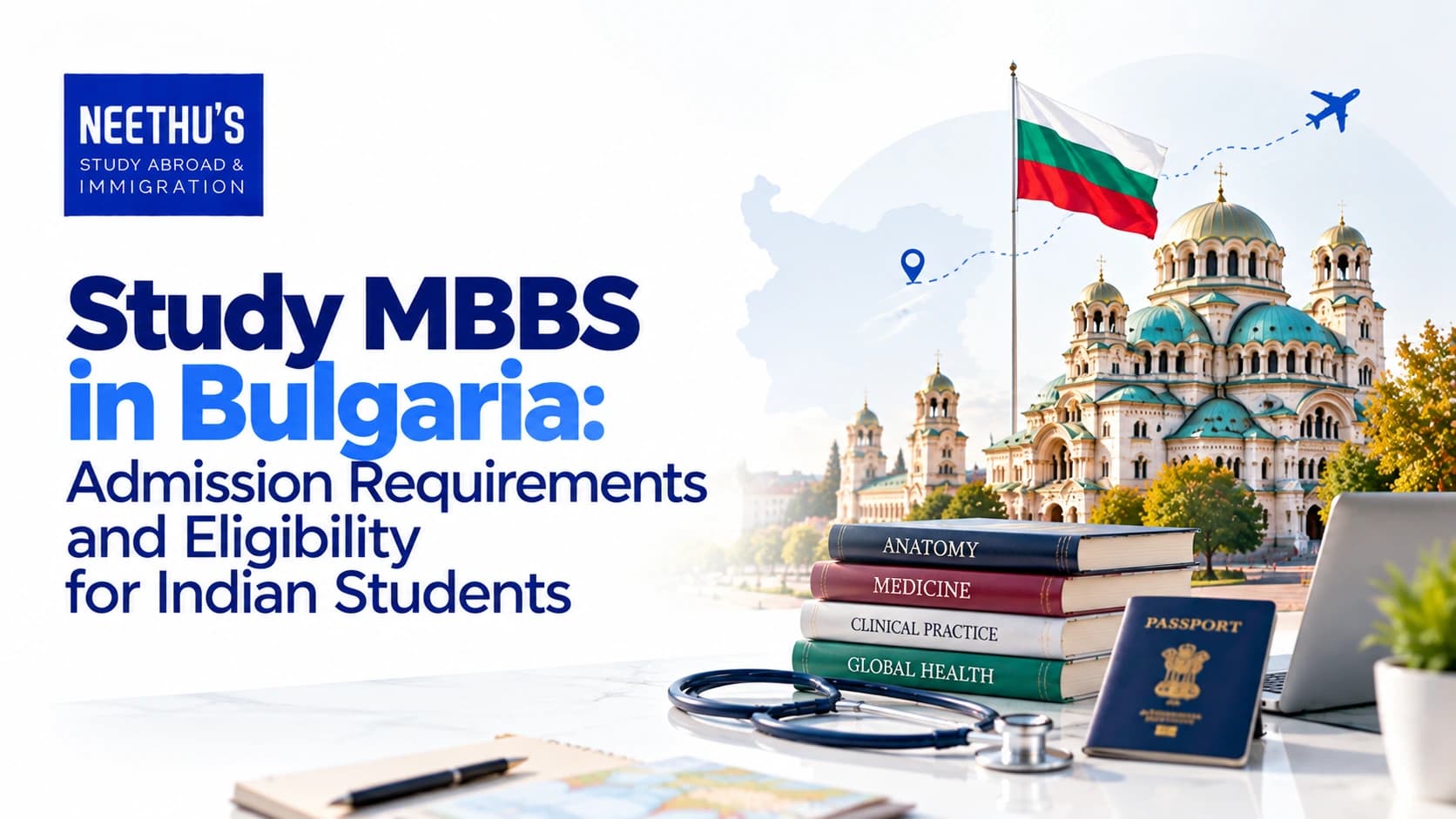
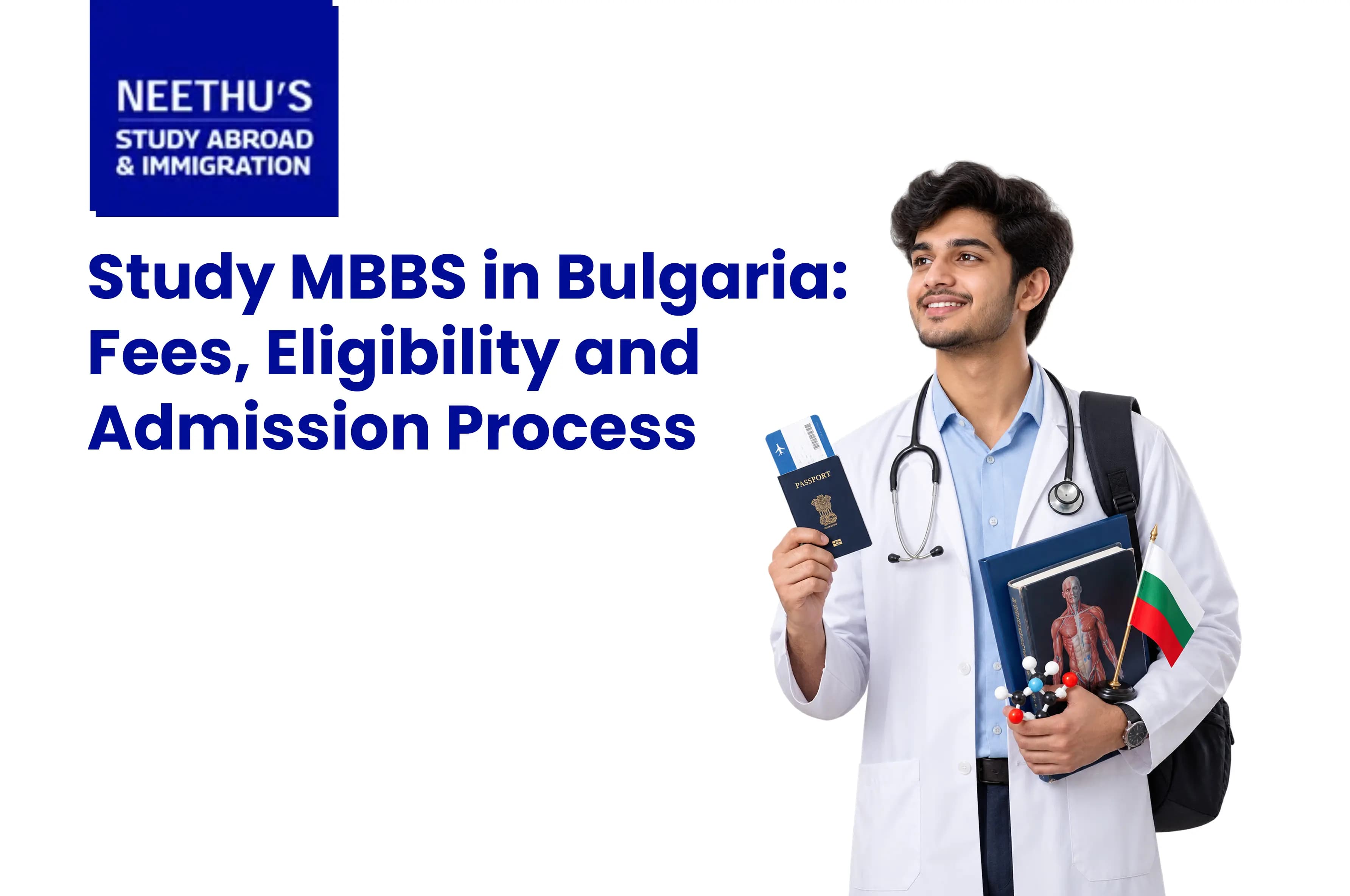
Choosing the right country for higher education involves considering university recognition, course availability, tuition fees, admission conditions, and future career opportunities. Bulgaria has become an option worth exploring for Indian students because it offers a range of undergraduate and postgraduate programmes, internationally structured degrees, and opportunities to study in English.
Located in Southeast Europe, Bulgaria is a member of the European Union and follows the European Higher Education framework. Students can explore programmes in medicine, engineering, business administration, information technology, pharmacy, and other academic fields. However, applying to a Bulgarian university requires careful preparation, particularly when it comes to educational document recognition and visa procedures.
If you are planning to Study in Bulgaria, understanding the admission process in advance can help you avoid unnecessary delays. This guide explains how Indian students can select universities, prepare their applications, meet eligibility conditions, and complete the necessary formalities before travelling.
The first step is to identify a university and programme that match your academic background and career plans. Bulgaria has several public and private higher education institutions offering undergraduate, postgraduate, and doctoral programmes.
Some universities Indian students can research include:
Sofia University: Offers programmes across science, humanities, economics, and other disciplines.
Medical University of Sofia: Provides medical and healthcare-related education.
Medical University of Varna: Offers programmes in medicine, dentistry, and pharmacy.
New Bulgarian University: Provides courses in business, arts, technology, and social sciences.
American University in Bulgaria: Offers undergraduate programmes in several academic disciplines.
Technical University of Sofia: Focuses on engineering, technology, and technical education.
Before selecting an institution, check whether the university is accredited and whether the particular programme is available to international applicants. Also verify the language of instruction, annual tuition fees, entrance examinations, and application deadlines.
The Embassy of India in Sofia provides a list of Bulgarian universities and useful information for Indian students. Applicants should verify the latest details directly with their chosen institutions.
Admission conditions depend on the university, programme, and level of education. Students applying for bachelor's degrees generally need to complete their higher secondary education, while master's applicants must hold an appropriate undergraduate qualification.
The Bulgaria admission requirements for Indians generally include the following:
For undergraduate programmes:
Completion of Class 12 or an equivalent qualification.
Academic transcripts showing subject-wise marks.
Meeting the university's minimum academic requirements.
Proof of eligibility for higher education, where requested.
English or Bulgarian language proficiency, depending on the course.
For postgraduate programmes:
A recognised bachelor's degree in a relevant discipline.
Academic transcripts and graduation certificates.
Proof of language proficiency.
Additional entrance tests, interviews, or subject-specific qualifications when required.
Students applying for medicine, dentistry, or pharmacy may need to meet additional subject requirements, particularly in biology and chemistry. Some institutions also conduct entrance examinations.
For example, Medical University of Varna publishes specific academic and admission conditions for non-EU applicants. Indian students applying to medical programmes should also check whether an eligibility certificate from India's National Testing Agency is required for their particular course.
Document preparation is an important part of the admission process. Bulgarian universities may require educational certificates to be authenticated, translated into Bulgarian, and recognised by the relevant authorities.
The Bulgaria university application documents commonly include:
Completed university application form.
Class 10 and Class 12 certificates, where applicable.
Academic transcripts showing subject-wise grades.
Bachelor's degree certificate and transcripts for master's applicants.
Valid passport copy.
Recent passport-size photographs.
English or Bulgarian language proficiency certificate, if required.
Medical certificate, where requested.
Eligibility certificate confirming the right to pursue higher education in the home country, if required.
Other declarations or supporting documents specified by the university.
Educational documents issued in India may need apostille or other applicable legalisation, followed by an official Bulgarian translation. The exact procedure depends on the university and the type of document.
Another important requirement is the recognition of previous education. The National Centre for Information and Documentation (NACID) in Bulgaria handles recognition procedures for foreign educational qualifications.
Some universities require a recognition certificate showing that the student's previous qualification is equivalent to the relevant Bulgarian educational standard. Therefore, applicants should contact the university's admission office before starting the process.
Once you have selected a programme and prepared the necessary paperwork, the next step is submitting your application.
Unlike countries that use a single national university admission portal, Bulgarian institutions generally manage their own international admission procedures. Students must follow the application instructions published by their chosen universities.
The usual application process involves:
Visiting the official university website.
Selecting the intended programme.
Downloading or completing the application form.
Uploading or submitting the required documents.
Paying the application fee, if applicable.
Sending additional documents when requested by the admission office.
Some universities accept online applications, while others may require original or certified paper documents. Always check the submission method and deadline before sending your application.
It is advisable to apply early because educational recognition, document authentication, and admission processing can take several weeks.
Certain Bulgarian universities require international applicants to complete entrance examinations or interviews before receiving admission confirmation.
This is particularly relevant for competitive courses such as medicine, dentistry, and pharmacy.
Depending on the programme, the assessment may include:
Biology and chemistry examinations.
English language assessments.
Subject-specific aptitude tests.
Online or in-person interviews.
For programmes taught in English, universities may request an internationally recognised language certificate. Some institutions provide their own English assessment for applicants who do not hold an accepted certificate.
Check the examination syllabus and assessment format on the official university website. Preparing in advance can help you understand the expected academic level and perform confidently.
After reviewing your application, the university will inform you whether you have been accepted. Successful applicants generally receive an admission letter or other official confirmation.
However, admission confirmation may not be the final document required for immigration purposes.
For non-EU students, Bulgarian authorities require additional documentation to support the student visa application. The university normally coordinates the necessary education-related approval process with the Bulgarian Ministry of Education and Science.
Before proceeding, check the following:
Whether your admission has been officially confirmed.
Whether the university has received all required documents.
Whether the necessary ministry approval has been issued.
Whether tuition deposits or other payments are outstanding.
Whether you have received the documents needed for your visa application.
Keep copies of all admission-related communication and payment receipts.
Indian citizens travelling to Bulgaria for long-term higher education generally need a Type D long-stay visa.
After receiving the required admission and ministry documents, students can begin their visa application through the Bulgarian diplomatic mission or the designated visa application process in India.
The visa application may require:
Completed visa application form.
Valid passport.
University admission confirmation.
Relevant approval from the Bulgarian Ministry of Education and Science.
Proof of accommodation in Bulgaria.
Evidence of sufficient financial resources.
Valid medical or health insurance.
Medical certificate.
Police clearance or criminal record certificate, where required.
Recent passport-size photographs.
Applicants should verify the latest checklist, appointment arrangements, fees, and submission requirements through the official Bulgarian visa application information for India.
After reaching Bulgaria, international students must also complete the applicable residence permit and address registration procedures. A student visa alone does not replace the residence permit requirement for a long-term stay.
Financial planning is another important consideration when applying to Bulgarian universities. Tuition fees depend on the institution, course, and language of instruction.
According to the European Education Area's country profile, general annual tuition ranges are approximately €562–€5,360 for bachelor's programmes and €1,945–€5,360 for master's programmes. Actual fees can differ considerably, particularly for medical programmes.
Students should also budget for:
University accommodation or private rent.
Food and groceries.
Local transportation.
Health insurance.
Study materials.
Visa and residence permit expenses.
Personal and emergency expenses.
The estimated monthly living cost is around €500–€900, depending on the city and lifestyle. Preparing a realistic budget before departure can help students manage their finances more effectively.
Once your visa is approved, you can begin preparing for your journey.
Before leaving India, make sure you have:
A valid passport and student visa.
University admission documents.
Accommodation confirmation.
Copies of educational certificates.
Health insurance documents.
Sufficient funds for initial expenses.
Flight tickets and travel arrangements.
Important university contact information.
Indian students should also complete the registration recommended by the Embassy of India in Sofia through its student registration facility and the MADAD portal.
After arrival, follow the university's enrolment instructions and complete the required immigration formalities within the applicable deadlines.
Applying to an overseas university involves several stages, from selecting the right course to completing document recognition and visa procedures. Students who are unfamiliar with Bulgarian admission systems may find it challenging to coordinate these requirements independently.
Consulting the Best study abroad consultants in kerala can help applicants understand university options, eligibility conditions, document preparation, and application timelines. However, students should always verify admission offers, university recognition, tuition payments, and visa information through official sources.
Avoid relying entirely on third-party promises. Contact the university directly whenever you need clarification about admission or immigration requirements.
Applying to a Bulgarian university requires proper planning, accurate documentation, and an understanding of the country's higher education and immigration procedures. Indian students should begin by selecting an appropriate programme, checking academic eligibility, preparing educational certificates, and completing the university's application process.
For students planning to Study in Bulgaria, starting early is particularly important because document recognition, university approval, and Type D visa processing can take additional time. By following the correct procedures and confirming requirements directly with the relevant authorities, applicants can make their transition to Bulgarian higher education more organised and manageable.
1. Why should Indian students choose Bulgaria for higher education?
Bulgaria offers a variety of undergraduate and postgraduate programmes, internationally structured degrees, English-taught courses, and opportunities to study subjects such as medicine, engineering, business, and information technology.
2. What are the basic eligibility requirements for Indian students to study in Bulgaria?
Students applying for bachelor's programmes generally need to complete Class 12, while postgraduate applicants must hold a recognised bachelor's degree. Additional academic and language requirements depend on the university and course.
3. Which documents are required for Bulgarian university admission?
Commonly required documents include academic certificates, transcripts, a valid passport, photographs, an application form, language proficiency evidence, and a medical certificate where applicable.
4. Do Bulgarian universities offer English-taught programmes?
Yes. Several Bulgarian universities offer programmes in English, particularly in medicine, dentistry, pharmacy, engineering, business, and other disciplines.
5. How can Indian students apply to Bulgarian universities?
Students should select a recognised university, check its eligibility criteria, prepare the required documents, submit an application, complete entrance examinations if necessary, and obtain admission confirmation.
6. Is an entrance examination required for admission to Bulgarian universities?
Entrance examinations depend on the university and programme. Medical, dental, and pharmacy courses may require subject-specific examinations in biology and chemistry.
7. Do Indian students need a visa to study in Bulgaria?
Yes. Indian students generally require a Type D long-stay visa for higher education in Bulgaria. They must also complete the applicable residence permit formalities after arrival.
8. How much does it cost to study at a Bulgarian university?
Tuition fees vary according to the university and programme. General annual fees may range from approximately €562 to €5,360 for bachelor's programmes and €1,945 to €5,360 for master's programmes, while medical courses may cost more.
9. Do Indian educational certificates need to be translated or legalised for Bulgarian university admission?
Yes, depending on the university's requirements. Educational documents may need authentication or apostille, official Bulgarian translation, and recognition by the relevant Bulgarian authorities.
10. Can study abroad consultants in Kerala help with Bulgarian university applications?
Yes. Experienced study abroad consultants can assist with university selection, eligibility checks, document preparation, application submission, and visa guidance. Students should independently verify university recognition and admission details before making payments.