Preparing your study abroad journey…
Preparing your study abroad journey…
New Zealand has become a popular destination for international students seeking recognised qualifications, practical learning experiences and opportunities to gain overseas work experience. For those planning to study in New Zealand, post-study employment opportunities are an important factor when selecting a course. The available Post-study work visa options depend on the qualification, study duration and immigration rules in effect.
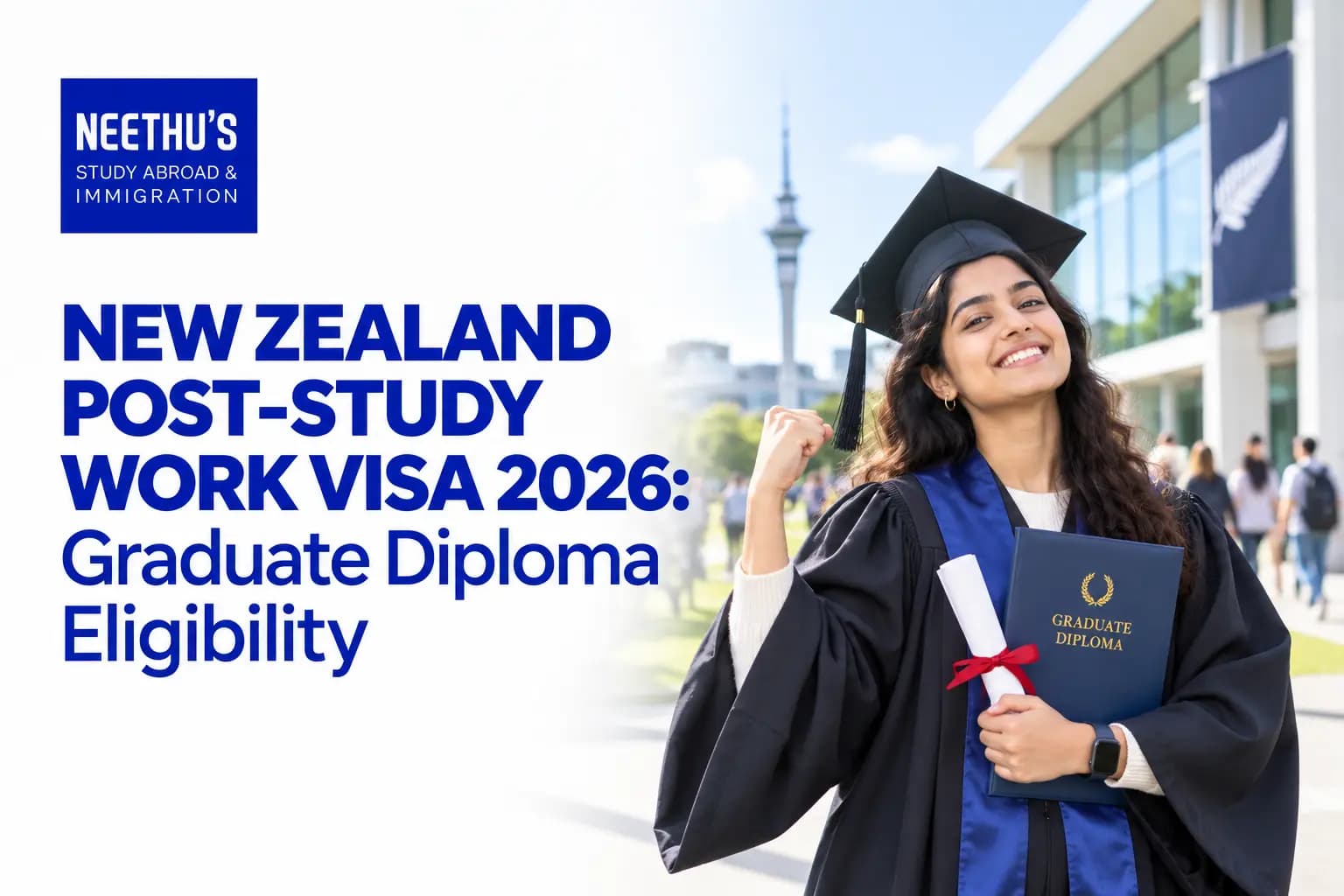
A significant immigration update takes effect on 16 November 2026. Under the new rules, eligible international students who complete a Level 7 Graduate Diploma in New Zealand and hold a bachelor's degree may qualify for a Post-Study Work Visa. This development is particularly relevant to study abroad for Indian students who want to combine international education with valuable work experience after graduation.
Until this change, a Level 7 Graduate Diploma did not automatically provide post-study work eligibility. Graduates without a bachelor’s degree generally had to check whether their exact qualification appeared on Immigration New Zealand’s eligible qualification list. If it did, their work was restricted to the occupation linked to that qualification.
From 16 November 2026, a student who completes an NZQCF Level 7 Graduate Diploma, studies full-time in New Zealand for the entire qualification and holds a bachelor’s degree can apply for a Post-Study Work Visa. The bachelor’s degree may have been awarded in New Zealand or overseas, with no time limit on when it was completed.
The student must be enrolled in the qualification and study full-time for its entire duration. Cross-crediting, transferred credits and recognition of prior learning do not count towards this new eligibility route. Check the programme structure before accepting an offer.
To use the new pathway, an applicant must generally:
Complete a Graduate Diploma classified at NZQCF Level 7.
Study full-time in New Zealand for the qualification’s full duration.
Be enrolled in the Graduate Diploma for the entire course, without relying on cross-crediting or recognition of prior learning.
Hold a bachelor’s degree from New Zealand or overseas.
Meet the visa’s health, character, genuine-intention and financial requirements.
Keep the bachelor’s degree certificate and official transcript. Immigration New Zealand says an International Qualification Assessment is not required for an overseas bachelor’s degree under this pathway, although authenticity may be checked. A Graduate Diploma certificate, transcript or completion letter will also be needed.
Students searching for “study in New Zealand” should focus on the exact qualification level and official programme details, not course advertisements promising work rights.
The visa can be granted for the time spent studying the Graduate Diploma in New Zealand, up to one year.
Eligible Graduate Diploma holders who also have a bachelor’s degree may receive open work conditions. This generally allows them to work for an employer in a role of their choice, subject to New Zealand employment law and any professional registration requirements.
The position is different for some non-degree qualifications at Level 7 or below. If a graduate does not hold a bachelor’s degree but has completed a qualification on the eligible list, the visa may restrict them to the occupation specified for that qualification. Certain construction-related Graduate Diplomas may be linked to roles such as Construction Project Manager, Project Builder or Quantity Surveyor. The exact qualification and subject focus matter; a similar-sounding course is not necessarily eligible.
A person can only be granted one Post-Study Work Visa. Completing another or higher qualification does not create an entitlement to a second one.
Students without a bachelor’s degree should not assume that every Level 7 Graduate Diploma will lead to a Post-Study Work Visa. They must check whether the specific qualification is included in Immigration New Zealand’s eligible list. If it is listed, the graduate may qualify, but work conditions will be tied to the occupation stated for that qualification.
From 16 November 2026, another route will become available: the Short-Term Graduate Work Visa. It is designed for eligible graduates who have completed a Level 5 to Level 7 qualification but do not qualify for a Post-Study Work Visa. Applicants must generally have studied full-time in New Zealand for at least 24 weeks. English-language, foundation and bridging courses are excluded. They must also show at least NZD 5,000 for living costs and meet relevant health and character requirements.
This visa provides up to six months of open work rights, allowing eligible graduates time to look for employment and, where suitable, move to another work visa. Work must be for an employer under an employment agreement or contract for services; business ownership is not permitted.
For most Post-Study Work Visa applicants, the application must be submitted no later than three months after the student visa expires. Different deadlines apply to certain doctoral graduates and some consecutive qualification situations, so check the rule for your study history. Missing the deadline can affect eligibility.
Common documents include:
A valid passport and an acceptable photograph.
Evidence that the New Zealand qualification has been completed.
Academic transcripts or a completion letter from the education provider.
The bachelor’s degree certificate and official transcript for the new Graduate Diploma pathway.
Evidence of at least NZD 5,000 in available funds.
Police certificates, medical information or chest X-ray results, if requested or required.
Applicants should check that they followed their student visa conditions and completed the qualification recorded for their study. From 16 November 2026, Post-Study Work Visa applications must be submitted online through Immigration New Zealand’s enhanced online system.
Choosing a course only because it appears to offer a work visa can lead to costly mistakes. Before paying a deposit, confirm the NZQCF level, course duration and full-time status. Students who already hold a bachelor’s degree should keep their previous qualification documents ready.
When comparing Post-study work visa options, look beyond the length of the visa. The available Post-study work visa options are not interchangeable. Consider whether the course develops skills sought by New Zealand employers, whether the occupation requires registration and whether realistic entry-level opportunities exist. A visa provides permission to work under specified conditions; it does not guarantee a job, a particular salary or permanent residence.
For families researching study abroad for Indian students, budgeting should include tuition, accommodation, transport, insurance and emergency funds. The NZD 5,000 maintenance requirement is a minimum amount for the relevant visa application, not a complete estimate of the cost of studying and living in New Zealand. Exchange rates and living expenses can change, so prepare a realistic budget.
Students may seek guidance from the Best study abroad consultants in kerala to compare institutions and organise documents. However, check eligibility against current Immigration New Zealand instructions. No consultant or education provider can guarantee visa approval.
The November 2026 update is an important development for international graduates considering a Level 7 Graduate Diploma in New Zealand. From 16 November, eligible graduates who also hold a bachelor’s degree can access a Post-Study Work Visa of up to one year, subject to full-time study and enrolment conditions. Careful course selection, accurate documents and timely application are essential. Confirm individual eligibility directly with Immigration New Zealand before making education or migration decisions.
FAQ
1. Can I get a New Zealand Post-Study Work Visa after completing a Graduate Diploma in 2026?
Yes. From 16 November 2026, students who complete an eligible Level 7 Graduate Diploma in New Zealand and hold a bachelor's degree from New Zealand or overseas may qualify for a Post-Study Work Visa.
2. Is a bachelor's degree compulsory for Graduate Diploma graduates applying for a Post-Study Work Visa?
Yes. Under the new Graduate Diploma pathway, applicants must hold a bachelor's degree in addition to completing an eligible Level 7 Graduate Diploma. Students without a bachelor's degree must check whether their qualification meets the existing eligible qualification requirements.
3. How long can I stay in New Zealand after completing a Graduate Diploma?
Eligible graduates can receive a Post-Study Work Visa for the duration of their Graduate Diploma studies, up to a maximum of one year under the new pathway.
4. Can Indian students apply for a Post-Study Work Visa after studying in New Zealand?
Yes. Indian students can apply if they complete an eligible qualification, meet the relevant study requirements and satisfy Immigration New Zealand's visa conditions. Nationality does not automatically prevent eligibility.
5. Can I work full-time on a New Zealand Post-Study Work Visa?
Yes. Eligible Post-Study Work Visa holders generally receive open work conditions, allowing them to work for an employer in most occupations, subject to applicable employment laws and professional registration requirements.
6. Can I apply for a Post-Study Work Visa if my bachelor's degree is from India?
Yes. The new Graduate Diploma pathway accepts bachelor's degrees awarded in New Zealand or overseas, including India. Applicants should provide their degree certificate and academic transcripts.
7. What is the minimum bank balance required for a New Zealand Post-Study Work Visa?
Applicants generally need to demonstrate at least NZD 5,000 in available funds to support themselves. They should also prepare for additional expenses such as accommodation, transportation and other living costs.
8. What happens if I complete a Graduate Diploma without holding a bachelor's degree?
You may still qualify for a Post-Study Work Visa if your specific qualification appears on Immigration New Zealand's eligible qualification list. However, employment may be restricted to the occupation associated with that qualification. Other eligible graduates may also consider the Short-Term Graduate Work Visa.
9. When should I apply for a New Zealand Post-Study Work Visa?
Most applicants must apply within three months after their student visa expires. Certain exceptions apply to specific categories of graduates. It is advisable to prepare the required documents before completing the course.
10. Does a New Zealand Post-Study Work Visa guarantee permanent residency?
No. A Post-Study Work Visa does not automatically lead to permanent residency. Graduates must independently meet the requirements of an appropriate residence pathway, such as the Skilled Migrant Category or another eligible immigration route.