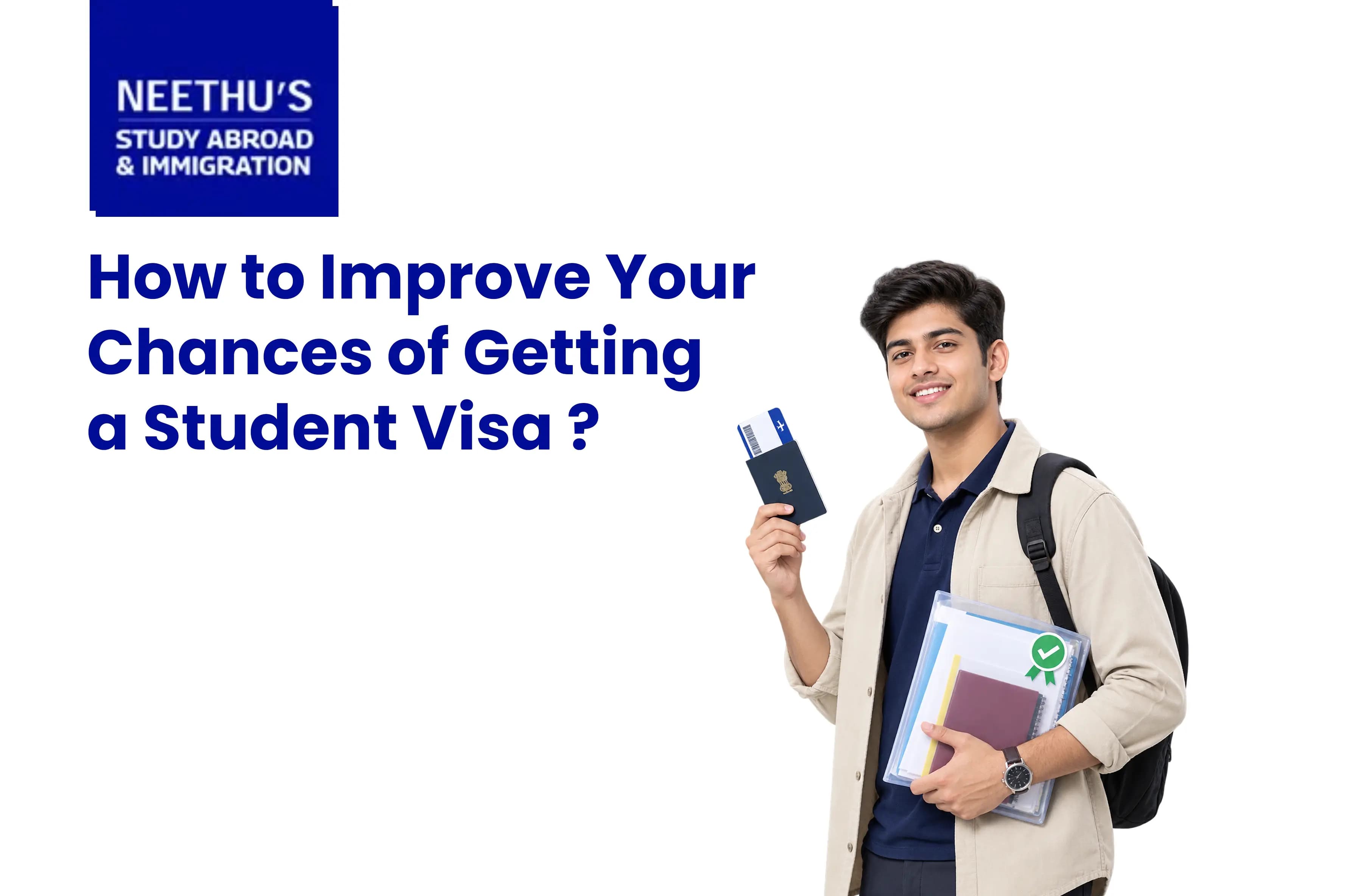
How to Improve Your Chances of Getting a Student Visa
Studying abroad can be an exciting opportunity, but getting permission to enter and study in another country is an important part of the process. A successful university admission does not automatically guarantee visa approval. Immigration authorities generally want to see that students are genuine applicants who understand their study plans, have adequate financial resources, and can meet the conditions attached to their visa.
The application process can feel complicated, particularly for first-time applicants. However, careful preparation can significantly reduce avoidable mistakes. From choosing the right course to preparing financial documents and answering interview questions confidently, every part of the application deserves attention.
Working with experienced Best Study Abroad Consultants in Kerala can also help students understand country-specific requirements and organise their applications more effectively. Still, the final decision rests with the relevant immigration authority, so applicants should make sure that all information submitted is accurate and supported by genuine documents.
Choose a Course That Matches Your Background
One of the first things immigration authorities may consider is whether your proposed course makes sense in relation to your academic and professional background.
For example, a student with an undergraduate degree in business who chooses a relevant master's programme may have a straightforward explanation for the progression. If the selected course is very different from previous studies, the applicant should be prepared to explain the reason for the change.
Before applying, consider:
-
Your previous academic qualifications
-
Your professional experience
-
The relevance of the proposed course
-
Career opportunities after graduation
-
Why the particular country is suitable for your studies
-
Why you selected the specific institution
A clear academic progression can make your study plan easier to understand.
Research the University and Programme
Knowing basic details about your chosen institution can help demonstrate that you have made an informed decision.
You should understand what your programme covers, how long it lasts, where the institution is located, and what makes it appropriate for your academic goals.
During a visa interview, you may be asked questions such as:
-
Why did you choose this course?
-
Why did you select this university?
-
Why do you want to study in this country?
-
What subjects will you study?
-
How does the programme relate to your career plans?
You do not need to memorise promotional information from the university website. Instead, understand the programme well enough to explain your decision naturally.
Prepare Your Financial Documents Carefully
Financial evidence is an important part of many student visa applications. Immigration authorities need to establish that you have sufficient funds to cover your education and living expenses according to the applicable rules.
The exact financial requirement varies by country and can change over time. Therefore, applicants should always check the current official requirements before submitting their application.
Depending on the destination, evidence may include:
-
Bank statements
-
Education loan documents
-
Scholarship letters
-
Fixed deposit records
-
Sponsor documents
-
Income evidence
-
Tuition payment receipts
-
Other approved financial evidence
Avoid submitting documents that are unclear, inconsistent or difficult to verify.
If your education is being funded by parents or another sponsor, you should be able to explain the relationship and the source of the funds where required.
Maintain Consistency Across Your Application
One of the easiest ways to create unnecessary questions is to provide information that conflicts across different documents.
Your application form, university documents, financial records and interview responses should present a consistent picture.
For example, if your application states that your parents are funding your education, your financial documentation should support that explanation. Similarly, the course details you discuss during an interview should match the programme for which you received admission.
Before submitting your application, carefully check:
-
Personal details
-
Academic dates
-
Employment history
-
Course information
-
Tuition fees
-
Financial information
-
Travel history
-
Sponsor details
Even a genuine applicant can create complications by making careless mistakes.
Write a Clear Statement of Purpose
Some destinations or institutions require a statement explaining your academic plans and motivation. This document should provide a logical explanation of your decision to study abroad.
A strong statement generally explains:
-
Your academic background.
-
Your interest in the selected field.
-
Why you chose the particular programme.
-
Why the destination is suitable for your education.
-
How the qualification fits your career plans.
Avoid making unsupported claims or copying generic statements from online examples.
Your explanation should reflect your actual circumstances. Immigration authorities may ask questions based on information included in your application, so you should understand everything you submit.
Be Honest About Your Intentions
Honesty is essential throughout the visa process. Never provide false information, altered documents or misleading explanations to improve your chances of approval.
If you have previous visa refusals, gaps in education or employment, changes in academic direction or other circumstances that require explanation, address them honestly when necessary.
Trying to hide information can create much more serious problems than explaining it clearly.
The purpose of a student visa is to allow eligible students to study under specific conditions. Applicants should understand the rules attached to their visa and demonstrate that they intend to comply with them.
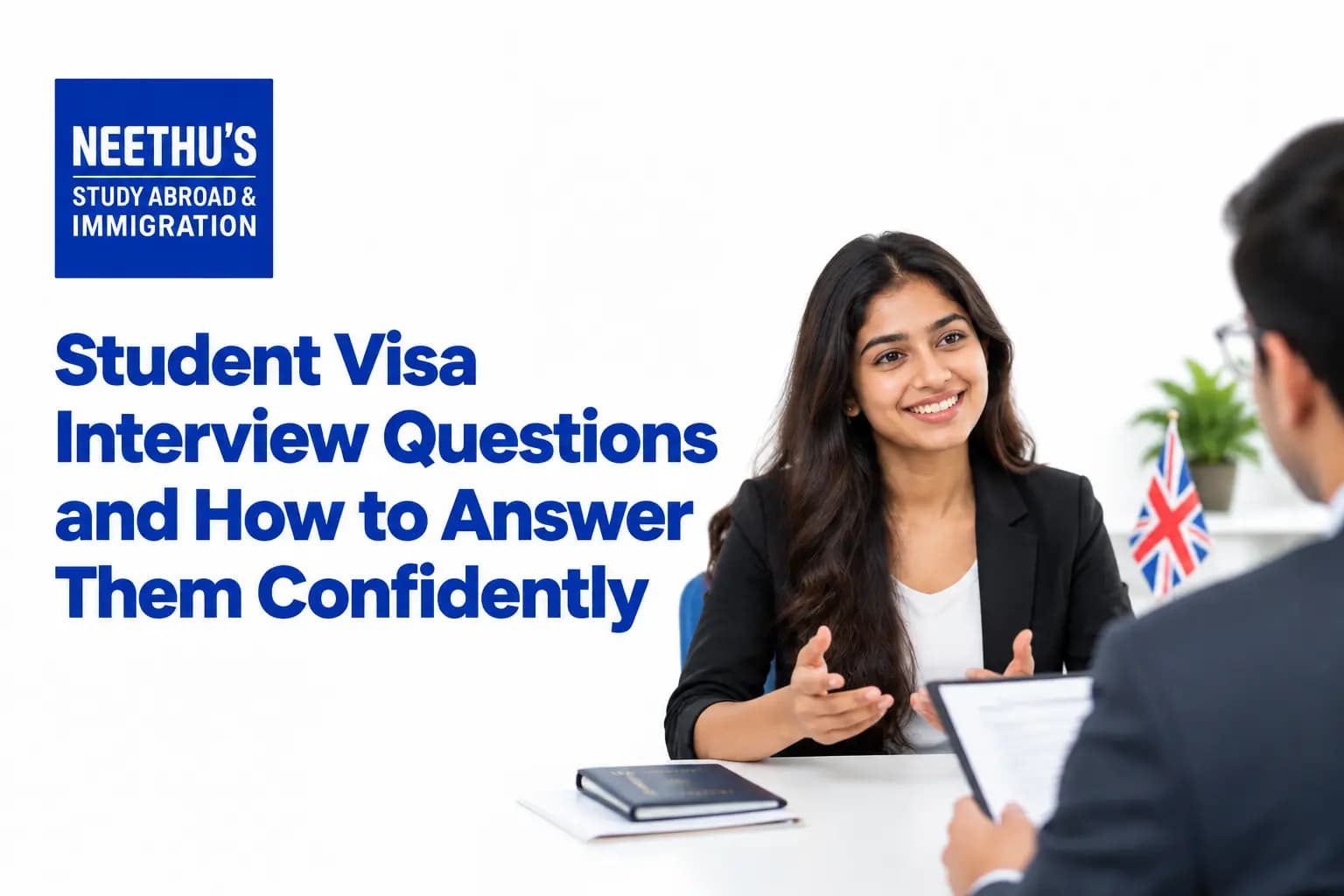
Prepare for the Visa Interview
Not every country requires a face-to-face interview, but students who are interviewed should be prepared to discuss their application confidently.
Interview preparation should focus on understanding rather than memorising scripted answers.
Common questions may involve:
-
Your academic background
-
Your chosen programme
-
Your university
-
Your financial arrangements
-
Your reasons for selecting the country
-
Your career plans
-
Your accommodation
-
Your previous international travel
-
Your plans after completing your studies
Keep your answers clear and relevant. Avoid giving unnecessarily long responses that move away from the question.
If you do not understand a question, it is better to politely ask the interviewer to repeat or clarify it than to provide an unrelated answer.
Improve Your English or Required Language Skills
Depending on the destination and programme, applicants may need to demonstrate proficiency in English or another language.
Tests such as IELTS, TOEFL or PTE may be accepted by particular universities or immigration systems, although requirements differ.
Even when a particular visa route does not require a separate language test, being comfortable communicating in English can help during interviews and while completing forms.
Students should therefore work on:
-
Speaking clearly
-
Understanding questions
-
Building relevant vocabulary
-
Improving listening skills
-
Explaining academic plans confidently
Good communication does not mean using complicated words. Clear and natural answers are generally more effective.
Organise Documents Before the Appointment
Disorganised documentation can make the application process unnecessarily stressful. Create a checklist based on the current requirements of your destination and arrange documents logically.
Your file may include items such as:
-
Valid passport
-
University admission documents
-
Visa application forms
-
Academic certificates
-
Language test results
-
Financial evidence
-
Photographs
-
Accommodation information
-
Health or insurance documents, where applicable
-
Additional supporting documents
Requirements differ considerably between countries, so do not rely on a checklist prepared for another destination or from an older application.
Keep both original documents and appropriate copies where required.
Avoid Last-Minute Applications
Starting early gives you time to correct mistakes, obtain missing documents and address unexpected delays.
Some documents can take time to arrange, particularly financial records, educational documents, language test results and official certificates.
Applying early also allows you to respond to requests for additional information without unnecessary pressure.
A practical timeline can include:
Several months before departure: Research destinations, universities and visa requirements.
After receiving admission: Review financial and visa documentation.
Before submitting the application: Check every form and supporting document carefully.
Before an interview: Practise answering likely questions naturally.
Before travelling: Review your visa conditions and required travel documents.
Seek Professional Guidance When Necessary
The visa process can involve detailed requirements, particularly when students are applying for the first time or considering a destination with complex immigration procedures.
Reputable Study Abroad Consultants in Kerala can help students understand admission and visa processes, identify missing documents, and prepare for interviews. Professional guidance can be particularly useful when there are unusual circumstances such as academic gaps, previous refusals, or changes in study direction.
However, students should choose consultants carefully. Check their experience, transparency, and communication practices. Be cautious of anyone promising guaranteed visa approval.
No consultant can legitimately guarantee that an immigration authority will approve an application.
Understand Your Visa Conditions
Getting a Student Visa is not the end of the process. Once approved, you should understand the conditions attached to it.
These may relate to:
-
Permitted work hours
-
Course attendance
-
Employment restrictions
-
Health insurance
-
Address reporting
-
Visa duration
-
Travel outside the country
-
Extending or changing your immigration status
Breaking visa conditions can affect your current stay and future immigration applications.
Before travelling, read the information provided by the relevant immigration authority and your visa approval documents.
Common Mistakes That Can Affect an Application
Several avoidable mistakes can create problems during the visa process.
Submitting incomplete documents: Missing paperwork may delay processing or lead to additional requests.
Providing inconsistent information: Differences between forms, documents and interview answers can raise questions.
Using false documents: This can have serious immigration consequences.
Choosing a course without research: Being unable to explain your study choice may weaken your application.
Ignoring financial requirements: Applicants should demonstrate funds according to the current rules.
Memorising interview answers: Scripted responses may sound unnatural and make it difficult to handle follow-up questions.
Waiting until the last minute: Delays can create unnecessary pressure and potentially affect travel plans.
Final Thoughts
Improving your chances of receiving a Student Visa begins with preparation rather than shortcuts. Choose a programme that genuinely fits your academic and career plans, understand your university and destination, prepare accurate financial evidence and make sure every document tells a consistent story.
You should also prepare for possible interviews and understand the immigration conditions that will apply after arrival. If you need assistance, professional guidance from Best Abroad Education Consultants in Kerala may help you navigate the process more systematically.
Most importantly, remember that visa approval is determined by the relevant immigration authority. A well-prepared application cannot guarantee approval, but accurate documentation, genuine intentions, financial readiness and a clear study plan can help you present your case effectively.
Frequently Asked Questions
1. What is the most important factor in a student visa application?
There is no single factor that guarantees approval. Applicants generally need to meet the applicable requirements relating to admission, finances, documentation, genuine study plans, and other immigration conditions.
2. Can a study abroad consultant guarantee visa approval?
No. Consultants can provide guidance and assistance, but the final decision is made by the relevant immigration authority. Anyone promising guaranteed approval should be approached cautiously.
3. How early should I start preparing my visa application?
Starting as soon as you receive your admission documents is advisable. The exact timeline depends on the destination and processing requirements.
4. Can an education gap affect my visa application?
An education gap does not automatically mean rejection. However, you should be prepared to explain the gap accurately and provide supporting information when required.
5. How important are financial documents?
Financial evidence can be an important part of many applications. Students should demonstrate funds according to the current requirements of their destination and provide genuine, verifiable documentation.
6. Should I memorise answers for my visa interview?
It is better to understand your application and practise explaining your plans naturally. Memorised responses can make conversations difficult when the interviewer asks unexpected follow-up questions.
7. Can I change my course after receiving a student visa?
Rules concerning course changes vary by destination. Students should check the applicable immigration and university requirements before making any changes.
8. What happens if my student visa is refused?
The appropriate next step depends on the reason for refusal and the rules of the destination country. Carefully review the refusal notice before deciding whether to reapply or pursue another available option.
9. Do I need to show proof of accommodation?
Some visa applications may require accommodation details or evidence, while others may not. Check the current document requirements for your specific destination.
10. Can a strong university admission guarantee a student visa?
No. University admission and visa approval are separate decisions. Students must independently satisfy the immigration requirements of the country where they plan to study.


























































_03-12-2025_01-17-26%20PM.webp&w=3840&q=75)
_02-12-2025_03-07-49%20PM.webp&w=3840&q=75)

_27-11-2025_04-06-24%20PM.webp&w=3840&q=75)
_25-11-2025_04-38-18%20PM.webp&w=3840&q=75)
_24-11-2025_03-20-26%20PM.webp&w=3840&q=75)
_22-11-2025_12-44-47%20PM.webp&w=3840&q=75)
_21-11-2025_04-17-47%20PM.webp&w=3840&q=75)
_20-11-2025_03-55-26%20PM.webp&w=3840&q=75)
_18-11-2025_04-00-40%20PM.webp&w=3840&q=75)
_15-11-2025_10-48-43%20AM.webp&w=3840&q=75)
%20(1)_14-11-2025_03-52-25%20PM.webp&w=3840&q=75)
_13-11-2025_03-02-38%20PM.webp&w=3840&q=75)
_08-11-2025_04-15-36%20PM.webp&w=3840&q=75)
_05-11-2025_04-01-50%20PM.webp&w=3840&q=75)
_05-11-2025_03-46-26%20PM.webp&w=3840&q=75)
_03-11-2025_03-31-09%20PM.webp&w=3840&q=75)
_04-11-2025_.webp&w=3840&q=75)
_04-11-2025_.webp&w=3840&q=75)
_28-10-2025_04-09-08%20PM.webp&w=3840&q=75)
_24-10-2025_05-10-31%20PM.webp&w=3840&q=75)
_24-10-2025_04-55-51%20PM.webp&w=3840&q=75)
_22-10-2025_04-40-20%20PM.webp&w=3840&q=75)
%20(1)_21-10-2025_03-05-46%20PM.webp&w=3840&q=75)
_21-10-2025_02-43-15%20PM.webp&w=3840&q=75)
_17-10-2025_05-08-52%20PM.webp&w=3840&q=75)
_17-10-2025_04-54-54%20PM.webp&w=3840&q=75)
_15-10-2025_03-46-47%20PM.webp&w=3840&q=75)
_14-10-2025_03-42-40%20PM.webp&w=3840&q=75)
_14-10-2025_03-29-48%20PM.webp&w=3840&q=75)
_13-10-2025_03-48-51%20PM.webp&w=3840&q=75)
_11-10-2025_04-28-42%20PM.webp&w=3840&q=75)
%20(1)_09-10-2025_04-12-08%20PM.webp&w=3840&q=75)

_07-10-2025_02-55-25%20PM.webp&w=3840&q=75)
_07-10-2025_02-39-51%20PM.webp&w=3840&q=75)
_06-10-2025_03-42-37%20PM.webp&w=3840&q=75)
_03-10-2025_04-42-59%20PM.webp&w=3840&q=75)
_01-10-2025_11-12-12%20AM.webp&w=3840&q=75)
%20(1)_29-09-2025_02-54-12%20PM.webp&w=3840&q=75)
_26-09-2025_12-14-18%20PM.webp&w=3840&q=75)
_24-09-2025_04-44-26%20PM.webp&w=3840&q=75)
_23-09-2025_04-14-36%20PM.webp&w=3840&q=75)
_22-09-2025_04-08-09%20PM.webp&w=3840&q=75)
_20-09-2025_03-26-03%20PM.webp&w=3840&q=75)
_17-09-2025_04-06-42%20PM.webp&w=3840&q=75)
_15-09-2025_04-43-43%20PM.webp&w=3840&q=75)
_13-09-2025_12-17-49%20PM.webp&w=3840&q=75)
_12-09-2025_04-31-36%20PM.webp&w=3840&q=75)
_12-09-2025_04-17-03%20PM.webp&w=3840&q=75)
_10-09-2025_03-59-59%20PM.webp&w=3840&q=75)
_09-09-2025_04-11-16%20PM.webp&w=3840&q=75)
_09-09-2025_03-53-52%20PM.webp&w=3840&q=75)






















_12-06-2025_03-40-35%20PM.webp&w=3840&q=75)