After MBBS from Kyrgyzstan: What Indian Students Should Do Next
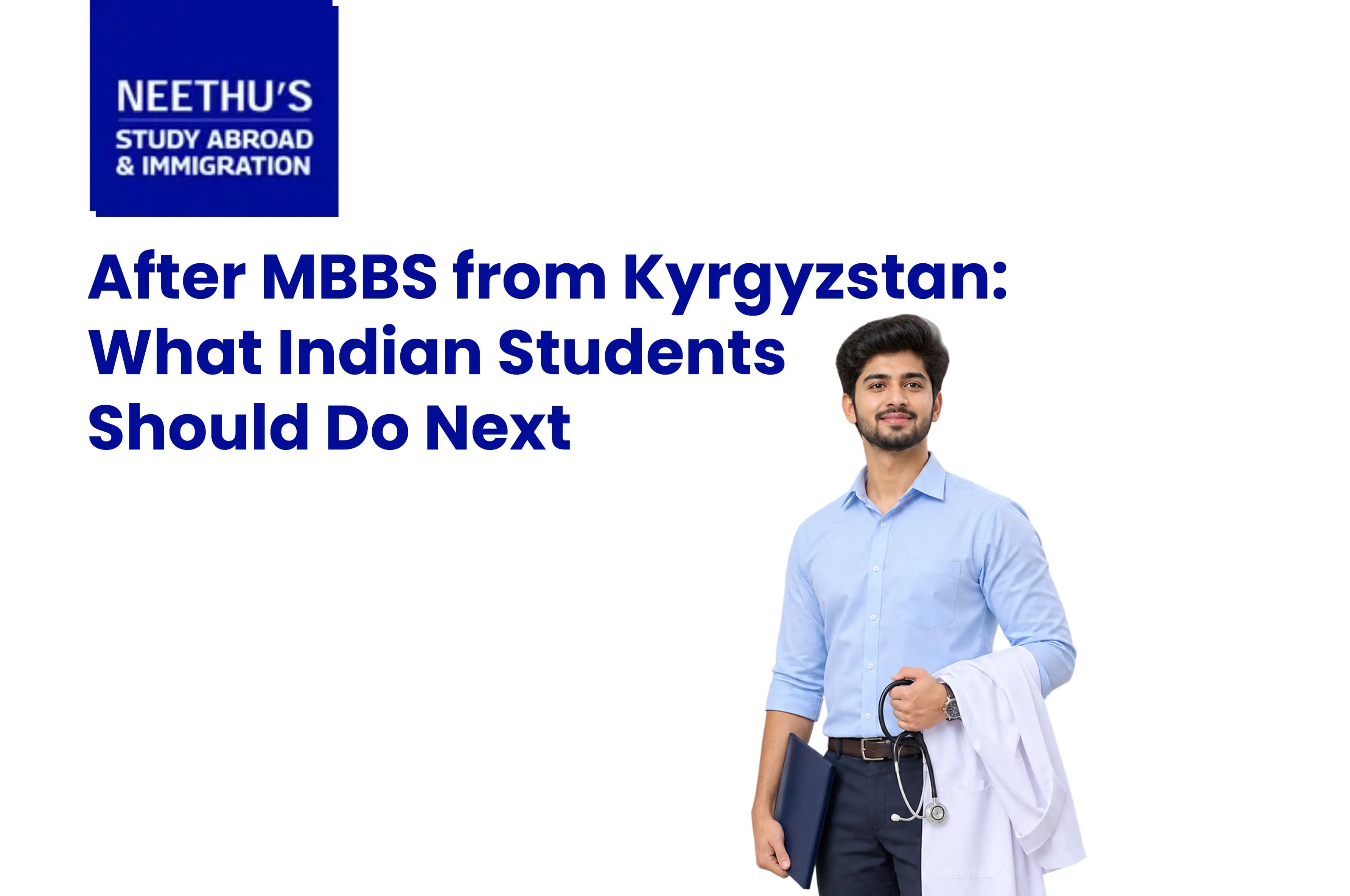
Completing a medical degree abroad is a major achievement, but graduation is only the beginning of a medical career. For Indian students who have completed their medical education in Kyrgyzstan, the next stage involves understanding the applicable Indian regulations, completing the required licensing process, and deciding whether to pursue clinical practice, postgraduate education, or opportunities abroad.
Kyrgyzstan has become a popular destination among Indian students because of its relatively affordable medical education, English-medium programmes and established medical institutions. However, students should remember that completing a medical degree overseas does not automatically grant the right to practise medicine in India.
If you are wondering what to do After MBBS from Kyrgyzstan, the most important step is to understand the regulatory pathway applicable to your admission and graduation batch. Requirements can change, so graduates should always verify the latest information from the National Medical Commission (NMC), National Board of Examinations in Medical Sciences (NBEMS), and other relevant authorities.
1. Collect All Your Academic Documents
The first step after graduation is to organise every document received from the university.
Important documents may include your medical degree certificate, academic transcripts, internship or clinical training certificates, passport, identity documents, and other university records.
Students should request any pending certificates before leaving Kyrgyzstan. It is also advisable to keep both physical and secure digital copies of important documents.
These records may later be required for examination applications, verification, internship, registration, postgraduate admissions, or employment.
2. Check Your Eligibility Under Current NMC Rules
Foreign medical graduates must meet the applicable requirements before they can obtain registration to practise medicine in India.
The National Medical Commission regulates medical education and the registration of medical practitioners in India. Requirements relating to foreign medical graduates can depend on factors such as the student's admission year, duration and structure of the medical course, clinical training and other prescribed conditions.
Therefore, students should not rely solely on information provided by friends, social media groups, or older graduates.
A student who completed the course under one set of regulations may have different requirements from someone who enrolled several years later. Checking the rules applicable to your own batch is essential.
3. Understand the Licensing Examination Pathway
One of the most important considerations for a foreign medical graduate is the examination required for medical registration in India.
The regulatory framework for medical licensing has been changing, including the planned implementation of the National Exit Test (NExT). Students should check the latest announcements from the NMC and NBEMS to determine which examination and eligibility requirements apply to their batch.
Graduates should begin preparing systematically rather than waiting until all other formalities are complete.
A strong preparation strategy should include revision of major medical subjects, clinical concepts, previous examination-style questions, and regular self-assessment.
4. Focus on Clinical Knowledge
Passing a licensing examination is important, but becoming a competent doctor requires more than examination preparation.
Graduates should use their internship and subsequent clinical opportunities to strengthen practical skills. These can include patient history-taking, physical examination, diagnosis, treatment planning, communication, and emergency management.
Clinical exposure is particularly important for students who intend to work in hospitals after obtaining registration.
Learning from experienced doctors can also help graduates understand how theoretical medical knowledge is applied to real patients.
5. Complete the Required Internship or Training
Internship criteria are a key step in the process for students who have completed their medical education abroad.
Students should understand whether their overseas clinical training meets the applicable requirements and whether any additional internship or supervised training in India is necessary.
The requirements can depend on the rules applicable to the student's batch and individual circumstances. Graduates should therefore confirm the current requirements with the appropriate regulatory authority before making arrangements.
All internship and clinical training records should be carefully preserved because they may be required during verification and registration.
6. Apply for Medical Registration
After meeting the applicable examination and internship requirements, graduates need to follow the appropriate registration process before practising medicine independently.
The registration process can involve verification of educational qualifications, examination results, internship records, and other supporting documents.
India's medical registration framework has been evolving, so graduates should follow the latest instructions issued by the NMC and the relevant State Medical Council or other authorised registration body.
Students should avoid beginning independent medical practice before obtaining the registration required under Indian law.
7. Prepare for Postgraduate Medical Education
Many graduates want to specialise after completing their medical degree.
Depending on the applicable rules and eligibility requirements, foreign medical graduates may pursue postgraduate medical education in India through the relevant entrance pathway.
Popular specialisations include:
-
General Medicine
-
General Surgery
-
Paediatrics
-
Orthopaedics
-
Obstetrics and Gynaecology
-
Dermatology
-
Radiology
-
Anaesthesiology
-
Psychiatry
-
Ophthalmology
Students should check the latest eligibility criteria and entrance examination requirements before applying.
Postgraduate education can provide an opportunity to develop specialised clinical expertise and improve long-term career prospects.
8. Consider Working as a Doctor in India
Not every graduate immediately wants to pursue postgraduate education. Some may prefer to gain professional experience first.
After completing the necessary licensing, registration and other requirements, graduates can explore suitable positions in hospitals, clinics and healthcare organisations.
Early professional experience can help new doctors develop confidence, communication skills and practical clinical judgement.
Students should ensure that the employer and position comply with applicable professional registration and employment requirements.
9. Explore Medical Licensing Abroad
Graduating from a Kyrgyz medical university does not limit a student to India. Some graduates may eventually consider practising in another country.
However, every country has its own medical licensing system.
For example, students interested in the United Kingdom need to meet the requirements of the General Medical Council, while those planning to work in the United States need to follow the applicable US medical licensing pathway.
Other countries also have their own examinations, credential verification procedures and registration requirements.
Therefore, students should research the regulator of their intended destination well before making career plans.
10. Keep Your Professional Documents Updated
Foreign medical graduates should maintain an organised professional file throughout their careers.
This can include:
-
Medical degree certificate
-
Academic transcripts
-
Internship certificate
-
Clinical training records
-
Examination results
-
Medical registration certificate
-
Identity documents
-
Employment records
-
Postgraduate certificates
-
Other professional qualifications
Keeping these documents organised can make future applications much easier.
Digital backups should also be maintained securely so that important records are available when required.
11. Avoid Depending on Unofficial Information
One of the biggest mistakes graduates can make is following outdated information.
Medical education and licensing regulations can change. Advice that was correct for a graduate several years ago may no longer apply to a newer batch.
Students should therefore verify important information directly through official regulatory sources.
This is particularly important when dealing with claims about university recognition, licensing examinations, internship eligibility, registration, and postgraduate admissions.
Students should also be cautious about agencies or individuals promising guaranteed licensing, guaranteed examination results, or guaranteed employment.
Is MBBS in Kyrgyzstan a Good Choice for Indian Students?
Students researching MBBS in Kyrgyzstan for Indian students should evaluate much more than the advertised tuition fee.
Before choosing a university, students should investigate its recognition status, curriculum, clinical training, hospital exposure, teaching medium, facilities, accommodation, and compliance with the requirements applicable to Indian medical graduates.
The overall cost should also include accommodation, food, travel, insurance, study materials, examination preparation, and other personal expenses.
Most importantly, students should understand the pathway they will need to follow after graduation.
A university that appears affordable at the admission stage may not necessarily be the best choice if students do not carefully evaluate the academic and regulatory requirements associated with their plans.
Financial Planning After Graduation
Graduates should prepare financially for the period after medical school.
Expenses may include examination preparation, travel, document verification, internship-related costs, registration charges, accommodation, and other professional expenses.
Students who plan to prepare for a licensing examination full-time may need financial support for several months after graduation.
Creating a realistic budget before completing the degree can help graduates manage this transition without unnecessary financial pressure.
What Should Indian Students Do Immediately After Graduation?
A simple approach is to follow these steps:
Step 1: Collect your degree, transcripts, and clinical training documents.
Step 2: Check the latest NMC rules applicable to your admission and graduation batch.
Step 3: Identify the examination and licensing pathway relevant to you.
Step 4: Prepare systematically for the applicable examination.
Step 5: Confirm internship and clinical training requirements.
Step 6: Complete the required registration process.
Step 7: Decide whether to work, pursue postgraduate education or explore opportunities abroad.
Step 8: Continue developing your clinical and professional skills.
Following a structured process can make the transition from medical student to practising doctor easier and more organised.
Conclusion
Graduating from a medical university in Kyrgyzstan is an important milestone, but Indian students need to plan carefully for what comes next. After completing MBBS from Kyrgyzstan, graduates should focus on understanding the applicable NMC requirements, completing the relevant examination and internship requirements, obtaining medical registration, and deciding on their preferred career path.
Some graduates may choose to work in India, while others may prepare for postgraduate education or explore medical licensing opportunities in other countries.
For students considering MBBS in Kyrgyzstan for Indian students, the decision should not be based on tuition fees alone. University selection, clinical exposure, recognition, regulatory requirements, and long-term career plans should all be considered before admission.
With proper preparation, organised documentation and accurate information from official authorities, graduates can approach the next stage of their medical careers with greater confidence. Support from Neethus Study Abroad can also help prospective students understand their study-abroad choices and plan their education journey more effectively.
FAQs
1. What should Indian students do after completing MBBS in Kyrgyzstan?
After graduation, students should collect their academic and clinical training documents, check the latest NMC requirements applicable to their batch, understand the relevant licensing examination pathway, complete any required internship or training, and follow the medical registration process in India.
2. Can I practise medicine in India after completing MBBS in Kyrgyzstan?
A foreign medical graduate cannot automatically practise medicine in India after graduation. They must meet the applicable NMC requirements and complete the required examination, internship, and registration procedures before practising independently.
3. Is a licensing examination required after completing MBBS in Kyrgyzstan?
Foreign medical graduates need to follow the licensing examination framework applicable to their batch. Students should check the latest NMC and NBEMS notifications to determine which examination and eligibility requirements apply to them.
4. Do I need to complete an internship after returning to India?
Internship and clinical training requirements depend on the regulations applicable to the student's admission and graduation batch. Graduates should verify whether their overseas training meets the requirements or whether additional supervised training in India is necessary.
5. Can I pursue postgraduate medical education in India after completing MBBS from Kyrgyzstan?
Yes, eligible foreign medical graduates can pursue postgraduate medical education in India after fulfilling the applicable licensing and eligibility requirements. They should check the current rules and entrance examination requirements before applying.
6. What documents should I collect after graduating from a Kyrgyz medical university?
Students should retain their medical degree certificate, academic transcripts, internship or clinical training certificates, passport, identity documents, examination results, and other university-issued records. Keeping secure digital copies is also recommended.
7. Can I work in another country after completing my medical degree in Kyrgyzstan?
Yes, graduates may explore medical careers in other countries, but each country has its own licensing examinations, qualification-verification procedures, and registration requirements. An MBBS degree from Kyrgyzstan does not automatically provide a licence to practise abroad.
8. Is MBBS in Kyrgyzstan for Indian students a good career option?
It can be an option for students who meet the admission requirements and carefully select an appropriate medical university. Before enrolling, students should evaluate the university, clinical exposure, applicable regulations, total expenses, and the licensing pathway they will need to follow after graduation.
9. How can I prepare for the licensing process after graduation?
Students should begin by checking the latest official requirements, organising their academic documents, and creating a structured study plan. Revising core medical subjects, strengthening clinical concepts, and using appropriate examination resources can support effective preparation.
10. How can Neethus Study Abroad help students planning medical education abroad?
Neethus Study Abroad can assist students with understanding study-abroad options, comparing suitable universities, admission procedures, and planning their education journey. Students should independently verify current medical licensing and regulatory requirements with the relevant official authorities.


































































































































_03-12-2025_01-17-26%20PM.webp&w=3840&q=75)
_02-12-2025_03-07-49%20PM.webp&w=3840&q=75)

_27-11-2025_04-06-24%20PM.webp&w=3840&q=75)
_25-11-2025_04-38-18%20PM.webp&w=3840&q=75)
_24-11-2025_03-20-26%20PM.webp&w=3840&q=75)
_22-11-2025_12-44-47%20PM.webp&w=3840&q=75)
_21-11-2025_04-17-47%20PM.webp&w=3840&q=75)
_20-11-2025_03-55-26%20PM.webp&w=3840&q=75)
_18-11-2025_04-00-40%20PM.webp&w=3840&q=75)
_15-11-2025_10-48-43%20AM.webp&w=3840&q=75)
%20(1)_14-11-2025_03-52-25%20PM.webp&w=3840&q=75)
_13-11-2025_03-02-38%20PM.webp&w=3840&q=75)
_08-11-2025_04-15-36%20PM.webp&w=3840&q=75)
_05-11-2025_04-01-50%20PM.webp&w=3840&q=75)
_05-11-2025_03-46-26%20PM.webp&w=3840&q=75)
_03-11-2025_03-31-09%20PM.webp&w=3840&q=75)
_04-11-2025_.webp&w=3840&q=75)
_04-11-2025_.webp&w=3840&q=75)
_28-10-2025_04-09-08%20PM.webp&w=3840&q=75)
_24-10-2025_05-10-31%20PM.webp&w=3840&q=75)
_24-10-2025_04-55-51%20PM.webp&w=3840&q=75)
_22-10-2025_04-40-20%20PM.webp&w=3840&q=75)
%20(1)_21-10-2025_03-05-46%20PM.webp&w=3840&q=75)
_21-10-2025_02-43-15%20PM.webp&w=3840&q=75)
_17-10-2025_05-08-52%20PM.webp&w=3840&q=75)
_17-10-2025_04-54-54%20PM.webp&w=3840&q=75)
_15-10-2025_03-46-47%20PM.webp&w=3840&q=75)
_14-10-2025_03-42-40%20PM.webp&w=3840&q=75)
_14-10-2025_03-29-48%20PM.webp&w=3840&q=75)
_13-10-2025_03-48-51%20PM.webp&w=3840&q=75)
_11-10-2025_04-28-42%20PM.webp&w=3840&q=75)
%20(1)_09-10-2025_04-12-08%20PM.webp&w=3840&q=75)
_07-10-2025_02-55-25%20PM.webp&w=3840&q=75)
_07-10-2025_02-39-51%20PM.webp&w=3840&q=75)
_06-10-2025_03-42-37%20PM.webp&w=3840&q=75)
_03-10-2025_04-42-59%20PM.webp&w=3840&q=75)
_01-10-2025_11-12-12%20AM.webp&w=3840&q=75)
%20(1)_29-09-2025_02-54-12%20PM.webp&w=3840&q=75)
_26-09-2025_12-14-18%20PM.webp&w=3840&q=75)
_24-09-2025_04-44-26%20PM.webp&w=3840&q=75)
_23-09-2025_04-14-36%20PM.webp&w=3840&q=75)
_22-09-2025_04-08-09%20PM.webp&w=3840&q=75)
_20-09-2025_03-26-03%20PM.webp&w=3840&q=75)
_17-09-2025_04-06-42%20PM.webp&w=3840&q=75)
_15-09-2025_04-43-43%20PM.webp&w=3840&q=75)
_13-09-2025_12-17-49%20PM.webp&w=3840&q=75)
_12-09-2025_04-31-36%20PM.webp&w=3840&q=75)
_12-09-2025_04-17-03%20PM.webp&w=3840&q=75)
_10-09-2025_03-59-59%20PM.webp&w=3840&q=75)
_09-09-2025_04-11-16%20PM.webp&w=3840&q=75)
_09-09-2025_03-53-52%20PM.webp&w=3840&q=75)













































_12-06-2025_03-40-35%20PM.webp&w=3840&q=75)