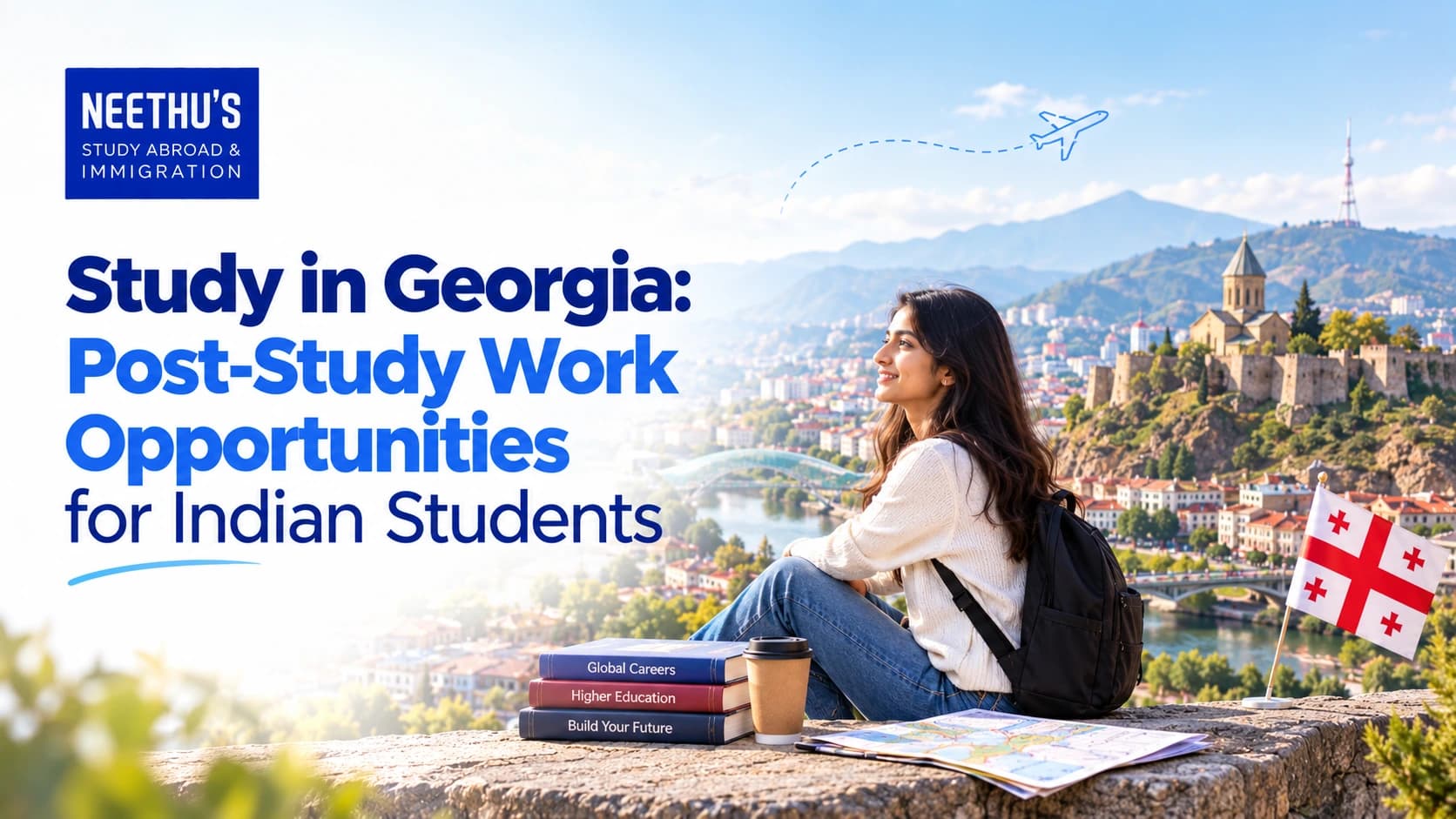
Study in Georgia: Post-Study Work Opportunities for Indian Students
Choosing an international university is an important decision for students who want to expand their knowledge and build a rewarding career. Georgia has attracted attention from Indian students interested in subjects such as medicine, business management, computer science, engineering, and hospitality. Along with gaining an overseas qualification, students often want to understand whether they can find employment in the country after completing their course.
For anyone planning to study in Georgia for Indian students, career planning should begin before university admission. Understanding the local employment landscape, language expectations, professional licensing conditions, and immigration procedures can help students make realistic decisions about their future.
This article explores potential career sectors, employment preparation, and important legal considerations for Indian graduates interested in working in Georgia.
What Makes Georgia an Option for Indian Students?
Georgia offers a variety of higher education programmes through universities and other educational institutions. Students can explore undergraduate and postgraduate courses in healthcare, business, technology, tourism, and several other disciplines.
Certain universities provide programmes in English, which can be helpful for international applicants. However, the language used in the classroom may differ from the language required in the workplace. Learning Georgian can make everyday communication easier and may improve access to certain local jobs.
Students should look beyond the course title when comparing institutions. Important considerations include the university's recognition, the quality of teaching, programme accreditation, practical training, tuition costs, and the qualification's acceptance in the country where they eventually intend to work.
Medical students, in particular, should confirm professional registration requirements before enrolling. A degree obtained overseas does not automatically grant permission to practise medicine in Georgia or India.
Can International Graduates Work in Georgia?
Completing a degree does not automatically provide an unrestricted right to work or remain in Georgia. International graduates must meet the immigration and employment conditions applicable to their circumstances.
Georgia's labour migration framework underwent important changes in 2026. Rules that came into effect on 1 March 2026 introduced additional requirements for many foreign nationals undertaking employment or self-employment. Depending on the circumstances, a graduate may need the relevant right to work and an appropriate immigration or residence status.
Holding a student residence permit should not be treated as automatic permission to accept any job after graduation. The appropriate process depends on the type of work, the individual's status, and the rules in force.
Before accepting employment, consult the Georgian State Services Development Agency and the official Georgian legislation portal. Confirm the current requirements rather than relying on older articles or informal advice.
Employment Sectors Graduates Can Explore
1. Healthcare and Medical Careers
Students graduating in medicine, dentistry, or related healthcare disciplines may investigate opportunities in clinical services, medical research, public health, healthcare administration, and associated fields.
However, healthcare is a regulated sector. Graduates may need professional registration, approved qualifications, language proficiency, and other authorisations before undertaking particular duties. Employers may also require relevant experience or additional training.
Indian students who intend to return home after graduation should check the current National Medical Commission rules applicable to foreign medical qualifications. Those hoping to practise in Georgia should confirm local professional licensing requirements and investigate whether suitable positions are available.
It is advisable to understand these conditions before choosing a medical programme, rather than waiting until graduation to discover that further requirements apply.
2. Information Technology and Software Development
Technology-related qualifications can prepare graduates to apply for positions in software development, website development, IT support, quality assurance, data analysis, and information systems.
Candidates can strengthen their applications by developing practical projects, learning relevant programming languages, and building a portfolio that demonstrates their technical abilities. Employers may also value problem-solving skills, teamwork, and the ability to communicate effectively.
Opportunities depend on the local job market and each employer's recruitment criteria. Some companies may require Georgian-language skills, while others may operate in international environments.
Remote work with overseas companies could be another avenue to investigate, but students and graduates should verify whether their proposed arrangement falls under Georgian employment, tax, and immigration rules.
3. Business, Marketing, and Financial Services
Graduates with business-related qualifications may consider careers in administration, sales, digital marketing, customer relations, business operations, and financial support.
Employers generally look for a combination of academic knowledge and practical skills. Familiarity with spreadsheets, customer relationship management systems, market research, communication, and data analysis may help candidates demonstrate their suitability for entry-level positions.
Language proficiency can influence the number of available roles. English may be sufficient for some international-facing positions, whereas other employers may expect fluency in Georgian.
Students can prepare by participating in relevant projects, developing professional communication skills, and researching companies that recruit candidates with their qualifications.
4. Tourism, Travel, and Hospitality
Georgia's tourism and hospitality sector may be relevant to students who have studied hotel management, travel services, tourism, or event coordination.
Possible positions include guest relations, hotel operations, travel assistance, event support, and customer service. Foreign-language skills can be beneficial when assisting visitors from different countries.
Nevertheless, vacancies and eligibility requirements vary by employer. Some roles may require previous experience or knowledge of Georgian. Applicants should research the job market and check the relevant work authorisation requirements before accepting a position.
Practical training and experience gained during an academic programme may help graduates demonstrate their understanding of hospitality operations.
5. Research and Advanced Studies
Not every student needs to enter full-time employment immediately after graduation. Some may prefer further education, specialised qualifications, or research-based programmes to deepen their knowledge.
A postgraduate degree can be useful when a particular career requires advanced subject knowledge. However, students should assess whether another qualification is necessary for their intended profession and whether the additional expense is justified.
Compare programme recognition, research facilities, admission criteria, and funding opportunities before applying. Students must also verify whether further study allows them to maintain or renew their lawful residence status.
Practical Ways to Improve Your Job Prospects
A university qualification is valuable, but employers may also look for practical skills, relevant experience, and the ability to adapt to a professional environment.
Indian students can improve their preparation by following these steps:
-
Learn the local language: Studying Georgian can help with daily interactions and may broaden employment options.
-
Gain relevant experience: Develop projects, participate in permitted practical training, and build experience connected to your chosen profession.
-
Prepare a professional CV: Clearly present your qualifications, technical skills, internships, achievements, and language abilities.
-
Research the market: Identify employers in your field and review the qualifications they expect from applicants.
-
Develop professional connections: Participate in university activities, career events, and networking opportunities.
-
Understand legal conditions: Confirm the required work authorisation and residence arrangements before beginning employment.
Students should not assume that freelance work, part-time employment, or self-employment is automatically allowed under their student status. The applicable conditions can differ according to the work arrangement and current legislation.
Work Permits and Residence Requirements After Graduation
Anyone considering post-study work in Georgia should establish which legal pathway applies to their intended employment.
Depending on the current regulations and individual circumstances, the process may involve obtaining permission to work, securing an eligible employment arrangement, and applying for an appropriate residence status. Supporting documents and eligibility conditions can vary.
Graduates should check whether their existing residence permission remains valid after completing their studies and determine what steps must be taken before it expires. They should also confirm any obligations that apply to their employer.
Do not rely solely on a university's general advice or an agency's verbal assurances. Immigration requirements can change, and an incorrect assumption may affect a graduate's ability to remain in the country legally.
Official government guidance should be used to confirm the latest procedures, required documents, deadlines, and fees.
Preparing for Overseas Education from India
A successful international education plan begins with selecting a course that matches your academic background and long-term career objectives. Compare the curriculum, institution recognition, total expenses, language requirements, and potential career pathways before submitting an application.
Students seeking support may consult the Best study abroad consultants in kerala to understand admission procedures, prepare documentation, and compare suitable universities. However, applicants should independently verify institutional recognition, official tuition charges, refund conditions, and immigration information.
Keep organised records of admission letters, academic documents, payment receipts, and official correspondence. Before accepting a job offer, examine the employment contract, salary, working conditions, and legal requirements carefully.
The Best study abroad consultants in kerala may also assist with application planning and pre-departure preparation. Choose advisers who provide clear information about the limitations of overseas employment and do not promise guaranteed jobs, visas, or permanent residence.
Conclusion
Georgia offers international students opportunities to gain qualifications and explore career paths in healthcare, information technology, business, tourism, and research. However, employment after graduation depends on the student's skills, the availability of suitable vacancies, professional licensing conditions, and the applicable immigration rules.
Students should investigate their preferred industry before enrolling and develop a career plan throughout their studies. Since Georgia's labour migration requirements changed in 2026, checking the latest official guidance is particularly important.
With careful university selection, practical preparation, and an accurate understanding of work authorisation, Indian graduates can make more informed decisions about whether Georgia fits their educational and professional ambitions.
FAQs
1. Can Indian students work in Georgia after completing their studies?
Yes, Indian graduates may be able to work in Georgia if they meet the applicable employment and immigration requirements. Completing a degree does not automatically grant permission to work, so graduates should confirm their eligibility before accepting a job.
2. Which jobs can Indian graduates explore in Georgia?
Depending on their qualifications and experience, graduates can explore opportunities in information technology, business administration, tourism, hospitality, research, and healthcare-related fields. Actual employment prospects depend on employer requirements and the local job market.
3. Is a student residence permit sufficient to work in Georgia after graduation?
Not necessarily. A student residence permit should not be assumed to authorise employment after graduation. Graduates must check the current right-to-work requirements and determine which residence or immigration status applies to their situation.
4. Do Indian medical graduates need a licence to practise in Georgia?
Yes, practising medicine generally requires compliance with the applicable professional registration and licensing rules. Graduates should verify qualification recognition, language requirements, and other conditions with the relevant Georgian authorities before seeking clinical employment.
5. Is knowledge of the Georgian language necessary to find a job?
Not every position has the same language requirements. Some international companies may recruit English-speaking candidates, while many local roles may require Georgian proficiency. Learning the local language can improve communication and potentially expand employment options.
6. Can Indian students work part-time while studying in Georgia?
Students should verify the current employment rules that apply to their immigration status and proposed work arrangement. They should not assume that a student residence permit automatically permits every type of part-time, freelance, or self-employed activity.
7. What documents might be required to work in Georgia after graduation?
Depending on the applicable procedure, documents may include a valid passport, proof of lawful stay, an employment agreement, evidence of income, and relevant work authorisation. Applicants should obtain an updated document checklist from the official authorities.
8. Can Indian graduates return to India and work after completing a degree in Georgia?
Yes, graduates can explore employment in India, provided they meet the relevant employer and professional requirements. Those pursuing regulated professions, particularly medicine, should confirm that their overseas qualification meets the applicable Indian recognition, examination, and registration rules.
9. How can students improve their employment opportunities in Georgia?
Students can build relevant practical skills, learn Georgian, gain permitted work experience, prepare a strong CV, develop professional connections, and research employers in their chosen industry. Understanding work authorisation requirements is also essential.
10. How can study abroad consultants help Indian students planning to study in Georgia?
Experienced consultants may help students compare universities, understand admission requirements, organise documents, and prepare for departure. Students should independently verify university recognition, current immigration rules, employment conditions, and all fees before making decisions.






























_03-12-2025_01-17-26%20PM.webp&w=3840&q=75)
_02-12-2025_03-07-49%20PM.webp&w=3840&q=75)
_27-11-2025_04-06-24%20PM.webp&w=3840&q=75)
_25-11-2025_04-38-18%20PM.webp&w=3840&q=75)
_24-11-2025_03-20-26%20PM.webp&w=3840&q=75)
_22-11-2025_12-44-47%20PM.webp&w=3840&q=75)
_21-11-2025_04-17-47%20PM.webp&w=3840&q=75)
_20-11-2025_03-55-26%20PM.webp&w=3840&q=75)
_18-11-2025_04-00-40%20PM.webp&w=3840&q=75)
_15-11-2025_10-48-43%20AM.webp&w=3840&q=75)
%20(1)_14-11-2025_03-52-25%20PM.webp&w=3840&q=75)
_13-11-2025_03-02-38%20PM.webp&w=3840&q=75)
_08-11-2025_04-15-36%20PM.webp&w=3840&q=75)
_05-11-2025_04-01-50%20PM.webp&w=3840&q=75)
_05-11-2025_03-46-26%20PM.webp&w=3840&q=75)
_03-11-2025_03-31-09%20PM.webp&w=3840&q=75)
_04-11-2025_.webp&w=3840&q=75)
_04-11-2025_.webp&w=3840&q=75)
_29-10-2025_04-52-52%20PM.webp&w=3840&q=75)
_28-10-2025_04-09-08%20PM.webp&w=3840&q=75)
_24-10-2025_05-10-31%20PM.webp&w=3840&q=75)
_24-10-2025_04-55-51%20PM.webp&w=3840&q=75)
_22-10-2025_04-40-20%20PM.webp&w=3840&q=75)
%20(1)_21-10-2025_03-05-46%20PM.webp&w=3840&q=75)
_21-10-2025_02-43-15%20PM.webp&w=3840&q=75)
_17-10-2025_05-08-52%20PM.webp&w=3840&q=75)
_17-10-2025_04-54-54%20PM.webp&w=3840&q=75)
_15-10-2025_03-46-47%20PM.webp&w=3840&q=75)
_14-10-2025_03-42-40%20PM.webp&w=3840&q=75)
_14-10-2025_03-29-48%20PM.webp&w=3840&q=75)
_13-10-2025_03-48-51%20PM.webp&w=3840&q=75)
_11-10-2025_04-28-42%20PM.webp&w=3840&q=75)
%20(1)_09-10-2025_04-12-08%20PM.webp&w=3840&q=75)
_07-10-2025_02-55-25%20PM.webp&w=3840&q=75)
_07-10-2025_02-39-51%20PM.webp&w=3840&q=75)
_06-10-2025_03-42-37%20PM.webp&w=3840&q=75)
_03-10-2025_04-42-59%20PM.webp&w=3840&q=75)
_01-10-2025_11-12-12%20AM.webp&w=3840&q=75)
%20(1)_29-09-2025_02-54-12%20PM.webp&w=3840&q=75)
_26-09-2025_12-14-18%20PM.webp&w=3840&q=75)
_24-09-2025_04-44-26%20PM.webp&w=3840&q=75)
_23-09-2025_04-14-36%20PM.webp&w=3840&q=75)
_22-09-2025_04-08-09%20PM.webp&w=3840&q=75)
_20-09-2025_03-26-03%20PM.webp&w=3840&q=75)
_17-09-2025_04-06-42%20PM.webp&w=3840&q=75)
_15-09-2025_04-43-43%20PM.webp&w=3840&q=75)
_13-09-2025_12-17-49%20PM.webp&w=3840&q=75)
_12-09-2025_04-31-36%20PM.webp&w=3840&q=75)
_12-09-2025_04-17-03%20PM.webp&w=3840&q=75)
_10-09-2025_03-59-59%20PM.webp&w=3840&q=75)
_09-09-2025_04-11-16%20PM.webp&w=3840&q=75)
_09-09-2025_03-53-52%20PM.webp&w=3840&q=75)











_12-06-2025_03-40-35%20PM.webp&w=3840&q=75)