How to Choose the Best Study Abroad Consultants in Kerala?

Studying in another country can open doors to new academic experiences, international exposure, and career opportunities. However, getting from the initial idea to an overseas classroom involves several important decisions. Students need to identify suitable courses, compare universities, understand eligibility requirements, prepare applications, arrange finances, and complete visa formalities.
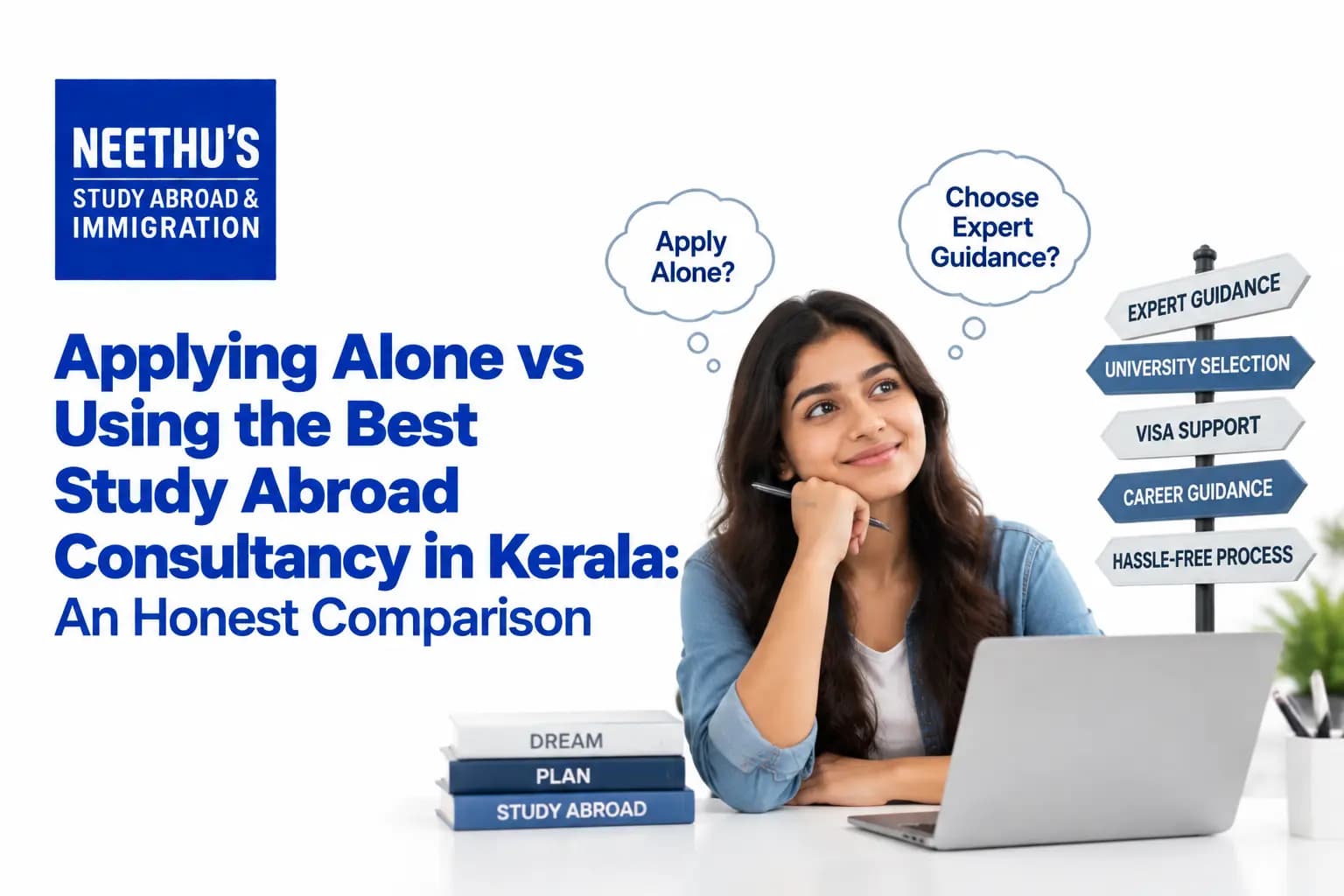
For students in Kerala, an experienced overseas education consultant can provide useful guidance throughout these stages. However, selecting a consultancy should not be done simply because of advertisements, social media presence, or promises of quick admission. The quality of counselling, transparency of information, and level of support can vary significantly between agencies.
If you are planning to study abroad and want professional assistance, this guide explains what to look for when selecting a consultancy and how to determine whether its services are genuinely suitable for your needs.
Understand Your Requirements Before Choosing a Consultant
Before meeting an overseas education counsellor, spend some time understanding your own goals.
You should have a basic idea of:
-
Your preferred study destination
-
The course or subject you want to pursue
-
Your academic qualifications
-
Your approximate budget
-
Your preferred intake
-
Your English-language proficiency
-
Your future career plans
You do not have to know every detail in advance. In fact, one of the purposes of counselling is to help you explore suitable options. However, knowing your priorities allows the counsellor to provide advice that is more relevant to your situation.
Why Professional Study Abroad Guidance Can Help
International university applications involve requirements that may be unfamiliar to first-time applicants. Each destination can have its own admission procedures, documentation rules, financial requirements, and visa processes.
An education consultant can help students understand these procedures and organise the application process.
Typical assistance may include university shortlisting, application preparation, document checking, statement of purpose guidance, scholarship information and visa support.
However, students should view consultants as advisers rather than decision-makers. You should understand the reasons behind every major recommendation before proceeding.
Research the Consultancy's Experience
One of the first things to investigate is the consultancy's background.
Find out how long it has been assisting students and whether its counsellors have experience with the country you are considering.
Experience is particularly useful when dealing with complicated application requirements or unusual academic backgrounds. A counsellor familiar with a specific destination may also have a better understanding of its university system and application timelines.
Instead of asking only how many years the company has been operating, ask questions such as:
-
How many students have you assisted with this destination?
-
Do you handle applications for my chosen course?
-
Which universities do you regularly work with?
-
How familiar are you with the current visa process?
Specific answers are more useful than general claims about experience.
Check Knowledge of Your Preferred Destination
A consultant offering services for multiple countries may not have the same level of expertise in every destination.
For example, the requirements for studying in the UK can differ considerably from those for Germany, Australia, Ireland or Canada. Even within one country, admission criteria may vary between universities and courses.
Your counsellor should be able to explain important factors such as:
-
University entry criteria
-
Course duration
-
Tuition expenses
-
Living costs
-
Intake periods
-
Language requirements
-
Scholarship opportunities
-
Accommodation
-
Student visa conditions
-
Possible career pathways
If the answers are unclear or appear outdated, consider getting advice from another consultancy.
Study Abroad Consultancy in Kerala: What Services Should You Expect?
When comparing a Study Abroad Consultancy in Kerala: What Services Should You Expect?, students should consider the complete range of assistance offered rather than focusing only on university applications.
A dependable consultancy may support students from the first counselling session through application submission and visa processing.
Academic Profile Evaluation
A proper counselling process should begin with an assessment of your academic profile.
The counsellor may review your qualifications, grades, work experience, English-language scores, financial situation, and career objectives.
Based on this information, they can suggest programmes that match your background.
A trustworthy counsellor should also explain when a particular university may be difficult to enter. Honest advice about limitations is often more valuable than being given a long list of unrealistic options.
Course Selection
Choosing a course simply because it is popular can create problems later.
The programme should match your previous education, interests and career plans. A consultant should help you understand the subjects covered, academic structure and potential career relevance of different programmes.
Ask about:
-
Course modules
-
Duration
-
Entry requirements
-
Internship opportunities
-
Industry exposure
-
Graduate employment prospects
-
Further study options
You should also research the course independently before making a final decision.
University Shortlisting
A strong university shortlist should include institutions that fit your academic profile, financial situation and career objectives.
Factors worth comparing include:
-
Academic reputation
-
Course content
-
Tuition fees
-
Location
-
Living expenses
-
Accommodation availability
-
Scholarships
-
Industry connections
-
Employment opportunities
University rankings can provide useful background information, but they should not be the sole basis for your decision.
Application Assistance
University applications can involve numerous forms and supporting documents.
Depending on the institution, you may need academic transcripts, certificates, identification documents, a CV, recommendation letters, a personal statement and proof of English proficiency.
A consultant can help organise these documents and check applications before submission.
They can also remind students about deadlines and help track application updates.
Statement of Purpose Support
Many universities ask applicants to submit a statement explaining their academic interests, motivation, and plans.
A consultant can help you understand what the university expects and suggest ways to structure your statement.
However, your final SOP should reflect your genuine experiences and ambitions. Avoid submitting generic content that does not accurately represent your background.
Ask About Scholarship Opportunities
Scholarships can make overseas education more affordable, but eligibility conditions vary widely.
A consultancy may help you identify relevant university scholarships, government funding programmes or other financial opportunities.
Ask the counsellor:
-
Which scholarships might suit my profile?
-
What are the eligibility requirements?
-
When should I apply?
-
What documents are needed?
-
Does applying through your agency affect scholarship eligibility?
Never assume that every student is guaranteed funding. Scholarship decisions are normally made by the relevant institution or funding body.
Understand the Total Cost of Studying Abroad
Tuition fees are only one part of your overseas education budget.
You may also need to pay for:
-
Accommodation
-
Food
-
Local transportation
-
Health insurance
-
Visa fees
-
Airfare
-
Study materials
-
Personal expenses
Ask your consultant for an estimated annual budget that includes both education and living expenses.
It is also useful to compare costs between different cities. Two universities may have similar tuition fees but very different accommodation and daily living expenses.
Evaluate Visa Guidance Carefully
Once you receive an admission offer, the next major step may be applying for a student visa.
Visa requirements differ by destination. Depending on the country, applicants may need to demonstrate sufficient funds, provide health documents, obtain insurance or attend an interview.
A consultant can help organise documents and explain the process, but no agency can guarantee a visa decision.
Be cautious if anyone says that your visa is "guaranteed." The final decision belongs to the relevant immigration authority.
Check the Consultancy's Fee Structure
Do not make a payment until you understand exactly what you are paying for.
Some consultancies may provide certain counselling and application services at no direct cost to students, while others charge fees for specific services.
Ask for a written breakdown covering:
-
Counselling charges
-
Application assistance
-
Visa support
-
Documentation services
-
Language training
-
Additional services
-
Refund policies
Also confirm whether university application charges, examination fees and government fees are separate.
Written information can help avoid disagreements later.
Verify University Partnerships
Consultancies often mention partnerships with universities as part of their services.
Ask which universities the agency officially represents and, where possible, verify these relationships through university websites.
A consultant should also be willing to explain why a particular university is being recommended.
Do not feel pressured to select a university simply because it is part of the consultancy's partner network. Your academic and career objectives should remain the priority.
Read Student Reviews With Care
Online reviews can help you understand how previous students experienced a consultancy, but reviews should be evaluated carefully.
Look for detailed feedback about:
-
Counselling
-
Application processing
-
Communication
-
Visa assistance
-
Documentation
-
Transparency
-
Responsiveness
-
Post-admission support
Do not rely on a single review. Look for recurring patterns across multiple sources.
You can also ask whether the consultancy can connect you with previous students who are willing to share their experiences.
Observe How the Counsellor Communicates
Your first counselling session can tell you a lot.
A professional counsellor should ask questions before recommending universities. They should understand your academic history, financial limitations, and career goals.
Good communication usually includes:
-
Clear explanations
-
Honest answers
-
Realistic recommendations
-
No unnecessary pressure
-
Time to compare options
-
Transparency about costs
If a counsellor immediately asks you to pay or pushes a particular university without understanding your profile, consider speaking with another agency.
Be Alert to Unrealistic Claims
Students should be particularly careful about exaggerated promises.
Claims such as "guaranteed admission," "guaranteed visa," "guaranteed scholarship" or "guaranteed job" should raise concerns.
Universities evaluate applications according to their own criteria. Immigration authorities make independent visa decisions, while scholarships and employment depend on eligibility and competition.
A responsible consultant should explain the process and possible outcomes without presenting uncertain results as guaranteed.
Consider Pre-Departure Assistance
Your relationship with a consultancy does not necessarily have to end after receiving a visa.
Some agencies provide pre-departure sessions to help students prepare for life overseas.
Topics may include:
-
Travel arrangements
-
Accommodation
-
Packing
-
Banking
-
Insurance
-
Transportation
-
Important documents
-
Student responsibilities
-
Local regulations
This type of support can be particularly helpful if you are travelling internationally for the first time.
Compare Several Consultancies
Choosing the first agency you contact may not give you enough information to make a confident decision.
Try consulting two or three agencies. Compare their university recommendations, fees, services and explanations.
If the recommendations are different, ask each counsellor to explain the reasoning behind them. This can help you understand whether the advice is genuinely based on your profile.
The cheapest option is not always the best, and the most expensive service does not necessarily provide superior guidance.
Questions to Ask Before Making Your Choice
Before signing an agreement, ask the consultancy:
-
Which destinations do you specialise in?
-
Do you handle my chosen course?
-
Which universities do you officially represent?
-
What universities are realistic for my academic profile?
-
What will my estimated total cost be?
-
Which services are included?
-
Are there additional charges?
-
Will you assist with the visa process?
-
What scholarship options are available?
-
What support do you provide before departure?
A consultancy that answers these questions clearly is more likely to provide a transparent experience.
What Should Define the Best Consultancy?
The best study abroad consultancy in Kerala should be judged by the quality of guidance rather than the size of its office or the amount of advertising it does.
Look for a team that understands your objectives, provides realistic university options, explains costs honestly, and communicates throughout the application process.
A good consultant should also encourage you to verify important information rather than asking you to accept every recommendation without question.
Final Thoughts
Finding the Best Study Abroad Consultants in Kerala requires careful comparison. Students should examine a consultancy's experience, destination expertise, university relationships, application support, scholarship guidance, visa assistance, fees, and communication before making a commitment.
Professional guidance can make the overseas education process more organised, but students should remain actively involved in every major decision. Research your shortlisted universities, verify current requirements through official sources, and understand the financial commitment before submitting an application.
The right consultancy should give you greater clarity, not create pressure. With realistic advice, transparent services, and proper preparation, students can approach their international education plans with confidence and make decisions that support their long-term academic and career goals.
FAQs
1. Why should I choose a study abroad consultant in Kerala?
A study abroad consultant can help with university selection, course shortlisting, application preparation, document verification, scholarship guidance, and visa assistance. Professional guidance can make the application process more organised and easier to manage.
2. How do I identify a reliable study abroad consultancy?
Look for a consultancy with experienced counsellors, destination-specific knowledge, transparent fees, clear communication, and a strong record of assisting students. It is also useful to compare reviews and speak with more than one consultancy before deciding.
3. What services should a study abroad consultant provide?
Services can include profile assessment, course and university selection, application assistance, statement of purpose guidance, scholarship information, English-language test guidance, visa support, and pre-departure counselling.
4. Can a consultant guarantee university admission?
No legitimate consultant can guarantee admission. Universities make their own decisions based on academic qualifications, course requirements, application quality, and other eligibility criteria.
5. Can study abroad consultants guarantee a student visa?
A consultancy cannot guarantee visa approval. Consultants can help applicants understand the requirements and prepare their documents, but the final decision is made by the relevant immigration authority.
6. How much does a study abroad consultancy in Kerala charge?
Fees vary depending on the consultancy and services provided. Some agencies may offer certain services without direct charges, while others may have separate fees for application, documentation, or visa assistance. Always request a complete fee breakdown before making a payment.
7. Should I use only one consultancy?
Not necessarily. Speaking with two or three consultancies can help you compare university recommendations, service quality, fees, and counselling approaches before making a final choice.
8. Can consultants help students to find scholarships?
Many consultancies provide scholarship guidance and help students identify opportunities based on their academic profile. However, scholarship eligibility and selection are determined by the respective university or funding organisation.
9. What questions should I ask before selecting a consultancy?
Ask about their experience with your destination and course, university partnerships, service charges, application support, visa assistance, scholarship guidance, and post-admission support. Clear answers can help you assess the consultancy's reliability.
10. What makes the best study abroad consultancy in Kerala?
The best study abroad consultancy in Kerala should provide honest advice, understand your academic goals, recommend realistic options, explain costs clearly, and offer consistent support throughout the application process. The focus should be on your educational objectives rather than simply processing an application.



















































































































































_03-12-2025_01-17-26%20PM.webp&w=3840&q=75)
_02-12-2025_03-07-49%20PM.webp&w=3840&q=75)

_27-11-2025_04-06-24%20PM.webp&w=3840&q=75)
_25-11-2025_04-38-18%20PM.webp&w=3840&q=75)
_24-11-2025_03-20-26%20PM.webp&w=3840&q=75)
_22-11-2025_12-44-47%20PM.webp&w=3840&q=75)
_21-11-2025_04-17-47%20PM.webp&w=3840&q=75)
_20-11-2025_03-55-26%20PM.webp&w=3840&q=75)
_18-11-2025_04-00-40%20PM.webp&w=3840&q=75)
_15-11-2025_10-48-43%20AM.webp&w=3840&q=75)
%20(1)_14-11-2025_03-52-25%20PM.webp&w=3840&q=75)
_13-11-2025_03-02-38%20PM.webp&w=3840&q=75)
_08-11-2025_04-15-36%20PM.webp&w=3840&q=75)
_05-11-2025_04-01-50%20PM.webp&w=3840&q=75)
_05-11-2025_03-46-26%20PM.webp&w=3840&q=75)
_03-11-2025_03-31-09%20PM.webp&w=3840&q=75)
_04-11-2025_.webp&w=3840&q=75)
_04-11-2025_.webp&w=3840&q=75)
_28-10-2025_04-09-08%20PM.webp&w=3840&q=75)
_24-10-2025_05-10-31%20PM.webp&w=3840&q=75)
_24-10-2025_04-55-51%20PM.webp&w=3840&q=75)
_22-10-2025_04-40-20%20PM.webp&w=3840&q=75)
%20(1)_21-10-2025_03-05-46%20PM.webp&w=3840&q=75)
_21-10-2025_02-43-15%20PM.webp&w=3840&q=75)
_17-10-2025_05-08-52%20PM.webp&w=3840&q=75)
_17-10-2025_04-54-54%20PM.webp&w=3840&q=75)
_15-10-2025_03-46-47%20PM.webp&w=3840&q=75)
_14-10-2025_03-42-40%20PM.webp&w=3840&q=75)
_14-10-2025_03-29-48%20PM.webp&w=3840&q=75)
_13-10-2025_03-48-51%20PM.webp&w=3840&q=75)
_11-10-2025_04-28-42%20PM.webp&w=3840&q=75)
%20(1)_09-10-2025_04-12-08%20PM.webp&w=3840&q=75)

_07-10-2025_02-55-25%20PM.webp&w=3840&q=75)
_07-10-2025_02-39-51%20PM.webp&w=3840&q=75)
_06-10-2025_03-42-37%20PM.webp&w=3840&q=75)
_03-10-2025_04-42-59%20PM.webp&w=3840&q=75)
_01-10-2025_11-12-12%20AM.webp&w=3840&q=75)
%20(1)_29-09-2025_02-54-12%20PM.webp&w=3840&q=75)

_26-09-2025_12-14-18%20PM.webp&w=3840&q=75)
_24-09-2025_04-44-26%20PM.webp&w=3840&q=75)
_23-09-2025_04-14-36%20PM.webp&w=3840&q=75)
_22-09-2025_04-08-09%20PM.webp&w=3840&q=75)
_20-09-2025_03-26-03%20PM.webp&w=3840&q=75)
_17-09-2025_04-06-42%20PM.webp&w=3840&q=75)
_15-09-2025_04-43-43%20PM.webp&w=3840&q=75)
_13-09-2025_12-17-49%20PM.webp&w=3840&q=75)
_12-09-2025_04-31-36%20PM.webp&w=3840&q=75)
_12-09-2025_04-17-03%20PM.webp&w=3840&q=75)
_10-09-2025_03-59-59%20PM.webp&w=3840&q=75)
_09-09-2025_04-11-16%20PM.webp&w=3840&q=75)
_09-09-2025_03-53-52%20PM.webp&w=3840&q=75)


















































_12-06-2025_03-40-35%20PM.webp&w=3840&q=75)