How Indian Students Can Get Admission to Massachusetts Institute of Technology (MIT) PhD Programs
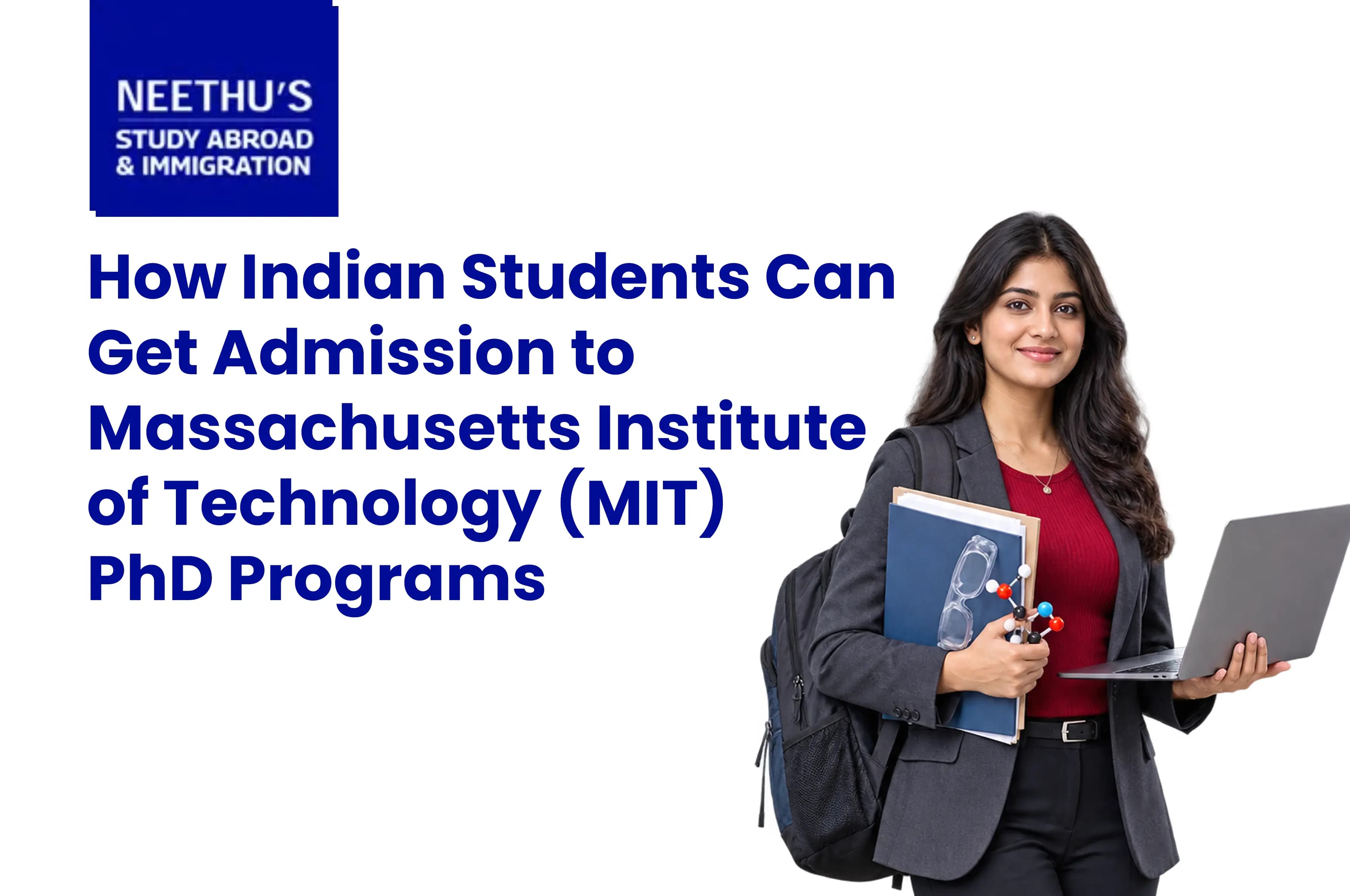
Pursuing a doctoral degree at the Massachusetts Institute of Technology (MIT) is a dream for many ambitious students across the world. Known for groundbreaking research, academic excellence, and innovation, MIT offers a highly competitive environment for students who want to contribute to their chosen field at the highest level.
For Indian students, gaining admission to an MIT PhD program requires much more than excellent grades. Strong research experience, well-defined academic interests, convincing recommendation letters, and a clear understanding of the application process can significantly improve the chances of success. This guide explains how Indian students can prepare for and apply to MIT doctoral programs.
Why Choose MIT for a PhD?
MIT is widely recognised for its contributions to science, engineering, technology, economics, management, and several other disciplines. Its research-driven approach allows doctoral students to work closely with experienced faculty members and participate in projects that address real-world challenges.
Students also benefit from access to advanced laboratories, research centres, interdisciplinary collaborations, and a global academic community. For those aiming to build careers in research, academia, innovation, or specialised industries, MIT offers an environment that encourages independent thinking and impactful research.
It is often considered among the institutions associated with the best university in USA rankings and global higher education discussions. However, applicants should focus less on rankings alone and more on whether a specific department, faculty member, and research environment align with their long-term academic goals.
Understand the MIT PhD Admission Requirements
MIT does not follow a single admission process for every doctoral programme. Requirements can vary depending on the department and field of study. Therefore, students should carefully review the official requirements of their chosen department before applying.
In general, applicants may need to provide:
-
Academic transcripts
-
Statement of purpose
-
Research statement or personal statement, where required
-
Letters of recommendation
-
Curriculum vitae or resume
-
Standardised test scores, if required by the department
-
English language proficiency test scores for eligible international applicants
-
Research papers, publications, or portfolios where relevant
A strong application should demonstrate academic ability as well as research potential. MIT doctoral admissions are highly selective, so simply meeting the minimum eligibility criteria may not be enough.
Choose the Right PhD Programme and Research Area
The first step towards admission is identifying a programme that matches your academic background and research interests. MIT offers doctoral opportunities across a wide range of disciplines, including engineering, computer science, physics, biological sciences, economics, architecture, management, and social sciences.
Instead of applying simply because of the institution's reputation, students should ask important questions:
-
What specific research problem do I want to explore?
-
Which MIT department is most suitable for my interests?
-
Are there faculty members working in my preferred research area?
-
Does my previous academic experience support my proposed research direction?
A well-defined research interest can make an application more convincing. Admissions committees generally look for applicants who understand their field and can explain why doctoral research is the right next step in their academic journey.
Build a Strong Academic Profile
Academic performance is an important part of a PhD application. Indian students should aim for consistently strong grades during their bachelor's and master's studies.
However, a high GPA alone does not guarantee admission. Doctoral programmes are research-intensive, which means universities also want evidence that an applicant can investigate complex problems independently.
Students can strengthen their profile by:
Participating in Research Projects
Working with professors on research projects can provide valuable practical experience. It also helps students understand how academic research is conducted.
Completing a Strong Dissertation or Thesis
A well-executed undergraduate or master's thesis can demonstrate analytical ability, research methodology, and subject knowledge.
Publishing Research Work
Research publications are not always mandatory, but a quality publication in a recognised journal or conference can strengthen an application, particularly in research-focused disciplines.
Taking Relevant Advanced Courses
Courses related to the intended PhD specialisation can show academic preparation and genuine interest in the subject.
The goal is to create an academic profile that demonstrates curiosity, persistence, and the ability to contribute meaningfully to research.
Prepare a Focused Statement of Purpose
The statement of purpose is one of the most important parts of a PhD application. It gives applicants an opportunity to explain their academic journey, research interests, career goals, and reasons for choosing a particular programme.
A strong statement should clearly answer:
-
What academic experiences shaped your research interests?
-
What problems or questions do you want to investigate?
-
Why are you interested in doctoral research?
-
Why is MIT suitable for your academic goals?
-
How does your previous experience prepare you for advanced research?
Avoid writing a generic essay that focuses only on the prestige of the university. Instead, connect your background with specific research interests and explain how the programme can support your development.
The statement should be personal, structured, and supported by genuine academic experiences.
Identify Faculty Members Working in Your Area
Before applying, students should explore faculty profiles, research laboratories, publications, and ongoing projects. Understanding the work of potential supervisors can help applicants identify whether their interests align with the department.
It is useful to read recent research publications and understand the broader direction of a professor's work.
However, students should avoid sending generic emails to multiple faculty members. If contacting a professor is appropriate for the department or programme, the message should be concise and personalised. Mention a specific aspect of their research and explain the connection with your own academic interests.
A thoughtful approach demonstrates genuine interest and preparation.
Secure Strong Letters of Recommendation
Letters of recommendation provide admissions committees with an external perspective on an applicant's academic and research abilities.
The best recommenders are usually professors, research supervisors, or mentors who know the student well. A strong recommendation can discuss qualities such as:
-
Research ability
-
Intellectual curiosity
-
Technical skills
-
Problem-solving ability
-
Academic performance
-
Independence
-
Commitment to long-term research
Students should approach recommenders early and provide sufficient information about the programme, research interests, academic achievements, and deadlines.
A detailed recommendation from someone familiar with your work is generally more valuable than a generic letter from a highly placed person who does not know you well.
Check English Language and Test Requirements
International students may need to demonstrate English language proficiency depending on their educational background and departmental requirements.
Some programmes may also have specific requirements regarding standardised tests. These policies can change, so applicants should always check the latest information directly from the relevant MIT department.
Students should not assume that a test requirement is the same across every programme. Each department may have different expectations.
Planning test preparation early can prevent last-minute difficulties during the application process.
Highlight Research Experience in Your CV
Your academic CV should clearly present the experiences most relevant to doctoral study.
Include details such as:
-
Research projects
-
Thesis work
-
Internships
-
Publications
-
Conference presentations
-
Technical skills
-
Academic awards
-
Scholarships
-
Relevant coursework
Rather than simply listing activities, make the research experience understandable. Briefly mention the objective of the project, your role, methods or tools used, and important outcomes.
A clear and well-organised CV helps the admissions committee quickly understand your academic development.
Understand PhD Funding Opportunities
One major advantage of pursuing a doctorate at leading American universities is the availability of funding opportunities. Many PhD students receive financial support through fellowships, research assistantships, teaching assistantships, or departmental funding.
Funding structures can vary depending on the programme and department. Students should carefully check whether admitted doctoral candidates receive support for tuition, living expenses, health insurance, or research activities.
Applicants should understand the financial details before accepting an offer. Since a PhD is a long-term academic commitment, knowing how funding works is essential for planning a comfortable academic journey.
Create a Realistic Application Timeline
MIT applications require careful preparation, so students should ideally begin planning at least a year before the intended intake.
A practical timeline may look like this:
12 Months Before Application
-
Identify potential research areas
-
Shortlist relevant PhD programmes
-
Begin building research experience
-
Review faculty profiles
-
Understand test requirements
8–10 Months Before Application
-
Prepare for English language or other required tests
-
Start drafting the statement of purpose
-
Update your academic CV
-
Contact potential recommenders
4–6 Months Before Application
-
Finalise application essays
-
Request recommendation letters
-
Arrange transcripts and supporting documents
-
Review department-specific requirements
Before the Deadline
-
Complete all application sections carefully
-
Upload required documents
-
Check spelling and formatting
-
Submit before the deadline
Starting early gives students enough time to improve their profile rather than rushing through the application process.
Common Mistakes Indian Students Should Avoid
MIT receives applications from academically strong students worldwide. Small mistakes can weaken an otherwise good application.
Avoid these common problems:
-
Writing a generic statement of purpose
-
Applying without clear research interests
-
Ignoring department-specific requirements
-
Choosing recommenders who do not know you well
-
Submitting applications close to the deadline
-
Overstating achievements
-
Sending copied emails to multiple professors
-
Focusing only on university rankings
-
Neglecting research experience
Authenticity and clarity are extremely important. Admissions committees want to understand who you are as a researcher and what you may contribute to the academic community.
The Role of Professional Study Abroad Guidance
Applying for a highly competitive doctoral programme can be complicated, particularly when students are managing research, exams, documentation, and university applications simultaneously. Professional guidance can help students organise their application process and understand important requirements.
Experienced Best Study Abroad Consultants in Kerala can assist students with university shortlisting, application documentation, statement preparation, and general admission guidance. However, the academic substance of a PhD application must always reflect the student's genuine research interests and achievements.
At Neethus Study Abroad, students can receive guidance throughout the overseas education application process and gain better clarity about preparing for competitive universities and programmes.
Final Thoughts
Getting admission for a phd in massachusetts institute of technology requires strong academic preparation, meaningful research experience, and a carefully developed application. There is no single formula that guarantees admission, but students can improve their chances by building a focused academic profile and demonstrating genuine research potential.
For Indian students planning to study in usa, the journey should begin with identifying a research area that genuinely interests them. Developing relevant experience, building strong relationships with professors, preparing thoughtful application documents, and applying strategically can make a significant difference.
A PhD application is not simply about proving that you are an excellent student. It is about showing that you have the curiosity, preparation, resilience, and research potential to contribute to a demanding academic environment. With early planning and a clear research direction, Indian students can take confident steps towards pursuing doctoral studies at one of the world's most respected research institutions.
Frequently Asked Questions
1. What are the eligibility requirements for Indian students applying for an MIT PhD?
Eligibility requirements vary by department. Generally, applicants need a strong academic background, relevant research experience, academic transcripts, recommendation letters, a statement of purpose, and other department-specific documents.
2. Is a master's degree required for admission to an MIT PhD program?
Not always. Some MIT PhD programs accept students directly after a bachelor's degree, while others may prefer or require advanced academic preparation. Requirements depend on the department and field of study.
3. How competitive is admission to MIT PhD programs?
MIT PhD admissions are highly competitive. Applicants are evaluated based on academic performance, research experience, recommendations, research interests, and their potential to contribute to the chosen field.
4. Do Indian students need GRE scores for MIT PhD admission?
GRE requirements vary by department and may change over time. Applicants should check the specific admission requirements of their chosen MIT PhD program before applying.
5. Is research experience necessary for a PhD in Massachusetts Institute of Technology?
Research experience is highly valuable for PhD applicants. Projects, dissertations, internships, publications, and laboratory experience can help demonstrate research skills and academic potential.
6. Can Indian students receive funding for an MIT PhD program?
Many doctoral students receive financial support through fellowships, research assistantships, teaching assistantships, or departmental funding. The availability and structure of funding depend on the program.
7. How important is the statement of purpose for MIT PhD admission?
The statement of purpose is a crucial part of the application. It should explain your academic background, research interests, future goals, and reasons for applying to the specific program.
8. Should applicants contact MIT professors before applying for a PhD?
This depends on the department and program. Applicants should review faculty research profiles and departmental guidelines before contacting professors. Any communication should be personalised and relevant to the professor's research.
9. When should Indian students start preparing for an MIT PhD application?
Ideally, students should begin preparation 12 months or more before the application deadline. This provides enough time to build a research profile, prepare required documents, take necessary tests, and secure recommendation letters.
10. Can study abroad consultants help with MIT PhD applications?
Yes. Study abroad consultants can provide guidance on application planning, documentation, university requirements, and timelines. However, students should ensure that their research interests, academic achievements, and application materials genuinely reflect their own profile.






















































































































































_03-12-2025_01-17-26%20PM.webp&w=3840&q=75)
_02-12-2025_03-07-49%20PM.webp&w=3840&q=75)

_27-11-2025_04-06-24%20PM.webp&w=3840&q=75)
_25-11-2025_04-38-18%20PM.webp&w=3840&q=75)
_24-11-2025_03-20-26%20PM.webp&w=3840&q=75)
_22-11-2025_12-44-47%20PM.webp&w=3840&q=75)
_21-11-2025_04-17-47%20PM.webp&w=3840&q=75)
_20-11-2025_03-55-26%20PM.webp&w=3840&q=75)
_18-11-2025_04-00-40%20PM.webp&w=3840&q=75)
_15-11-2025_10-48-43%20AM.webp&w=3840&q=75)
%20(1)_14-11-2025_03-52-25%20PM.webp&w=3840&q=75)
_13-11-2025_03-02-38%20PM.webp&w=3840&q=75)
_08-11-2025_04-15-36%20PM.webp&w=3840&q=75)
_05-11-2025_04-01-50%20PM.webp&w=3840&q=75)
_05-11-2025_03-46-26%20PM.webp&w=3840&q=75)
_03-11-2025_03-31-09%20PM.webp&w=3840&q=75)
_04-11-2025_.webp&w=3840&q=75)
_04-11-2025_.webp&w=3840&q=75)
_29-10-2025_04-52-52%20PM.webp&w=3840&q=75)
_28-10-2025_04-09-08%20PM.webp&w=3840&q=75)
_24-10-2025_05-10-31%20PM.webp&w=3840&q=75)
_24-10-2025_04-55-51%20PM.webp&w=3840&q=75)
_22-10-2025_04-40-20%20PM.webp&w=3840&q=75)
%20(1)_21-10-2025_03-05-46%20PM.webp&w=3840&q=75)
_21-10-2025_02-43-15%20PM.webp&w=3840&q=75)
_17-10-2025_05-08-52%20PM.webp&w=3840&q=75)
_17-10-2025_04-54-54%20PM.webp&w=3840&q=75)
_15-10-2025_03-46-47%20PM.webp&w=3840&q=75)
_14-10-2025_03-42-40%20PM.webp&w=3840&q=75)
_14-10-2025_03-29-48%20PM.webp&w=3840&q=75)
_13-10-2025_03-48-51%20PM.webp&w=3840&q=75)
_11-10-2025_04-28-42%20PM.webp&w=3840&q=75)
%20(1)_09-10-2025_04-12-08%20PM.webp&w=3840&q=75)

_07-10-2025_02-55-25%20PM.webp&w=3840&q=75)
_07-10-2025_02-39-51%20PM.webp&w=3840&q=75)
_06-10-2025_03-42-37%20PM.webp&w=3840&q=75)
_03-10-2025_04-42-59%20PM.webp&w=3840&q=75)
_01-10-2025_11-12-12%20AM.webp&w=3840&q=75)
%20(1)_29-09-2025_02-54-12%20PM.webp&w=3840&q=75)

_26-09-2025_12-14-18%20PM.webp&w=3840&q=75)
_24-09-2025_04-44-26%20PM.webp&w=3840&q=75)
_23-09-2025_04-14-36%20PM.webp&w=3840&q=75)
_22-09-2025_04-08-09%20PM.webp&w=3840&q=75)
_20-09-2025_03-26-03%20PM.webp&w=3840&q=75)
_17-09-2025_04-06-42%20PM.webp&w=3840&q=75)
_15-09-2025_04-43-43%20PM.webp&w=3840&q=75)
_13-09-2025_12-17-49%20PM.webp&w=3840&q=75)
_12-09-2025_04-31-36%20PM.webp&w=3840&q=75)
_12-09-2025_04-17-03%20PM.webp&w=3840&q=75)
_10-09-2025_03-59-59%20PM.webp&w=3840&q=75)
_09-09-2025_04-11-16%20PM.webp&w=3840&q=75)
_09-09-2025_03-53-52%20PM.webp&w=3840&q=75)











































_12-06-2025_03-40-35%20PM.webp&w=3840&q=75)