Study Abroad from Kannur: Application Timeline, Documents and Costs for Central Kerala Students
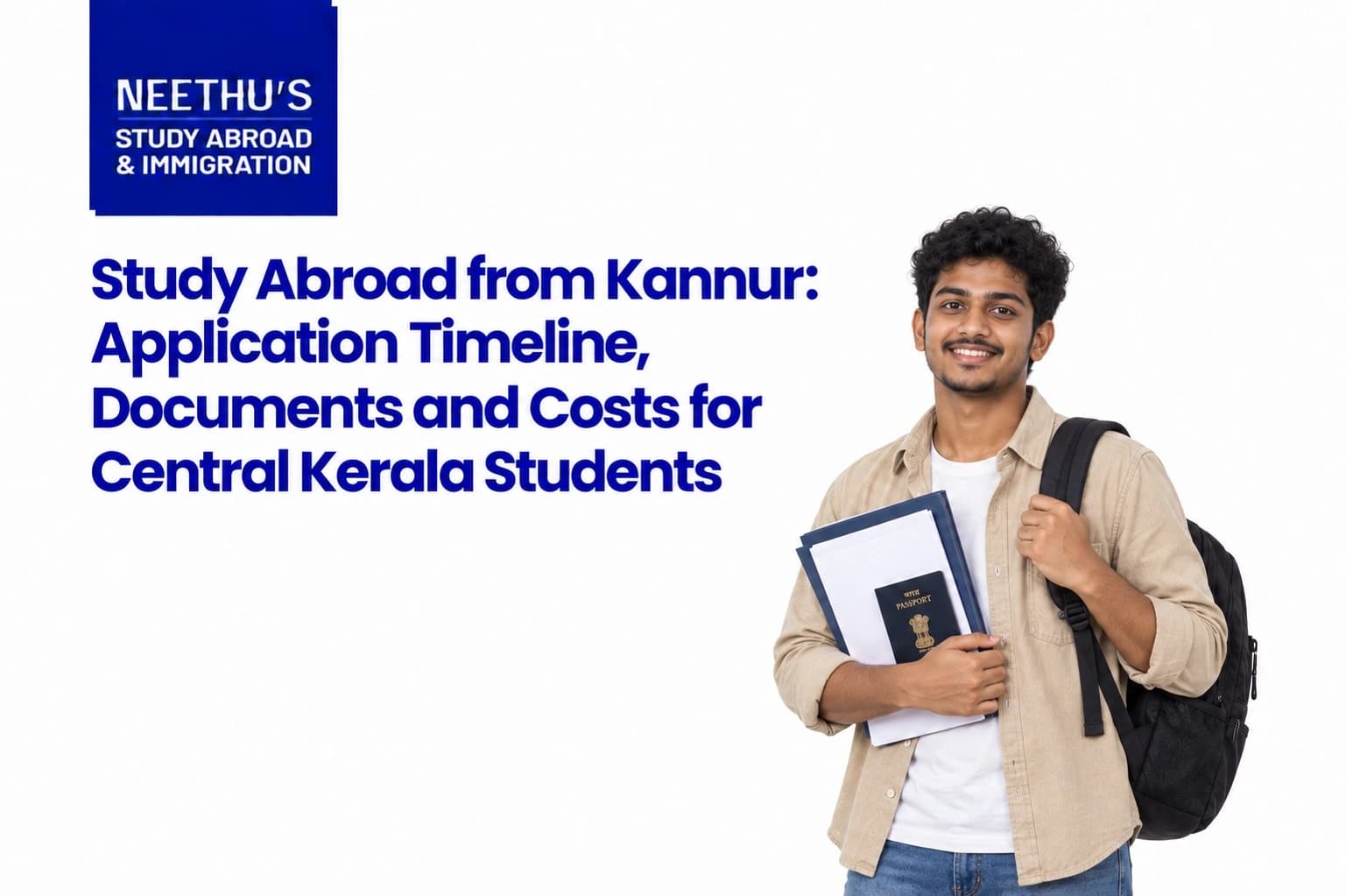
Studying at an international university has become an increasingly popular choice among students from Kerala. With universities across the UK, Canada, Australia, Germany, Ireland, the USA, and other destinations offering diverse programmes, students now have more opportunities to build international academic and professional experience.
For students planning to begin this journey, understanding the application process is just as important as choosing a destination. From selecting the right course to arranging documents, meeting language requirements, and preparing a realistic budget, every stage needs careful planning.
Students considering study abroad from Kannur can start preparing well before their intended intake. Having a clear timeline can reduce last-minute pressure and give applicants enough time to address admission and visa requirements.
Why Plan Early for Overseas Education?
A study-abroad application involves several stages that cannot always be completed within a few weeks. Universities may have different application deadlines, while popular courses can have limited places. Language tests, document preparation, financial planning and visa procedures can also take time.
Starting early gives students an opportunity to:
-
Compare universities and courses carefully
-
Understand eligibility requirements
-
Prepare for English-language tests
-
Improve academic or test scores where necessary
-
Arrange financial documents
-
Prepare a strong statement of purpose
-
Apply before important deadlines
-
Complete visa formalities without unnecessary stress
Students should also verify that their chosen university or college is properly accredited and recognised. The Ministry of External Affairs advises Indian students travelling abroad for education to check the recognition of their institution and understand the relevant visa, legal and living requirements of their destination country.
A Typical Study Abroad Application Timeline
Although deadlines vary between countries and institutions, students can use the following timeline as a general planning guide.
12–18 Months Before Intake: Start Your Research
The first stage is deciding what and where you want to study.
Think about your preferred subject, career plans, academic background and financial situation. Research countries and universities that offer suitable programmes rather than selecting a destination solely because it is popular.
At this stage, compare:
-
Course curriculum
-
University reputation
-
Entry requirements
-
Tuition fees
-
Living expenses
-
Scholarship opportunities
-
Employment opportunities after graduation
-
Visa requirements
-
Intakes and application deadlines
Creating a shortlist of several suitable universities can give you alternatives if your first choice does not work out.
9–12 Months Before Intake: Prepare for Eligibility Tests
Once you have shortlisted courses, check whether you need an English-language test or another examination.
Depending on the university and programme, students may need IELTS, TOEFL, PTE or another accepted test. Certain courses may also require additional entrance examinations, portfolios or interviews.
If you need English-language preparation, joining ielts coaching Kannur can provide structured practice in listening, reading, writing and speaking.
Do not wait until the final application deadline to take your test. Taking it early gives you time to retake the examination if your score does not meet the university's requirement.
6–9 Months Before Intake: Organise Your Documents
Document preparation is one of the most important parts of an international application.
Commonly requested documents may include:
-
Academic mark sheets and certificates
-
Degree or provisional certificate
-
Passport
-
English-language test score
-
Curriculum vitae or résumé
-
Statement of purpose
-
Letters of recommendation
-
Work experience documents, if applicable
-
Portfolio, for selected creative programmes
-
Financial documents where required
-
Passport-size photographs
The exact list varies according to the university, course and destination. Students should always follow the institution's current application instructions instead of relying on a generic checklist.
Students from Kannur may also need transcripts or other academic documents from their previous institutions. For example, Kannur University publishes specific fees and procedures for transcripts, verification and related documents for students pursuing higher studies abroad.
4–8 Months Before Intake: Submit University Applications
After completing your documents and language requirements, you can begin submitting applications.
Before pressing the submit button, check every detail carefully. Your name, date of birth, academic information and passport details should be consistent across your documents.
Your statement of purpose deserves particular attention. Rather than simply listing your academic achievements, explain why you selected the programme, how it connects with your previous education and what you hope to achieve after graduation.
If recommendation letters are required, approach your teachers, professors or employers early. Giving recommenders sufficient time can result in more thoughtful and relevant references.
Working with the best study abroad consultants in Kannur can also help students understand university requirements, organise applications and avoid common mistakes during the process.
3–6 Months Before Intake: Wait for Decisions and Compare Offers
Once applications have been submitted, universities may take different amounts of time to respond.
You might receive:
-
An unconditional offer
-
A conditional offer
-
A request for additional information
-
An invitation for an interview
-
A rejection
If you receive multiple offers, compare them carefully instead of immediately choosing the university with the highest ranking.
Consider tuition fees, course content, location, accommodation, career opportunities and overall living expenses. A university that looks affordable based only on tuition fees may become expensive when rent, transport and daily expenses are included.
2–4 Months Before Departure: Prepare for the Student Visa
After accepting an offer and meeting the conditions, the next major stage is the student visa.
Visa requirements differ considerably between countries. Students may be asked to provide an admission confirmation, passport, financial evidence, academic documents, language test results, photographs, insurance documents or other supporting evidence.
The financial requirement is particularly important. Students should understand how much money they need to demonstrate and which types of financial evidence are accepted by the relevant immigration authority.
Do not assume that receiving a university offer automatically guarantees a visa. Admission and immigration decisions are separate processes.
What Documents Should Students Prepare?
While requirements differ by destination, maintaining a well-organised document folder can make the application process much easier.
A basic checklist may include:
Academic documents:
Keep your mark sheets, certificates, transcripts and degree documents together.
Identity documents:
Ensure that your passport is valid and that your personal details match your academic records.
Language-test documents:
Keep your IELTS, TOEFL, PTE or other relevant score report available if required.
Application documents:
Prepare your SOP, CV, LORs and portfolio where applicable.
Financial documents:
Depending on the destination, you may need bank statements, education-loan documents, scholarship evidence or sponsor information.
Visa documents:
These vary by country, so applicants should use the official immigration website for the latest checklist.
Keeping both digital and physical copies of important documents can also be useful during the application and travel stages.
How Much Does Studying Abroad Cost?
The total cost depends heavily on the destination, university, programme and lifestyle.
Students should divide their budget into several categories rather than considering tuition alone.
Tuition Fees
Tuition is generally the largest academic expense. It varies according to the country, university and course. Laboratory-based, medical, business and specialised programmes can have different fee structures.
Living Expenses
Rent, food, transport, utilities, mobile services and personal expenses should all be included in the budget.
The cost of living can also vary significantly between cities. Studying in a major metropolitan area may require a larger accommodation budget than studying in a smaller city.
Application and Test Fees
Students may need to pay for English-language examinations, university applications, document processing, transcript requests and other administrative services.
Visa and Travel Expenses
Budget for the student visa, health insurance where applicable, flight tickets and initial expenses after arrival.
Emergency Fund
Having some additional savings for unexpected costs is advisable. Students may encounter expenses related to accommodation deposits, travel, medical needs or essential purchases after arriving.
A detailed budget allows students and their families to understand the financial commitment before making a final decision.
How Can Students from Kannur Get Started?
The study-abroad journey becomes easier when it is divided into manageable stages. Students should begin with career goals, followed by course and university research. Once the shortlist is ready, they can check eligibility, prepare language-test scores and organise documents.
Professional guidance can be useful when students are unsure about course selection, application requirements or visa documentation. Overseas education consultants Kannur may assist students with different stages of the process, although applicants should still verify important information directly with universities and immigration authorities.
Students planning study abroad from Kannur should also avoid making decisions solely based on recommendations from friends or social media. A course that suits one student may not necessarily be appropriate for another.
Final Thoughts
Studying overseas is a significant academic and financial decision, but careful preparation can make the process much more manageable. Starting early allows students to research their options, prepare stronger applications and plan their finances without unnecessary pressure.
From selecting a university and preparing documents to taking language tests and applying for a visa, each stage contributes to a successful international education journey.
For students looking for the best study abroad consultants in Kannur, the most important thing is to choose guidance that focuses on their individual academic profile, career goals and budget rather than offering a one-size-fits-all solution.
With proper research, realistic financial planning, and attention to application deadlines, students from Kannur and other parts of Kerala can approach their international education plans with greater confidence.
Frequently Asked Questions
1. What are the benefits of studying abroad?
Studying abroad can provide access to international universities, specialised courses, multicultural experiences, and opportunities to develop skills valued by global employers.
2. When should students start planning to study abroad?
Ideally, students should begin planning 9–18 months before their intended intake. This provides enough time for course research, language tests, applications, finances, and visa preparation.
3. What documents are generally required to study abroad?
Common documents include academic certificates, transcripts, a valid passport, language-test scores, SOP, LORs, CV, and financial documents. Requirements vary by country and university.
4. Which English-language tests are accepted by foreign universities?
Many universities accept IELTS, TOEFL, or PTE, although accepted tests and minimum scores differ between institutions and courses.
5. How much does it cost to study abroad?
The total cost depends on the destination, university, programme, and lifestyle. Students should budget for tuition, accommodation, food, transport, visa fees, insurance, travel and other personal expenses.
6. Can students apply to universities without an IELTS score?
Some universities and programmes may offer alternatives or exemptions depending on the student's previous education and circumstances. Students should check the specific university's current requirements.
7. How can students choose the right country for higher education?
Students should compare course availability, university reputation, tuition fees, living costs, visa rules, post-study opportunities, and career prospects before selecting a destination.
8. Can study abroad consultants help with the application process?
Yes. Experienced consultants can assist with course selection, university applications, document preparation, application deadlines, and visa guidance. Students should still verify important requirements through official sources.
9. What financial documents may be required for a student visa?
Depending on the destination, students may need bank statements, education-loan documents, scholarship information or evidence of sponsorship to demonstrate that they can meet the required expenses.
10. How can students begin their study-abroad journey ?
Students can start by identifying their preferred course and career goal, researching suitable universities, checking eligibility requirements, preparing for language tests and creating a realistic financial plan.























































































































































































_03-12-2025_01-17-26%20PM.webp&w=3840&q=75)
_02-12-2025_03-07-49%20PM.webp&w=3840&q=75)

_27-11-2025_04-06-24%20PM.webp&w=3840&q=75)
_25-11-2025_04-38-18%20PM.webp&w=3840&q=75)
_24-11-2025_03-20-26%20PM.webp&w=3840&q=75)
_22-11-2025_12-44-47%20PM.webp&w=3840&q=75)
_21-11-2025_04-17-47%20PM.webp&w=3840&q=75)
_20-11-2025_03-55-26%20PM.webp&w=3840&q=75)
_18-11-2025_04-00-40%20PM.webp&w=3840&q=75)
_15-11-2025_10-48-43%20AM.webp&w=3840&q=75)
%20(1)_14-11-2025_03-52-25%20PM.webp&w=3840&q=75)
_13-11-2025_03-02-38%20PM.webp&w=3840&q=75)
_08-11-2025_04-15-36%20PM.webp&w=3840&q=75)
_05-11-2025_04-01-50%20PM.webp&w=3840&q=75)
_05-11-2025_03-46-26%20PM.webp&w=3840&q=75)
_03-11-2025_03-31-09%20PM.webp&w=3840&q=75)
_04-11-2025_.webp&w=3840&q=75)
_04-11-2025_.webp&w=3840&q=75)
_29-10-2025_04-52-52%20PM.webp&w=3840&q=75)
_28-10-2025_04-09-08%20PM.webp&w=3840&q=75)
_24-10-2025_05-10-31%20PM.webp&w=3840&q=75)
_24-10-2025_04-55-51%20PM.webp&w=3840&q=75)
_22-10-2025_04-40-20%20PM.webp&w=3840&q=75)
%20(1)_21-10-2025_03-05-46%20PM.webp&w=3840&q=75)
_21-10-2025_02-43-15%20PM.webp&w=3840&q=75)
_17-10-2025_05-08-52%20PM.webp&w=3840&q=75)
_17-10-2025_04-54-54%20PM.webp&w=3840&q=75)
_15-10-2025_03-46-47%20PM.webp&w=3840&q=75)
_14-10-2025_03-42-40%20PM.webp&w=3840&q=75)
_14-10-2025_03-29-48%20PM.webp&w=3840&q=75)
_13-10-2025_03-48-51%20PM.webp&w=3840&q=75)
_11-10-2025_04-28-42%20PM.webp&w=3840&q=75)
%20(1)_09-10-2025_04-12-08%20PM.webp&w=3840&q=75)

_07-10-2025_02-55-25%20PM.webp&w=3840&q=75)
_07-10-2025_02-39-51%20PM.webp&w=3840&q=75)
_06-10-2025_03-42-37%20PM.webp&w=3840&q=75)
_03-10-2025_04-42-59%20PM.webp&w=3840&q=75)
_01-10-2025_11-12-12%20AM.webp&w=3840&q=75)
%20(1)_29-09-2025_02-54-12%20PM.webp&w=3840&q=75)

_26-09-2025_12-14-18%20PM.webp&w=3840&q=75)
_24-09-2025_04-44-26%20PM.webp&w=3840&q=75)
_23-09-2025_04-14-36%20PM.webp&w=3840&q=75)
_22-09-2025_04-08-09%20PM.webp&w=3840&q=75)
_20-09-2025_03-26-03%20PM.webp&w=3840&q=75)
_17-09-2025_04-06-42%20PM.webp&w=3840&q=75)
_15-09-2025_04-43-43%20PM.webp&w=3840&q=75)
_13-09-2025_12-17-49%20PM.webp&w=3840&q=75)
_12-09-2025_04-31-36%20PM.webp&w=3840&q=75)
_12-09-2025_04-17-03%20PM.webp&w=3840&q=75)
_10-09-2025_03-59-59%20PM.webp&w=3840&q=75)
_09-09-2025_04-11-16%20PM.webp&w=3840&q=75)
_09-09-2025_03-53-52%20PM.webp&w=3840&q=75)




















































_12-06-2025_03-40-35%20PM.webp&w=3840&q=75)