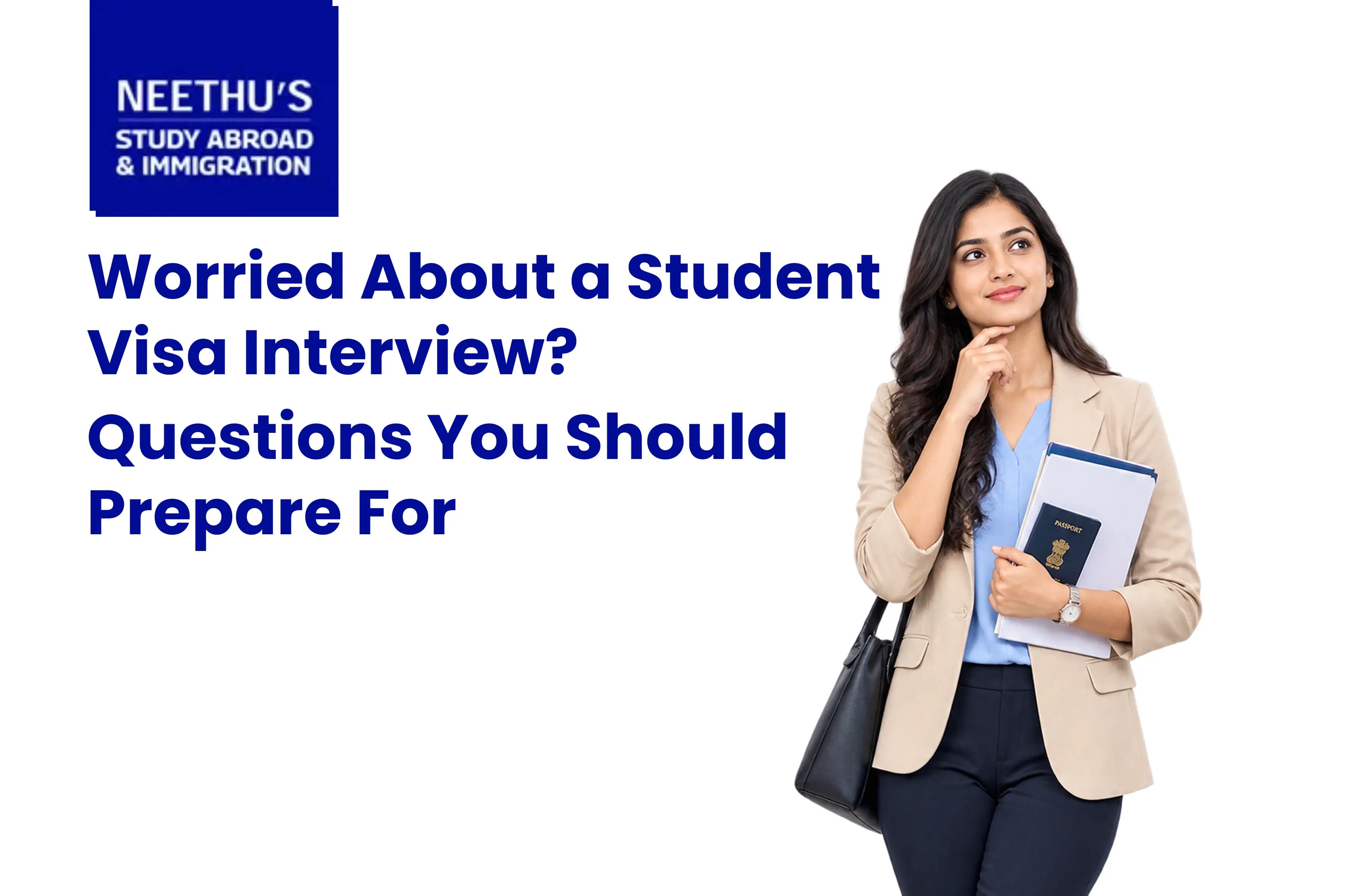
Worried About a Student Visa Interview? Questions You Should Prepare For
Getting accepted into an overseas university is an exciting milestone, but the journey does not end with an admission letter. For many international students, the next major step is the visa interview. This stage can feel stressful, especially when you are unsure what an immigration officer may ask or how detailed your answers should be.
The best way to reduce interview anxiety is to prepare in advance. While no applicant can predict every question, most interviews focus on a few key areas, including your academic background, choice of course, university selection, financial arrangements, and plans after graduation.
Understanding these areas will help you respond naturally rather than trying to memorize prepared speeches. Careful preparation for student visa interview questions can also help you feel more comfortable when discussing your study plans.
Why Do Visa Officers Conduct Interviews?
A student visa interview allows the visa officer to assess whether your application is genuine and whether your plans are consistent with the information submitted in your application.
The officer may want to establish several things:
-
Whether you have a genuine intention to study
-
Whether you understand your chosen program
-
Whether your academic background supports your course choice
-
Whether you can afford your education and living expenses
-
Whether you have researched your university and destination
-
Whether your future plans are realistic
-
Whether the information in your interview matches your documents
The interview is therefore more than a simple question-and-answer session. It gives you an opportunity to demonstrate that you have made a thoughtful decision about your education.
Questions About Your Study Plans
Why Do You Want to Study Abroad?
Be prepared to explain why you decided to pursue your education overseas instead of studying locally.
Your answer could focus on aspects such as the availability of your chosen specialization, practical learning opportunities, research facilities, international academic exposure, or the structure of the program.
Try to connect your decision with your educational objectives. Avoid making your answer mainly about travelling, experiencing a new lifestyle, or finding employment abroad.
Why Did You Select This Country?
Visa officers expect students to have researched their chosen destination.
Explain what attracted you academically. Perhaps the country offers a particular specialization, strong industry connections, innovative teaching methods, or qualifications relevant to your career plans.
A good response should make it clear that your destination was selected for genuine educational reasons.
Why Did You Choose This University?
Research your university before the interview. You should know its location, program structure, course duration, major subjects, and features that influenced your decision.
Instead of simply saying that the university has a good reputation, identify specific aspects that relate to your goals. For example, you might mention particular modules, practical training, research opportunities, or facilities relevant to your chosen field.
Why Did You Choose This Particular Course?
The visa officer may want to know whether your program fits your previous education and future ambitions.
Explain what you hope to learn and how the qualification can support your career. If you are changing your field of study, prepare a clear explanation for the transition.
Your answer should demonstrate that your course selection was deliberate rather than random.
Questions About Your Academic Background
What Did You Study Previously?
Be prepared to discuss your previous qualification, major subjects, institution, and academic experience.
The officer may ask additional questions to understand how your previous education relates to your intended program.
How Does This Course Relate to Your Previous Studies?
This question is especially important when there is a clear connection between your previous qualification and your new course.
For example, someone with an undergraduate degree in computer science might explain how a master's program in data analytics will allow them to develop advanced technical and analytical skills.
If your new course represents a change in direction, explain the reason clearly and logically.
Why Are You Not Studying This Course in Your Home Country?
Avoid criticizing universities in your home country. Instead, explain what is different or particularly valuable about the international program you selected.
You could discuss specialized modules, teaching approaches, research opportunities, practical exposure, or a curriculum that matches your professional objectives.
Questions About Your Finances
Financial questions are an important part of many student visa interviews.
Who Is Paying for Your Education?
Know exactly how your studies will be financed. Your sponsor could be a parent, another family member, yourself, or a combination of funding sources.
Your response should match the information and documents included with your application.
What Does Your Sponsor Do?
If someone else is funding your studies, you should understand their occupation and source of income.
The interviewer may want to know whether your sponsor has sufficient financial capacity to support your tuition fees and living expenses.
How Much Will Your Education Cost?
You should have a realistic understanding of your expected expenses.
Before the interview, review your tuition fees and estimate other major costs such as accommodation, food, transportation, insurance, and study materials.
You do not need to turn your response into a detailed financial presentation. However, you should demonstrate that you have planned your budget carefully.
Do You Have an Education Loan or Scholarship?
If you are using an education loan, scholarship, or another funding arrangement, know the important details.
For example, be familiar with the sanctioned loan amount, scholarship value, or percentage of tuition covered. Your answers should remain consistent with the relevant documentation.
Questions About Your University and Accommodation
Where Is Your University Located?
Do not arrive at the interview knowing only the university's name. Research its city, campus, and general surroundings.
Being able to discuss your institution comfortably shows that you have genuinely researched your study destination.
Where Will You Stay?
The officer may ask about your accommodation plans.
Know whether you intend to stay in university accommodation, a private rental, shared housing, or another arrangement. If you have already booked accommodation, keep the relevant confirmation documents available.
Did You Apply to Other Universities?
Answer this question honestly. If you applied to multiple institutions, explain how you eventually selected your current university.
You can mention factors such as course content, tuition costs, location, facilities, academic reputation, or career relevance.
Questions About Your Future
What Do You Plan to Do After Graduation?
Think about your career direction before attending the interview.
Explain what type of position, industry, or professional field interests you after completing your studies. Your answer should be realistic and connected to your academic background.
Avoid giving an answer simply because you think it is what the officer wants to hear.
Do You Plan to Return Home After Your Studies?
Depending on the country and visa category, the officer may ask about your plans after graduation.
Explain your genuine intentions and how your international qualification fits into your broader career plans. If you have professional or family considerations that are relevant, you can explain them appropriately.
Other Common Questions to Practice
Students should also spend time preparing for common student visa interview questions that may cover different aspects of their application.
Examples include:
-
When does your course begin?
-
How long is your program?
-
What subjects will you study?
-
What do you know about your university?
-
Why did you choose this intake?
-
How did you learn about the university?
-
What other countries did you consider?
-
Have you travelled internationally before?
-
Have you previously applied for a visa?
-
Have you ever had a visa refused?
-
Do you have relatives or friends in the destination country?
-
How will you manage your living expenses?
-
What are your career goals?
-
Why should your visa be approved?
You do not need to prepare lengthy answers to each question. Instead, identify the important facts and practice explaining them naturally.
How to Prepare Effectively
Review Your Documents
Go through your application, admission letter, financial statements, academic records, and other supporting documents before your interview.
Make sure you understand the information included in each document. Contradictions between your paperwork and spoken answers can create unnecessary concerns.
Research Your Program
Read your university's official course information carefully. Understand the subjects, duration, structure, learning outcomes, and any practical components.
This will make it easier to explain why the program is suitable for you.
Know Your Finances
Prepare a clear picture of your tuition fees and living expenses. Know who is sponsoring you and where the funding comes from.
Financial preparation is particularly important because vague answers can make you appear unprepared.
Practice With Someone
Ask a parent, teacher, friend, or counsellor to conduct a mock interview.
Practice answering questions without reading from notes. The objective is not to memorize responses but to become comfortable discussing your plans.
Keep Your Answers Natural
Memorized answers can sometimes sound rehearsed. Instead of learning entire paragraphs, remember the main points you want to communicate.
For example, if asked why you selected a university, remember three reasons and explain them conversationally.
Mistakes Students Should Avoid
Several common mistakes can make an otherwise strong interview more difficult.
Do not give false information. Always provide accurate details about your education, finances, travel history, and plans.
Do not speak negatively about your home country. Focus on the academic advantages offered by your chosen program.
Do not guess answers. If you cannot remember a minor detail, remain calm rather than inventing information.
Do not give unnecessarily long responses. Answer the question directly and allow the officer to continue the conversation.
Do not ignore your application details. Everything you say should be consistent with the information you submitted.
Do not focus entirely on working abroad. Keep your responses centered on your education and legitimate future objectives.
Can a Study Abroad Consultant Help With Interview Preparation?
Students applying overseas for the first time may find professional guidance useful. An experienced study abroad consultant can help review documentation, understand the visa process, identify potential interview topics, and conduct mock interviews.
Students in Kerala can compare the Best Study Abroad Consultants in Kerala based on their experience, transparency, university partnerships, application support, and student feedback.
However, professional assistance should not replace personal preparation. You should still know your course, university, financial arrangements, and career plans well enough to explain them yourself.
Tips for the Day of Your Interview
On the day of the interview, arrive early and keep your required documents organized.
Dress neatly and maintain a professional appearance. Listen carefully to every question before responding.
Speak at a comfortable pace and avoid rushing through your answers because of nervousness. If you need a moment to think, it is perfectly reasonable to pause briefly.
If you do not understand a question, politely ask the officer to repeat or clarify it. Most importantly, remain truthful throughout the conversation.
Final Thoughts
A student visa interview does not have to be an intimidating experience. The more familiar you are with your own application, academic plans, finances, university, and career objectives, the easier it becomes to answer confidently.
Instead of trying to predict every question, prepare around the major themes that visa officers commonly explore. Practice speaking naturally, check your documents carefully, and make sure your answers accurately reflect your circumstances.
Good preparation is not about memorizing perfect responses. It is about understanding your own study plan well enough to explain it clearly, honestly, and confidently when the time comes.
Frequently Asked Questions
1. What questions are commonly asked in a student visa interview?
Visa officers commonly ask about your chosen course, university, study destination, academic background, financial arrangements, accommodation, and plans after graduation.
2. How should I prepare for a student visa interview?
Review your visa application, admission documents, course details, university information, and financial records. Practice answering questions naturally instead of memorizing complete responses.
3. Why do visa officers ask about my chosen course?
They want to understand whether your course is a genuine and logical choice based on your previous education, interests, and future career plans.
4. What financial questions can I expect during the interview?
You may be asked who is funding your education, what your sponsor does, how much your studies will cost, and how you plan to manage tuition fees and living expenses.
5. Should I memorize answers before my visa interview?
It is better to understand the key points rather than memorize answers word for word. Natural and consistent responses are generally easier to communicate.
6. What should I say if I do not understand a question?
Stay calm and politely ask the interviewer to repeat or clarify the question. Avoid guessing or providing an unrelated answer.
7. Can I be asked about my plans after graduation?
Yes. You may be asked about your career goals and what you intend to do after completing your studies. Prepare a realistic answer that connects your education with your professional objectives.
8. What mistakes should I avoid during a student visa interview?
Avoid giving false information, contradicting your documents, providing unnecessarily long answers, appearing unfamiliar with your course, or focusing primarily on immigration rather than education.
9. Can a study abroad consultant help me prepare for the interview?
Yes. A qualified consultant can help you review documents, understand the visa process, identify likely questions, and conduct mock interview sessions.
10. How can I feel more confident during my student visa interview?
Thorough preparation is the best way to build confidence. Know your course, university, finances, and future plans, and practice explaining them clearly and honestly.




















_03-12-2025_01-17-26%20PM.webp&w=3840&q=75)
_02-12-2025_03-07-49%20PM.webp&w=3840&q=75)

_27-11-2025_04-06-24%20PM.webp&w=3840&q=75)
_25-11-2025_04-38-18%20PM.webp&w=3840&q=75)
_24-11-2025_03-20-26%20PM.webp&w=3840&q=75)
_22-11-2025_12-44-47%20PM.webp&w=3840&q=75)
_21-11-2025_04-17-47%20PM.webp&w=3840&q=75)
_20-11-2025_03-55-26%20PM.webp&w=3840&q=75)
_18-11-2025_04-00-40%20PM.webp&w=3840&q=75)
_15-11-2025_10-48-43%20AM.webp&w=3840&q=75)
%20(1)_14-11-2025_03-52-25%20PM.webp&w=3840&q=75)
_13-11-2025_03-02-38%20PM.webp&w=3840&q=75)
_08-11-2025_04-15-36%20PM.webp&w=3840&q=75)
_05-11-2025_04-01-50%20PM.webp&w=3840&q=75)
_05-11-2025_03-46-26%20PM.webp&w=3840&q=75)
_03-11-2025_03-31-09%20PM.webp&w=3840&q=75)
_04-11-2025_.webp&w=3840&q=75)
_04-11-2025_.webp&w=3840&q=75)
_28-10-2025_04-09-08%20PM.webp&w=3840&q=75)
_24-10-2025_05-10-31%20PM.webp&w=3840&q=75)
_24-10-2025_04-55-51%20PM.webp&w=3840&q=75)
_22-10-2025_04-40-20%20PM.webp&w=3840&q=75)
%20(1)_21-10-2025_03-05-46%20PM.webp&w=3840&q=75)
_21-10-2025_02-43-15%20PM.webp&w=3840&q=75)
_17-10-2025_05-08-52%20PM.webp&w=3840&q=75)
_17-10-2025_04-54-54%20PM.webp&w=3840&q=75)
_15-10-2025_03-46-47%20PM.webp&w=3840&q=75)
_14-10-2025_03-42-40%20PM.webp&w=3840&q=75)
_14-10-2025_03-29-48%20PM.webp&w=3840&q=75)
_13-10-2025_03-48-51%20PM.webp&w=3840&q=75)
_11-10-2025_04-28-42%20PM.webp&w=3840&q=75)
%20(1)_09-10-2025_04-12-08%20PM.webp&w=3840&q=75)
_07-10-2025_02-55-25%20PM.webp&w=3840&q=75)
_07-10-2025_02-39-51%20PM.webp&w=3840&q=75)
_06-10-2025_03-42-37%20PM.webp&w=3840&q=75)
_03-10-2025_04-42-59%20PM.webp&w=3840&q=75)
_01-10-2025_11-12-12%20AM.webp&w=3840&q=75)
%20(1)_29-09-2025_02-54-12%20PM.webp&w=3840&q=75)
_26-09-2025_12-14-18%20PM.webp&w=3840&q=75)
_24-09-2025_04-44-26%20PM.webp&w=3840&q=75)
_23-09-2025_04-14-36%20PM.webp&w=3840&q=75)
_22-09-2025_04-08-09%20PM.webp&w=3840&q=75)
_20-09-2025_03-26-03%20PM.webp&w=3840&q=75)
_17-09-2025_04-06-42%20PM.webp&w=3840&q=75)
_15-09-2025_04-43-43%20PM.webp&w=3840&q=75)
_13-09-2025_12-17-49%20PM.webp&w=3840&q=75)
_12-09-2025_04-31-36%20PM.webp&w=3840&q=75)
_12-09-2025_04-17-03%20PM.webp&w=3840&q=75)
_10-09-2025_03-59-59%20PM.webp&w=3840&q=75)
_09-09-2025_04-11-16%20PM.webp&w=3840&q=75)
_09-09-2025_03-53-52%20PM.webp&w=3840&q=75)








_12-06-2025_03-40-35%20PM.webp&w=3840&q=75)