Preparing your study abroad journey…
Preparing your study abroad journey…
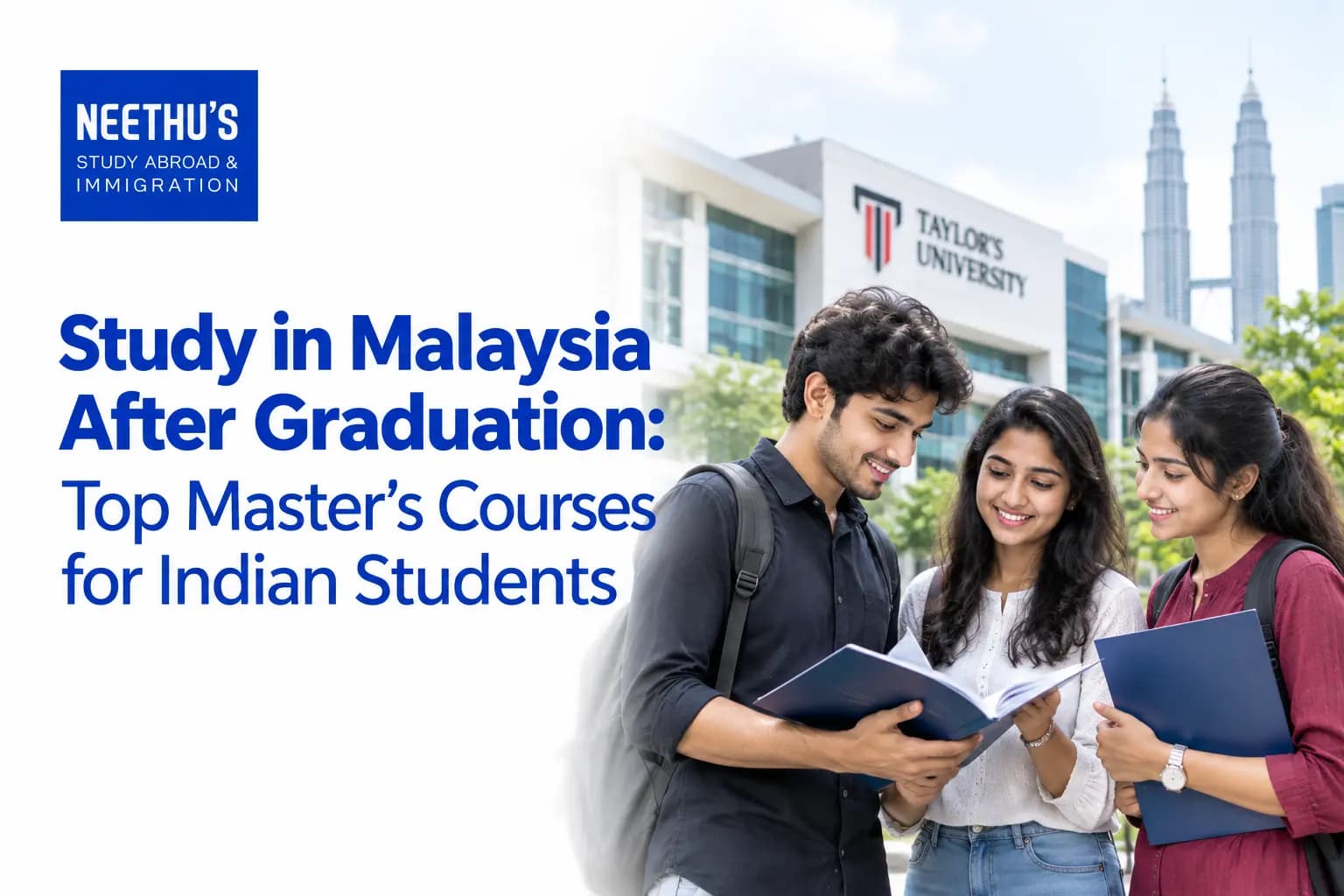
Choosing the right country for postgraduate education is an important decision for Indian students who want to improve their qualifications and build successful careers. Malaysia has become an attractive destination for international students because of its recognised universities, comparatively affordable tuition fees, multicultural environment, and wide range of master's programmes.
After completing a bachelor's degree, students can explore several postgraduate courses in Malaysia, including business administration, computer science, engineering, data science, finance, public health, and hospitality management. These programmes help graduates gain specialised knowledge, practical skills, and international exposure. Masters in Malaysia for Indian Students is an increasingly popular option for graduates looking for quality education and international career opportunities.
One of the main advantages of pursuing higher education in Malaysia is the availability of English-taught programmes and different university options to suit various academic interests and budgets.
In this blog, we explore the top master's courses in Malaysia, popular universities, eligibility requirements, study costs, visa procedures, and career opportunities for Indian students.
A Master of Business Administration is one of the most popular postgraduate qualifications for students interested in business, management, and leadership. It is suitable for graduates from commerce, management, engineering, and other academic backgrounds.
The programme generally covers:
Strategic management
Marketing management
Financial management
Human resource management
Business analytics
International business
An MBA helps students develop leadership, communication, decision-making, and problem-solving abilities.
After graduation, students can explore career opportunities as business development managers, marketing managers, operations managers, management consultants, and financial analysts.
Computer science and information technology are excellent options for graduates interested in developing advanced technical skills. Malaysian universities offer several postgraduate programmes designed to meet the growing demand for technology professionals.
Popular specialisations include:
Artificial Intelligence
Cybersecurity
Software Engineering
Cloud Computing
Information Systems
Computer Networks
These programmes provide knowledge of advanced computing, programming, software development, and digital security.
Graduates can explore career opportunities as software developers, cybersecurity analysts, IT consultants, systems analysts, and technology specialists.
Students with undergraduate degrees in computer science, information technology, or related disciplines may find these courses particularly suitable.
Data science is an emerging field that plays an important role in modern business operations. Organisations use data to understand customer behaviour, identify market trends, and make informed business decisions.
A master's degree in data science or business analytics helps students develop analytical and technical skills.
The curriculum may include:
Statistical analysis
Machine learning
Data visualisation
Predictive modelling
Big data technologies
Business intelligence
Graduates can pursue careers as data scientists, data analysts, business intelligence analysts, machine learning specialists, and analytics consultants.
Students with backgrounds in mathematics, statistics, computer science, engineering, or business analytics can consider these programmes.
Malaysia offers several postgraduate engineering programmes for graduates who want to specialise in advanced technical fields.
Some popular engineering specialisations include:
Mechanical Engineering
Civil Engineering
Electrical and Electronic Engineering
Chemical Engineering
Petroleum Engineering
Industrial Engineering
These programmes combine theoretical learning, research activities, technical projects, and practical applications.
After completing their master's degree, graduates can explore employment opportunities in construction, manufacturing, infrastructure, energy, research, and technology industries.
Students should select a specialisation based on their undergraduate qualification and future career interests.
Students who have completed bachelor's degrees in commerce, accounting, economics, or finance can consider postgraduate programmes in finance and accounting.
Popular specialisations include:
Financial Management
International Finance
Professional Accounting
Investment Management
Banking and Risk Management
Financial Technology
These programmes help students understand financial markets, investment strategies, corporate finance, financial reporting, and risk management.
Graduates can pursue careers as financial analysts, investment analysts, accountants, banking professionals, risk management specialists, and financial consultants.
A Master of Public Health (MPH) is suitable for graduates interested in healthcare management, disease prevention, community health, and health policy.
The programme generally covers:
Epidemiology
Health promotion
Biostatistics
Environmental health
Healthcare management
Public health research
Students with relevant academic backgrounds in medicine, nursing, pharmacy, life sciences, and other healthcare disciplines can explore suitable programmes.
After completing the course, graduates may find opportunities in healthcare organisations, research institutions, public health projects, NGOs, and healthcare administration.
Malaysia is known for its tourism and hospitality industry, making it an interesting destination for students interested in this sector.
A master's degree in hospitality and tourism management provides knowledge of hotel operations, tourism planning, event management, customer experience, and international hospitality businesses.
Potential career opportunities include:
Hotel operations manager
Tourism development executive
Event manager
Hospitality consultant
Resort manager
Travel and tourism specialist
This programme is particularly suitable for graduates who want to build careers in hotels, resorts, tourism organisations, and international hospitality businesses.
Indian students can explore several public and private universities when selecting a postgraduate programme. The right institution depends on academic qualifications, preferred specialisation, tuition budget, and career objectives.
Some universities worth considering include:
1. University of Malaya (UM): A recognised public research university offering postgraduate programmes in business, engineering, science, social sciences, and other disciplines.
2. Universiti Putra Malaysia (UPM): Provides postgraduate opportunities in agriculture, engineering, business, food science, and research-related fields.
3. Universiti Kebangsaan Malaysia (UKM): Offers master's programmes in healthcare, education, engineering, management, and science.
4. Taylor's University: A private university offering programmes in business, hospitality, management, and other academic areas.
5. Monash University Malaysia: Provides postgraduate programmes in business, engineering, information technology, science, and related disciplines.
Students should compare university rankings, programme accreditation, admission requirements, course structures, and tuition fees before making their final decision.
Admission requirements vary depending on the university and selected programme. However, most Malaysian universities expect international applicants to meet certain academic and language requirements.
Common eligibility criteria include:
A recognised bachelor's degree in a relevant discipline.
Minimum academic performance or CGPA specified by the university.
Academic transcripts and degree certificates.
English language proficiency through an accepted test, if required.
Statement of purpose or personal statement, depending on the programme.
Letters of recommendation, where applicable.
Updated resume for selected professional courses.
Some specialised programmes may also require relevant work experience, research proposals, portfolios, or additional entrance qualifications.
Students should carefully review the admission criteria of their chosen university because requirements can differ between institutions.
The cost of postgraduate education depends on the university, course duration, specialisation, and accommodation arrangements. Public and private universities may have different tuition fee structures.
Apart from tuition fees, Indian students should prepare a budget for their daily expenses.
Major expenses include:
University tuition fees
Accommodation and utilities
Food and groceries
Local transportation
Study materials
Health insurance
Personal expenses
Living costs depend on the city and lifestyle. Students staying in Kuala Lumpur may have different accommodation and transportation expenses compared with those studying in smaller cities.
It is advisable to check the latest international student fee structure of each university and prepare a financial plan before applying.
Indian students need an appropriate student visa to pursue full-time higher education in Malaysia.
The student visa application is generally coordinated through Education Malaysia Global Services (EMGS), with the selected university assisting international students throughout the process.
Commonly required documents include:
Valid passport with the required validity.
University admission or offer letter.
Academic certificates and transcripts.
Passport-size photographs.
English language proficiency certificate, if applicable.
Health declaration documents.
Medical screening and insurance documents, as required.
For a new Student Pass application, the passport should generally have at least 18 months of validity.
Students should begin the visa process after receiving their university admission confirmation. Submitting accurate documents and completing the required formalities on time can help avoid unnecessary delays.
A postgraduate qualification can help Indian students develop specialised knowledge and improve their employment prospects.
Malaysia offers employment opportunities across several industries, including:
Information technology and software development
Banking and financial services
Engineering and manufacturing
Healthcare and research
Hospitality and tourism
Business management and consulting
Students interested in gaining international work experience should understand the employment and immigration regulations applicable after graduation.
Malaysia also offers a Graduate Pass for eligible international graduates, allowing them to stay for up to 12 months under specified conditions. Indian nationals are among the eligible nationalities, subject to the applicable requirements and immigration approval.
However, students should check the latest immigration guidelines before making post-study employment plans.
There are several reasons why Malaysia attracts Indian students interested in postgraduate education.
1. English-taught programmes: Many universities offer courses in English, making it easier for international students to participate in academic activities.
2. International exposure: Students get opportunities to interact with classmates from different countries and experience diverse cultures.
3. Wide range of courses: Universities offer postgraduate programmes in business, engineering, technology, healthcare, finance, and other disciplines.
4. Affordable education options: Students can compare public and private institutions to find programmes that suit their financial requirements.
5. Modern learning facilities: Many universities provide well-equipped classrooms, libraries, research facilities, and technology-supported learning environments.
6. Multicultural environment: Malaysia offers a diverse society where international students can experience different traditions, cuisines, and cultures.
Selecting a master's course requires careful research. Students should consider their undergraduate qualifications, interests, financial situation, and future employment plans before making a decision.
Here are some important factors to evaluate:
University recognition: Check whether the university and selected programme have appropriate accreditation and recognition.
Academic eligibility: Make sure your bachelor's degree meets the admission requirements.
Tuition fees: Compare the complete programme fees and additional university charges.
Course duration: Understand the programme structure and expected completion period.
Career opportunities: Research the employment options related to your chosen specialisation.
Practical exposure: Check whether the course includes internships, research projects, or industry collaborations.
Visa requirements: Understand the student visa process and relevant post-study immigration options.
Students who need assistance with university shortlisting, application preparation, and documentation can approach experienced education advisors. Choosing the Best study abroad consultants in kerala can help students understand available postgraduate programmes and organise their admission process more effectively.
Malaysia offers Indian graduates several opportunities to pursue postgraduate education in business administration, computer science, engineering, finance, healthcare, hospitality, and other specialised fields.
Its multicultural learning environment, English-taught programmes, range of university options, and comparatively affordable education make it an attractive destination for students seeking international qualifications.
Before deciding to Study in Malaysia, students should carefully compare universities, course structures, tuition fees, admission requirements, and future career opportunities.
Choosing a master's programme that matches their undergraduate qualifications and long-term ambitions can make the postgraduate experience more valuable. With proper research and application planning, Indian students can take an important step towards building successful careers through higher education in Malaysia.
1. What are the best master's courses in Malaysia for Indian students?
Some popular master's programmes include Business Administration (MBA), Computer Science, Data Science, Engineering, Finance, Public Health, and Hospitality Management. Students should select a course based on their undergraduate qualification and career interests.
2. Can Indian students pursue a master's degree in Malaysia after completing a bachelor's degree in India?
Yes. Indian students with a recognised bachelor's degree can apply for postgraduate programmes in Malaysia. However, they must meet the university's academic requirements and any additional eligibility criteria for their chosen course.
3. How long does it take to complete a master's degree in Malaysia?
Most master's programmes in Malaysia take between one and two years to complete. The duration depends on the university, subject, and whether the programme involves coursework, research, or a combination of both.
4. What is the minimum percentage required to study for a master's degree in Malaysia?
The minimum academic requirement varies between universities and programmes. Many institutions require a relevant bachelor's degree with a specified CGPA or equivalent academic performance. Students should check the admission criteria of their preferred university.
5. Is IELTS compulsory for Indian students applying for master's courses in Malaysia?
IELTS is not compulsory for every university or programme. Some institutions accept other English proficiency tests or consider previous education in English, subject to their admission policies. Students should confirm the accepted language requirements before applying.
6. What is the average tuition fee for master's programmes in Malaysia?
Tuition fees vary depending on the university, course, and duration. Public universities generally offer different fee structures from private institutions. Indian students should check the latest international student fees and additional charges before preparing their education budget.
7. Can Indian students work part-time while studying in Malaysia?
Yes. International students in Malaysia may work part-time for up to 20 hours per week during semester breaks or holidays of more than seven days, subject to immigration approval and applicable conditions. They should obtain the necessary permission before starting employment.
8. Which are the best universities in Malaysia for master's programmes?
Some popular options include the University of Malaya, Universiti Putra Malaysia, Universiti Kebangsaan Malaysia, Taylor's University, and Monash University Malaysia. Students should compare programme accreditation, faculty expertise, fees, and admission requirements before selecting a university.
9. Can Indian students stay in Malaysia after completing their master's degree?
Eligible Indian graduates may apply for Malaysia's Graduate Pass, which allows qualifying international graduates to stay for up to 12 months under specified conditions. Approval depends on meeting the relevant immigration requirements.
10. What career opportunities are available after completing a master's degree in Malaysia?
Graduates can explore career opportunities in information technology, engineering, finance, healthcare, business management, research, and hospitality. Employment opportunities depend on the student's specialisation, qualifications, experience, and applicable work authorisation requirements.