Preparing your study abroad journey…
Preparing your study abroad journey…
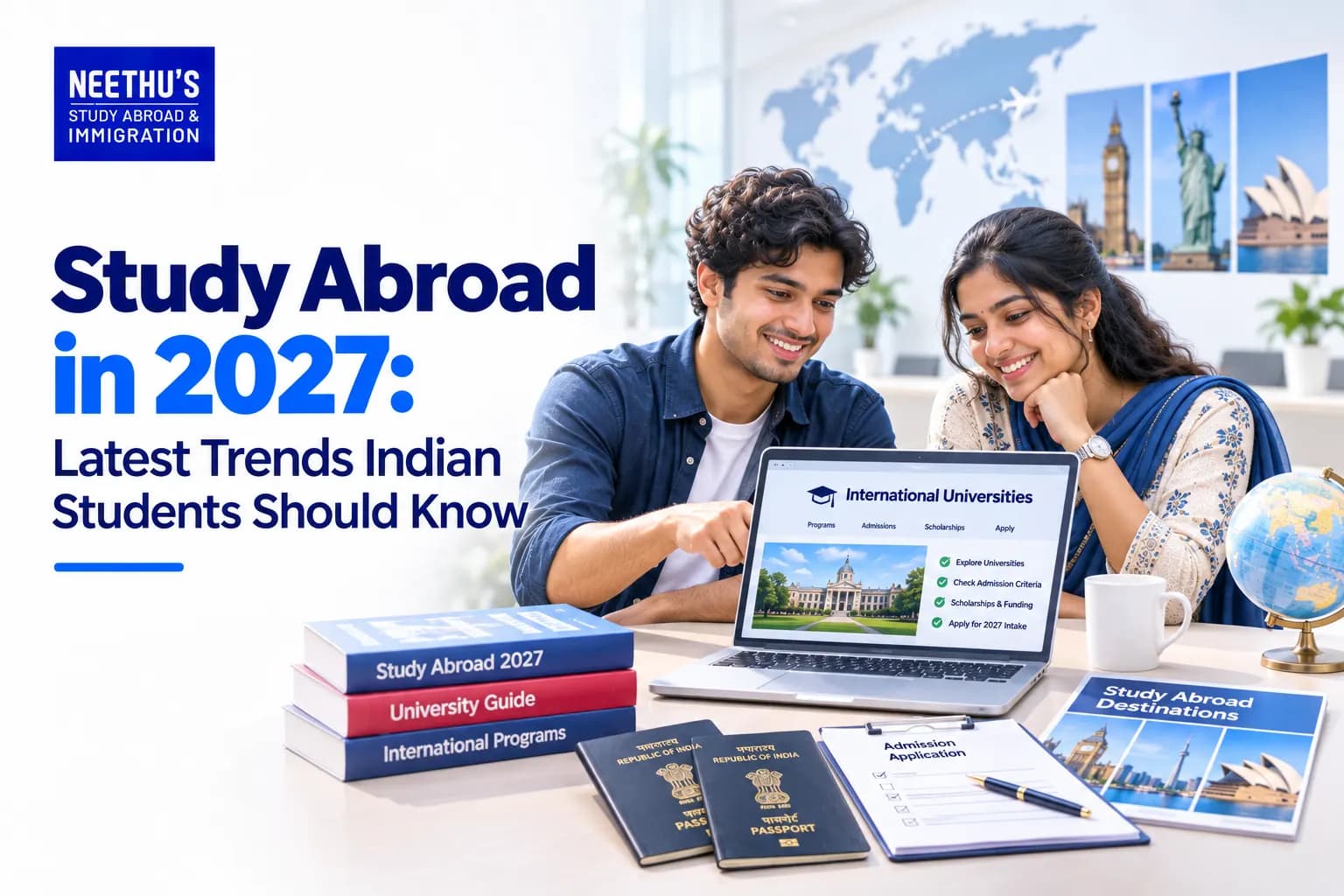
International education is changing as universities, governments, and industries respond to new economic conditions, technological developments, and workforce requirements. For Indian students planning to pursue higher education overseas in 2027, choosing a destination involves more than comparing university rankings or tuition fees. Factors such as changing student visa policies, employment opportunities, emerging courses, scholarships, and affordability are becoming increasingly important.
Countries that were once considered the only major destinations are now competing with emerging education hubs across Europe and Asia. At the same time, universities are introducing programmes that focus on practical skills, artificial intelligence, research, and industry experience.
Understanding the Latest study abroad trends can help students make informed decisions before beginning their applications. Whether planning an undergraduate degree, postgraduate qualification, or specialised professional course, students should understand how international education is evolving and what these changes mean for their future.
One noticeable development in international education is the growing interest in European countries. Although the UK remains a popular choice, Indian students are increasingly exploring destinations such as Germany, France, Italy, Ireland, Hungary, and the Netherlands.
These countries offer a combination of internationally recognised qualifications, specialised academic programmes, and opportunities to experience different cultures.
Germany attracts students interested in engineering, technology, and research. France is known for business, management, fashion, and hospitality education, while Italy offers programmes in design, architecture, and business.
Students considering European destinations should compare tuition fees, language requirements, living expenses, and post-study opportunities. They should also check whether their selected programmes are available in English or require local language proficiency.
Technology is influencing the way businesses operate, creating demand for professionals with specialised digital skills. As a result, international students are showing increased interest in programmes related to artificial intelligence, data science, cybersecurity, robotics, and cloud computing.
Universities are expanding their course offerings to include subjects that connect academic knowledge with practical industry applications.
Popular areas of interest include:
Artificial Intelligence and Machine Learning.
Data Science and Business Analytics.
Cybersecurity and Information Security.
Software Engineering.
Robotics and Automation.
Cloud Computing.
Digital Transformation.
According to an October 2026 IDP student survey, 47% of Indian respondents identified AI and technology skills as important for future career success. This highlights the growing influence of emerging technologies on course selection.
Students should look beyond course titles and examine the curriculum, practical projects, internship opportunities, and industry partnerships before selecting a programme.
A foreign qualification is often viewed as an investment in long-term career development. However, students are becoming more careful about evaluating employment opportunities after graduation.
The availability of post-study work options, industry connections, internship opportunities, and graduate employment support can influence destination selection.
For example, students may compare the UK's Graduate Route, Australia's Temporary Graduate visa, and Germany's post-study residence options. However, immigration conditions and eligibility requirements differ, and policies may change before students graduate.
Before applying, research:
Post-study work eligibility.
Duration of permitted stay.
Employment conditions.
Graduate recruitment opportunities.
Skills in demand.
Relevant professional registration requirements.
Students should avoid choosing a country solely because of its post-study work policy. Employment outcomes also depend on qualifications, language skills, experience, and the local job market.
Student visa regulations are receiving greater attention in international education planning. Several popular destinations have introduced or discussed changes involving international student numbers, financial requirements, dependent eligibility, and post-study immigration routes.
These developments make it important for Indian applicants to understand the latest official regulations before selecting a destination.
Some important areas to research include:
Proof of sufficient financial resources.
Tuition fee payment requirements.
English language proficiency.
Genuine student assessment.
Health insurance.
Accommodation arrangements.
Dependent visa eligibility, where applicable.
Visa approval is not guaranteed by university admission. Students must satisfy the immigration requirements of their chosen country independently.
For 2027 applicants, checking official government immigration websites regularly is particularly important because rules may change between application and travel dates.
Rising tuition fees and living expenses have encouraged students and families to examine the overall cost of international education more carefully.
Instead of choosing a university based only on its reputation, applicants are comparing the total financial commitment with the academic and career benefits.
Germany, Italy, France, Hungary, and other European destinations may offer different tuition structures and scholarship opportunities depending on the institution and programme.
Students can explore:
Merit-based scholarships: Awarded to applicants based on academic performance and achievements.
Need-based financial assistance: Offered by selected institutions to students who demonstrate financial need.
Government scholarships: Available through specific national or international education programmes.
University scholarships: Provided by individual institutions for eligible international students.
Research funding: Available for selected postgraduate and doctoral programmes.
Students should check application deadlines, academic conditions, funding coverage, and renewal requirements. Some scholarships cover only tuition fees, while others may also contribute towards accommodation or living expenses.
Healthcare education is another area attracting attention among international students. Growing demand for qualified professionals has encouraged interest in nursing, public health, biomedical science, physiotherapy, pharmacy, and healthcare management.
Students with relevant academic backgrounds can explore specialised programmes that combine theoretical learning with practical experience.
Popular study areas include:
Nursing and Midwifery.
Public Health.
Biomedical Science.
Healthcare Administration.
Physiotherapy.
Clinical Research.
Pharmaceutical Sciences.
Admission requirements can vary significantly. Some programmes require previous qualifications in relevant subjects, clinical experience, professional registration, or additional entrance assessments.
Students planning to practise in another country should also understand the professional licensing and registration requirements before selecting a course.
Academic qualifications remain important, but employers increasingly value graduates who can apply their knowledge in professional environments.
Consequently, universities are placing greater emphasis on practical learning, industry projects, internships, research activities, and collaborative assignments.
Students should examine whether a programme includes:
Industry-based projects.
Internship placements.
Laboratory or practical training.
Research opportunities.
Career development services.
Professional networking activities.
These opportunities can help international students understand workplace expectations and develop skills relevant to their chosen industries.
When comparing universities, reviewing the course structure can be more useful than relying entirely on overall institutional rankings.
Technology is also changing how students research universities and prepare their applications.
Applicants increasingly use digital platforms to compare programmes, understand eligibility criteria, organise documents, and explore scholarship opportunities.
Artificial intelligence tools can assist with brainstorming personal statement ideas, improving grammar, and identifying relevant course information. However, students should verify important details through official university websites.
A personal statement should reflect the applicant's actual academic background, motivation, and career goals. Submitting generic or misleading AI-generated information can weaken an application.
Students should also ensure that their academic documents, financial information, and application details are accurate and consistent.
Another development worth watching is the expansion of international university campuses in India.
Foreign institutions are exploring opportunities to establish campuses and academic partnerships within the country. This provides students with additional ways to access international qualifications without immediately relocating overseas.
For some students, these campuses may offer a more affordable route to international education. Others may consider starting their studies in India before exploring further international academic opportunities.
However, applicants should verify the recognition of the institution, programme structure, degree-awarding arrangements, and progression opportunities before enrolling.
International branch campuses do not provide exactly the same experience as studying in the university's home country, particularly in terms of cultural exposure and international campus life.
With changing admission requirements, visa regulations, and destination options, preparing an international application requires careful research.
Students looking for Study abroad Consultants for Indian students should prioritise agencies that provide transparent information about universities, eligibility requirements, tuition fees, scholarships, and visa procedures.
When comparing the Best study abroad consultants in Kerala, consider their experience with different destinations, student feedback, application support, and knowledge of current immigration regulations.
A reliable consultant should help students:
Evaluate their academic qualifications.
Identify suitable countries and universities.
Understand admission and language requirements.
Prepare application documents.
Explore scholarship opportunities.
Organise financial and visa documentation.
Students should remain involved in the process and independently verify important information through official sources. No consultant can guarantee university admission or visa approval.
International education in 2027 is expected to offer students a wider range of destinations, specialised courses, and academic opportunities. European universities, technology-focused programmes, healthcare education, practical learning, and scholarship options are becoming important considerations for Indian applicants.
At the same time, changing visa regulations, financial requirements, and employment conditions make early preparation essential.
Understanding the Latest study abroad trends can help students select programmes that match their academic interests, financial circumstances, and long-term career plans. Rather than following popular destinations without proper research, applicants should compare universities, examine course structures, and understand the opportunities available after graduation.
With informed decisions and careful application planning, Indian students can approach their international education goals with greater confidence in 2027.
1. What are the major study abroad trends for Indian students in 2027?
Major trends include increased interest in European destinations, AI and technology courses, healthcare education, affordable universities, scholarships, and career-focused programmes.
2. Which countries are popular for Indian students planning to study abroad in 2027?
The UK, Germany, Canada, Australia, Ireland, France, Italy, and the Netherlands remain important destinations for international education.
3. Are European countries becoming popular among Indian students?
Yes. Countries such as Germany, France, Italy, and the Netherlands are attracting attention because of their academic programmes, research opportunities, and diverse education options.
4. Which courses will be in demand for international students in 2027?
Artificial intelligence, data science, cybersecurity, engineering, healthcare, business analytics, and public health are among the areas students are exploring.
5. Will student visa requirements change in 2027?
Visa policies may change depending on the destination. Students should check official immigration websites for the latest financial, documentation, and eligibility requirements.
6. Can Indian students get scholarships to study abroad in 2027?
Yes. International students can explore university scholarships, government funding, merit-based awards, and research grants, depending on their qualifications.
7. Is studying abroad in 2027 expensive?
Costs depend on the country, university, course, accommodation, and lifestyle. Comparing total education expenses and available scholarships can help students plan their budgets.
8. Is IELTS compulsory for studying abroad in 2027?
Not always. Some universities accept IELTS, PTE, TOEFL, or other recognised English tests. Requirements vary by institution and programme.
9. How early should Indian students start preparing for 2027 admissions?
Ideally, students should begin researching 8–12 months before their intended intake to allow sufficient time for university selection, examinations, documents, finances, and visa applications.
10. How can study abroad consultants help Indian students?
Consultants can assist with university selection, eligibility assessment, application preparation, scholarship research, and visa documentation. Students should verify all important information independently.