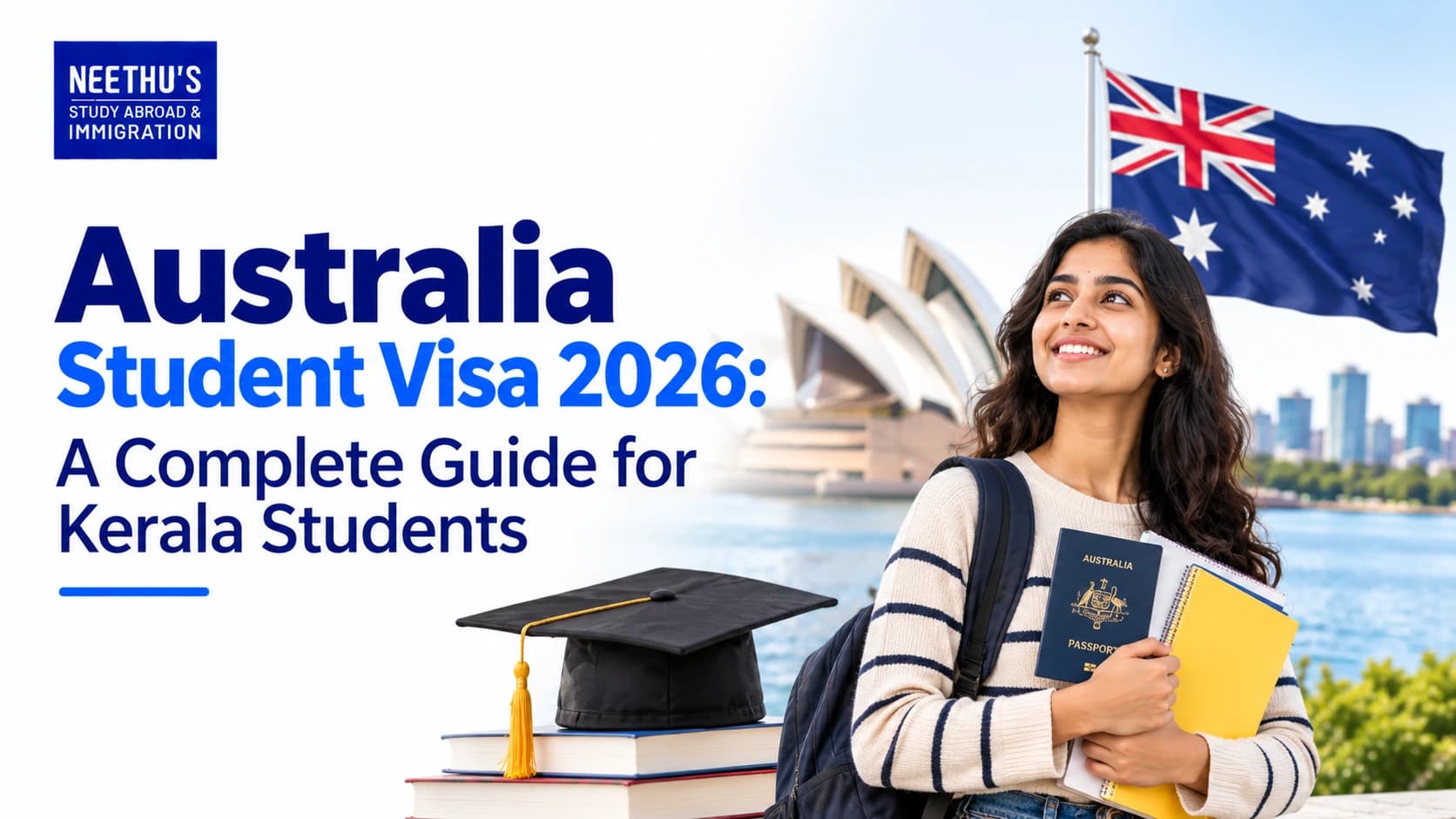
Australia Student Visa 2026: A Complete Guide for Kerala Students
Australia continues to attract students from Kerala who want to gain international qualifications, develop professional skills, and explore career opportunities. Its universities and colleges offer programmes in areas such as information technology, business, engineering, healthcare, hospitality, and research. However, studying overseas requires careful planning, particularly when preparing a student visa application.
Getting admission to an Australian institution is only the beginning. Students must also understand the visa process, demonstrate that their education is financially manageable, and explain why their selected course supports their future goals. Preparing these details early can help applicants avoid unnecessary delays and submit more organised applications.
For students planning to Study in Australia, two important areas deserve particular attention in 2026: the Genuine Student (GS) requirement and financial capacity evidence. This guide explains the main preparation steps, common mistakes, and practical strategies Kerala students can follow before submitting their applications.
Understanding the Australian Student Visa Process
The Australian Student visa, subclass 500, allows eligible international students to study an approved course in Australia. Applicants generally need to secure admission from an eligible education provider before lodging their visa application.
The preparation process usually begins with selecting a suitable course and institution. Students should compare course content, tuition fees, admission criteria, study duration, and available learning opportunities before making a decision.
After receiving an offer, applicants may need to accept the place, pay the required initial fees, and obtain a Confirmation of Enrolment (CoE). They should then prepare their supporting documents, arrange Overseas Student Health Cover (OSHC), complete the online visa application, and provide the required evidence.
The application may also involve health, character, English-language, and other requirements, depending on the applicant's circumstances. Students should review the latest rules before submitting their applications because immigration procedures can change.
Australia Student Visa Requirements in 2026
Understanding the Australia student visa requirements before beginning the application can help students prepare the correct documents and avoid last-minute problems.
Although requirements vary according to individual circumstances, applicants should generally be prepared to provide the following:
-
A valid passport and personal identification details.
-
A Confirmation of Enrolment from the Australian education provider.
-
Academic certificates and transcripts.
-
English-language test results, if required.
-
Evidence of sufficient financial capacity when applicable.
-
Overseas Student Health Cover.
-
Responses to the Genuine Student questions.
-
Additional documents requested by the authorities.
Students should ensure that their educational history, employment details, and personal information are consistent across all documents. Any gaps in education or employment should be explained honestly where relevant.
English-language requirements depend on the institution, course, and applicable visa rules. IELTS, PTE Academic, and other accepted tests may be relevant, but students should confirm the required test and score directly with their education provider and check the applicable immigration rules.
It is also important to understand that receiving an admission offer does not guarantee visa approval. The visa application is assessed separately, and applicants must meet the relevant criteria.
How to Prepare for the Genuine Student Requirement
The Genuine Student requirement assesses whether an applicant genuinely intends to study in Australia and has considered the circumstances surrounding their proposed education. It replaced the Genuine Temporary Entrant requirement for applications lodged from 23 March 2024.
Students should treat the GS questions as an opportunity to explain their real educational choices rather than simply writing what they believe an immigration officer wants to read.
Explain Why You Selected the Course
Your chosen programme should make sense in relation to your previous education, work experience, or future ambitions.
For example, a student who has completed a bachelor's degree in computer science and wants to pursue a specialised master's programme should explain how the new qualification builds on their existing knowledge.
Research the curriculum before preparing your answers. Identify the subjects, practical components, or specialisations that influenced your decision. Specific explanations are more convincing than general statements about wanting an international degree.
Explain Your Choice of Australia
Applicants should understand why the selected Australian institution and course suit their circumstances.
Consider factors such as teaching methods, course structure, industry exposure, research facilities, or specialised subjects. Explain which of these factors matter to your educational plans.
If similar programmes are available in India, consider how the Australian course differs in ways that are genuinely relevant to your goals. Avoid unsupported claims or comparisons that you cannot explain.
Connect Your Studies With Future Career Goals
Your answers should demonstrate that you have considered how the qualification may benefit your future.
For instance, a student interested in supply chain management could explain how studying logistics, procurement, and international operations may support future employment in the field.
You do not need to guarantee a particular job or salary. Instead, show that you understand the career paths related to your qualification and have realistic expectations about the opportunities it may provide.
Keep Your Answers Honest and Consistent
Practical GS preparation requires careful attention to detail.
-
Answer each question directly and avoid irrelevant information.
-
Use real examples from your education, employment, or personal circumstances.
-
Ensure your answers match your academic records and other supporting documents.
-
Explain relevant education or employment gaps accurately.
-
Avoid copying generic statements from online templates.
-
Review the word limit and instructions provided in the application.
The GS questions have a limit of 150 words per response. Supporting evidence is important, so statements about education, employment, finances, or other circumstances should be backed by relevant documents where appropriate.
No template can guarantee a positive outcome. The strongest preparation is based on genuine circumstances, clear explanations, and consistent evidence.
Managing Financial Capacity Evidence in 2026
Financial preparation is another essential part of applying for an Australian student visa. Applicants must demonstrate that they can meet the relevant education and living expenses without depending on unauthorised employment.
The published minimum annual living-cost amount for a primary student applicant is AUD 29,710. This is only one component of the financial calculation. Applicants may also need to account for tuition fees and travel expenses, with additional amounts applying to eligible accompanying family members.
Students should confirm the current financial requirements before applying, as the applicable amounts and evidence rules may change.
Calculate Your Total Education Budget
Before paying substantial fees or arranging a loan, prepare a realistic budget covering your expected expenses.
Include:
-
Tuition fees for the relevant period, accounting for fees already paid where applicable.
-
The required living-cost amount.
-
Travel expenses.
-
Overseas Student Health Cover.
-
Accommodation, food, transport, and personal expenses.
The cost of living varies across Australian cities. Students should research their intended destination and consider whether they can comfortably manage their expenses beyond the minimum amount used for visa purposes.
Organise Your Financial Documents
Acceptable financial evidence may include eligible bank funds, approved education loans, scholarships, or other recognised forms of financial support.
If parents or a partner are sponsoring your studies, organise the documents that demonstrate the relationship and explain how the education will be funded. Depending on the circumstances, these may include bank statements, income documents, loan sanction letters, scholarship confirmations, or other supporting records.
An alternative financial pathway may be available through qualifying evidence of a parent's or partner's annual income. Applicants should check the current threshold and accepted evidence rather than relying on outdated figures.
Explain the Source of Funds Clearly
Students should avoid arranging finances at the last minute without understanding how the funds will be documented.
If a bank account contains a substantial recent deposit, keep evidence explaining its source where relevant. This may include documentation relating to an education loan, a legitimate asset sale, savings, or another genuine financial transaction.
The aim is to demonstrate that the funds are authentic, accessible, and sufficient for the intended purpose.
Never submit altered bank statements, false income certificates, or misleading sponsorship records. Incorrect or fraudulent evidence can have serious consequences for a visa application.
Choosing the Right Study Abroad Guidance
Students who need assistance comparing institutions, preparing admission documents, or organising their application may consider the Best study abroad consultants in kerala when researching education guidance services.
A reliable consultant should explain the application process, provide clear information about fees, help identify suitable courses, and ensure that students understand their responsibilities. They should not promise guaranteed visa approval or encourage applicants to provide false information.
Before selecting a consultant, ask about their experience, the services included in their fee, and whether you will retain access to your application and documents.
Students should also verify important immigration information independently. For complex immigration matters, advice from an appropriately authorised Australian migration professional may be helpful.
Common Mistakes Kerala Students Should Avoid
Even applicants with good academic records can experience difficulties if their documentation or explanations are incomplete.
One common mistake is selecting a course without understanding its content or relevance to previous studies. Applicants should research their programme thoroughly before writing their GS responses.
Another mistake is underestimating the total cost of studying overseas. Tuition fees and minimum living-cost figures do not necessarily cover every expense a student may face. A detailed budget can help identify financial gaps before the application is submitted.
Some students also rely too heavily on part-time work to pay essential expenses. Employment opportunities and working rights are subject to applicable conditions, and future earnings should not replace the financial evidence required for the visa.
Finally, avoid submitting inconsistent information. Check names, dates, qualifications, employment history, financial records, and application answers before lodging the application.
Conclusion
Preparing for an Australian student visa in 2026 requires more than securing admission to a college or university. Kerala students should understand the visa process, choose a course that aligns with their educational background, prepare genuine GS responses, and organise financial evidence well in advance.
To Study in Australia, start by researching suitable institutions and calculating the total cost of your education. Give particular attention to the Genuine Student requirement, ensure your supporting documents are authentic, and verify the latest financial and immigration rules before submitting your application.
With careful planning, realistic financial preparation, and clear explanations of your educational goals, you can approach the student visa process in a more organised and informed manner.
FAQs
1. What is the Australian Student visa (subclass 500)?
The Australian Student visa (subclass 500) allows eligible international students to study an approved course in Australia. Applicants must meet the relevant visa criteria and provide the required supporting documents.
2. What are the main Australian student visa requirements in 2026?
Applicants generally need a valid passport, Confirmation of Enrolment (CoE), appropriate health insurance, financial evidence when required, Genuine Student responses, and other documents relevant to their circumstances.
3. What is the Genuine Student (GS) requirement for an Australian student visa?
The GS requirement assesses whether an applicant genuinely intends to study in Australia. Students should explain their course choice, educational background, reasons for choosing Australia, and expected benefits of their studies.
4. How can Kerala students prepare for the Genuine Student requirement?
Kerala students should research their chosen course, prepare honest and specific answers, explain how the qualification relates to their career goals, and ensure their responses are consistent with their supporting documents.
5. How much money is required for an Australian student visa in 2026?
The published minimum annual living-cost amount for a primary student applicant is AUD 29,710. Applicants must also consider applicable tuition fees and travel expenses. Always verify the current financial requirements before applying.
6. What financial documents are accepted for an Australian student visa?
Depending on the applicant's circumstances, evidence may include bank funds, eligible education loans, scholarships, or qualifying parental or partner income documents. The evidence must satisfy the applicable requirements.
7. Can parents sponsor a student's education in Australia?
Yes. Parents may support their child's education, provided the applicant meets the relevant financial evidence requirements. Supporting documents may be needed to demonstrate the relationship, source of funds, and availability of financial support.
8. Is IELTS or PTE required for an Australian student visa?
English-language evidence may be required depending on the applicant's circumstances, course, institution, and applicable exemptions. Students should confirm accepted tests and score requirements before submitting their applications.
9. Can students work while studying in Australia?
Eligible student visa holders can work subject to their visa conditions. Work rights may include restrictions during study periods, so students should check their individual conditions and avoid relying on future employment to meet required financial capacity.
10. Should Kerala students use study abroad consultants for an Australian student visa?
Consultants may help with course selection, admission procedures, and document preparation. Students should choose a transparent service, avoid anyone promising guaranteed visa approval, and independently verify immigration requirements through official sources.