UK Graduate Route Changes: What Kerala Students Should Know Before 2027
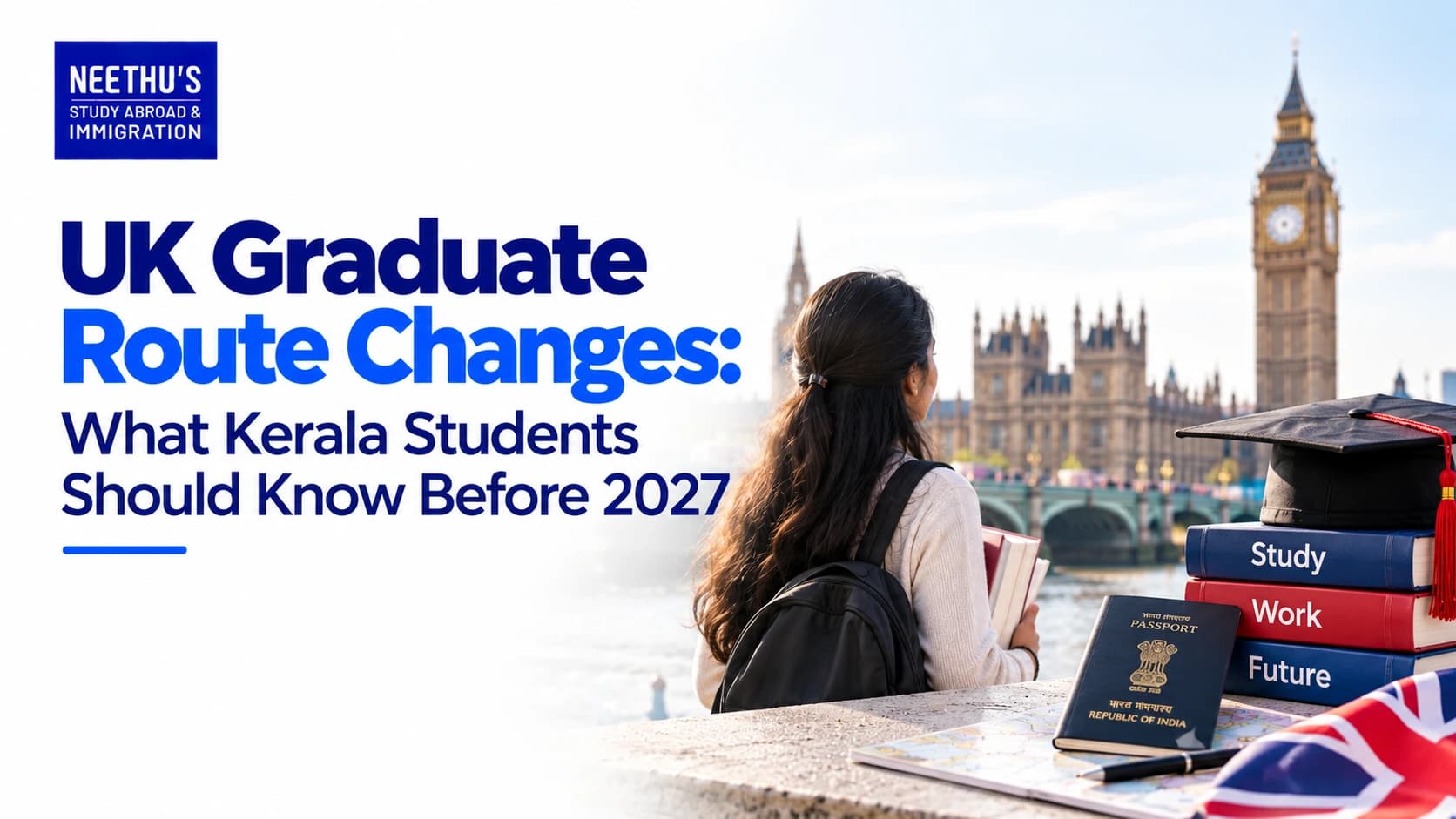
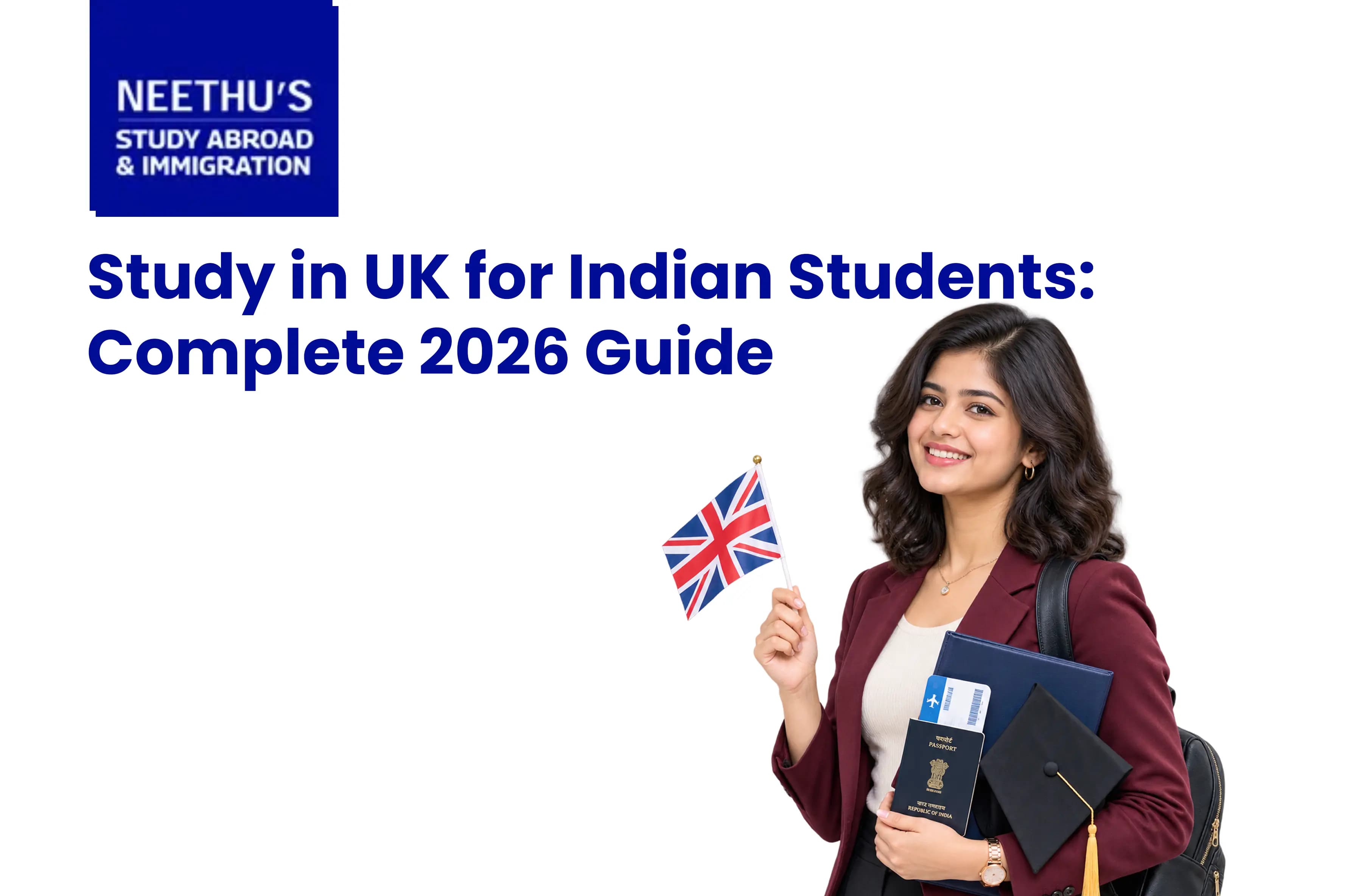
Study in UK can open doors to international qualifications, professional experience, and new career opportunities. For many students from Kerala, the attraction goes beyond earning a degree. They also hope to work in the UK after graduation, gain industry exposure and establish themselves in their chosen fields.
The Graduate Route has played an important role in making this possible. It allows eligible international students to stay in the UK after completing their studies and work without needing an employer to sponsor them at the outset. However, the rules are changing for future graduates.
From 1 January 2027, eligible bachelor's and master's graduates who apply for a Graduate visa will generally receive 18 months of permission rather than two years. Eligible doctoral graduates will continue to receive three years.
The revised timeline makes career preparation more important for students planning their overseas education. Understanding the difference between the Graduate Route and the Skilled Worker visa, particularly the £41,700 standard salary threshold, can help students make better decisions before enrolling.
This article explains the upcoming changes and what aspiring UK graduates from Kerala should consider when planning their education and career.
1. Understanding the UK Graduate Route
The Graduate Route is a UK immigration pathway designed for eligible international students who have successfully completed an approved qualification. It allows them to remain in the country for a limited period and explore employment opportunities after university.
Often referred to as the UK post-study work visa, this route offers greater flexibility than a work visa that requires sponsorship. Graduate visa holders can generally look for employment, work in most roles, and change jobs without obtaining sponsorship for each position. Self-employment is also permitted under the route.
However, the visa is temporary. It does not automatically lead to permanent settlement, and graduates who want to remain in the UK after their permission expires must qualify for another immigration category.
Applicants generally need to meet the following conditions:
-
Hold valid Student permission or eligible Tier 4 permission when applying.
-
Successfully complete an eligible course at a qualifying UK institution.
-
Ensure their university has reported their successful course completion to the Home Office.
-
Submit their Graduate visa application from within the UK before their existing Student permission expires.
Eligibility can depend on the qualification, institution and individual immigration circumstances. Students should check the latest government guidance before relying on this route in their future plans.
2. What Changes on 1 January 2027?
The most important detail is that the new duration depends on when the Graduate visa application is submitted. The date a student begins a course or receives their final results does not, by itself, determine whether they receive 18 months or two years.
The expected duration under the announced rules is as follows:
|
Graduate category |
Application before 1 January 2027 |
Application on or after 1 January 2027 |
|
Eligible bachelor's graduates |
2 years |
18 months |
|
Eligible master's graduates |
2 years |
18 months |
|
Eligible doctoral graduates |
3 years |
3 years |
Students should verify the applicable rules and transitional arrangements through official UK government guidance before applying.
Consider a student from Kozhikode who completes a master's degree in December 2026. If the student submits the Graduate visa application on 2 January 2027, the shorter duration would generally apply. Completing the degree before the end of 2026 does not automatically secure the previous two-year period.
This distinction is particularly relevant to students whose courses are expected to finish around the end of 2026. They should understand the application process, their university's reporting timeline and their existing visa expiry date well in advance.
The UK Graduate visa 2027 changes will leave eligible bachelor's and master's graduates with six fewer months to develop their careers, search for suitable employment and explore their next immigration option. Preparing for these steps before graduation can make the transition easier.
3. Why Is the UK Reducing the Visa Duration?
The Graduate Route is intended to give international graduates an opportunity to gain experience in the UK following their studies. The government's immigration reforms seek to ensure that the route supports the intended progression from education into employment.
For students, the main practical effect is a shorter period in which to make career decisions and prepare for a longer-term stay, if that is their objective.
During the available period, graduates may need to:
-
Identify suitable vacancies in their professional field.
-
Prepare applications, attend interviews and complete recruitment assessments.
-
Gain relevant experience that strengthens their employment prospects.
-
Find an employer willing and able to sponsor a qualifying role.
-
Check whether they meet the conditions for a different immigration route.
Not every Graduate visa holder must immediately obtain a sponsored position. The Graduate Route continues to provide work flexibility during the permission period. However, students who hope to remain in Britain beyond that period should understand the requirements of potential alternative routes early.
A shorter visa does not make career progression impossible, but it increases the value of preparation before the course ends.
4. Understanding the £41,700 Skilled Worker Salary Threshold
One common source of confusion is the £41,700 salary figure. This is associated with the standard salary requirement for the Skilled Worker visa. It is not a minimum salary that every person holding a Graduate visa must earn.
The two immigration routes serve different purposes. The Graduate Route allows eligible graduates to work without employer sponsorship during their authorised stay. The Skilled Worker route, by contrast, generally requires an eligible job offer from an approved sponsoring employer and compliance with the relevant salary rules.
Under the standard Skilled Worker provisions, applicants generally need to meet the applicable salary threshold and the going rate for their occupation. The relevant requirement can vary according to the role and the rules in force when an application is made.
Certain applicants may qualify for reduced salary requirements. Eligible new entrants, including some recent graduates, may be able to use a discounted threshold of £33,400 under the applicable provisions. They must still meet the relevant occupation-specific going rate and all other eligibility conditions.
Therefore, neither figure should be considered a guaranteed salary requirement or entitlement for every graduate.
Example: A graduate receives a £35,000 job offer
Imagine that a student from Thrissur completes a master's degree in the UK and receives an offer for a professional position paying £35,000 annually.
The offer falls below the standard £41,700 threshold. Nevertheless, the graduate might qualify under the new-entrant provisions if the position, employer and personal circumstances satisfy the relevant immigration requirements.
Now consider another graduate who receives an offer worth £29,000 a year. That offer may not meet the applicable salary rules, even if the individual qualifies as a new entrant.
The actual outcome depends on the occupation code, the job's going rate, the applicant's eligibility and the rules applicable at the time. Graduates should verify these details rather than assume that any job offer will qualify for sponsorship.
5. What Does This Mean for Fresh Graduates from Kerala?
For many students, finding their first professional role after university can take time. Employers may expect practical experience, specialised skills or evidence that candidates can apply their academic knowledge in a workplace.
The challenge is not limited to meeting a salary requirement. Students must also identify suitable vacancies and employers that are willing and authorised to sponsor eligible workers.
Opportunities vary by profession. Graduates in computing, engineering, finance and other specialised fields may find relevant positions, but outcomes depend on market conditions, individual skills and employer requirements. A degree alone cannot guarantee employment or sponsorship.
Students can improve their preparation by taking the following steps:
Gain experience while studying. Internships, placements, university projects and relevant part-time experience can help demonstrate practical ability.
Develop industry-specific skills. Employers may look for technical knowledge, communication skills, problem-solving ability and familiarity with the tools used in their sector.
Prepare a professional profile. A clear CV, an updated LinkedIn profile and examples of relevant work can make applications more effective.
Research potential employers. Check whether organisations recruit international graduates and hold the necessary sponsorship licence where required.
Understand salary requirements. Review the eligibility conditions for roles that could provide a route to longer-term employment.
Use university career services. Careers teams can provide advice on interviews, applications, employer events and graduate recruitment programmes.
The aim should be to enter the job market with a clear plan rather than begin researching employment options only after the final examination.
6. How Could an 18-Month Visa Affect the Job Search?
Six months can make a meaningful difference when a graduate is navigating a competitive recruitment process. Professional hiring may involve several interview rounds, practical assessments, reference checks, and internal approval before an offer is made.
A graduate who spends the first few months exploring unrelated vacancies may have less time to secure a position that supports their longer-term plans.
For example, a computer science graduate might initially accept a general role to gain workplace experience. Later, the graduate may decide to pursue a position that offers a clearer sponsorship pathway. Finding that second opportunity can require additional applications and interviews.
This does not mean graduates should reject all jobs that do not offer sponsorship. Employment decisions depend on personal circumstances, career goals and the conditions of the Graduate Route. Instead, students should understand how each opportunity fits into their wider plan.
Before selecting a university course, compare the curriculum, industry connections, placement opportunities and career support available to students. Researching the types of jobs graduates enter can also help set realistic expectations.
The UK post-study work visa offers flexibility, but future bachelor's and master's graduates should not assume they will have two full years under the revised rules. Planning for the 18-month period can help them use their available time more effectively.
7. How Kerala Students Can Prepare Before Applying to a UK University
Choosing an overseas course involves more than comparing university rankings or tuition fees. Students and families should assess whether the qualification offers a realistic pathway towards their intended career.
Before accepting an offer, consider these factors.
Course suitability: Check whether the programme provides the knowledge and qualifications needed for your intended profession.
Employment prospects: Research the types of jobs available to graduates in your chosen field. Look at the skills employers request and the experience they expect.
Placement opportunities: Find out whether the university offers internships, industry projects or access to employer recruitment events.
Sponsorship prospects: Research employers in the sector and understand the requirements for sponsored employment. Do not assume every graduate-level position is eligible.
Financial preparation: Budget for tuition, accommodation, everyday expenses and job-search costs. Consider how you would manage if your employment plans take longer than expected.
Immigration timelines: Check when your course is likely to finish, when your university will report successful completion and when you must submit your visa application.
Students should also recognise that immigration rules can change during the period between university admission and graduation. Decisions should be based on the official requirements available at the relevant time, rather than assumptions about future policy.
For families making a substantial financial commitment, a realistic career plan is just as important as selecting a university.
8. Where Can Students Find Reliable Guidance?
Students comparing institutions and overseas education options may consult the Best study abroad consultants in Kerala for help with course selection, university applications, admission requirements, and planning their education journey.
However, choosing a course and meeting immigration requirements are separate matters. Education consultants cannot guarantee that a student will receive a Graduate visa, secure a sponsored position, or earn a particular salary after graduation.
Students should use official UK government resources to confirm the current requirements:
-
Graduate visa eligibility and application guidance: https://www.gov.uk/graduate-visa
-
Skilled Worker salary requirements and exceptions: https://www.gov.uk/skilled-worker-visa/when-you-can-be-paid-less
For questions involving individual immigration circumstances, a suitably qualified immigration adviser can help explain which provisions may apply.
It is especially important to verify the latest guidance before making decisions based on the 2027 changes, since the requirements applicable at the time of application will determine the outcome.
Conclusion
The reduction in Graduate Route permission from two years to 18 months is an important consideration for Kerala students planning to complete bachelor's or master's degrees in the UK. Under the announced rules, eligible graduates applying from 1 January 2027 will generally receive the shorter period, while eligible doctoral graduates will retain three years.
The £41,700 figure relates to the standard Skilled Worker salary requirement, not the Graduate visa itself. Some eligible recent graduates may qualify under reduced new-entrant provisions, but the job, employer, occupation and salary conditions must still be satisfied.
Students can prepare by researching employment opportunities before choosing a course, developing practical skills during university and understanding the requirements for potential work visa options.
A UK qualification can provide valuable opportunities, but the best decisions come from combining educational goals with realistic financial planning and a clear understanding of the immigration rules. Starting early can help students make better use of their time after graduation and approach their future career with greater confidence.
FAQs
1. What is the UK Graduate Route?
The UK Graduate Route allows eligible international students to stay in the UK after successfully completing an approved qualification. It generally permits graduates to work in most jobs without employer sponsorship during the visa period.
2. What is changing in the UK Graduate visa from 2027?
From 1 January 2027, eligible bachelor's and master's graduates who apply for the Graduate visa will generally receive 18 months of permission instead of two years. Eligible doctoral graduates will continue to receive three years.
3. Who will be affected by the UK Graduate visa 2027 changes?
The revised duration will affect eligible bachelor's and master's graduates who submit their Graduate visa applications on or after 1 January 2027. Students should check the official rules to understand which duration applies to their circumstances.
4. Will students graduating in 2026 still receive a two-year Graduate visa?
Not necessarily. The application date determines the applicable duration under the announced rules. A student who graduates in 2026 but applies on or after 1 January 2027 will generally receive 18 months of permission.
5. What is the £41,700 salary threshold for the UK Skilled Worker visa?
The £41,700 figure is the standard salary threshold associated with the Skilled Worker visa. Applicants must also meet the applicable occupation-specific going rate and other eligibility requirements. It is not a minimum salary requirement for all Graduate visa holders.
6. Can fresh graduates qualify for a lower Skilled Worker visa salary?
Some eligible graduates may qualify under the new-entrant provisions, which can allow a lower salary threshold. The applicant must satisfy the relevant conditions, including the applicable occupation's going rate and other visa requirements.
7. Can Kerala students work in the UK without sponsorship after graduation?
Yes. Eligible Graduate visa holders can generally work in most jobs without employer sponsorship during their authorised stay. However, they will need to qualify for another immigration route if they wish to remain after their Graduate visa expires.
8. How can students improve their chances of finding a sponsored job in the UK?
Students can improve their employment prospects by completing internships, developing industry-specific skills, building a professional CV, attending university career events and researching employers that hold sponsorship licences and recruit for eligible positions.
9. How should Kerala students prepare for the shorter post-study work period?
Students should research career opportunities before selecting a course, gain practical experience during university, and understand the salary and eligibility requirements for potential Skilled Worker positions. They should also plan their finances and keep track of visa application deadlines.
10. Does the UK Graduate Route lead to permanent residency?
No, the UK Graduate Route does not directly lead to permanent residency. Graduates who wish to settle in the UK must qualify for an eligible immigration route, such as the Skilled Worker visa, and meet the relevant settlement requirements.