US Student Visa Delays: What Indian Students Should Know
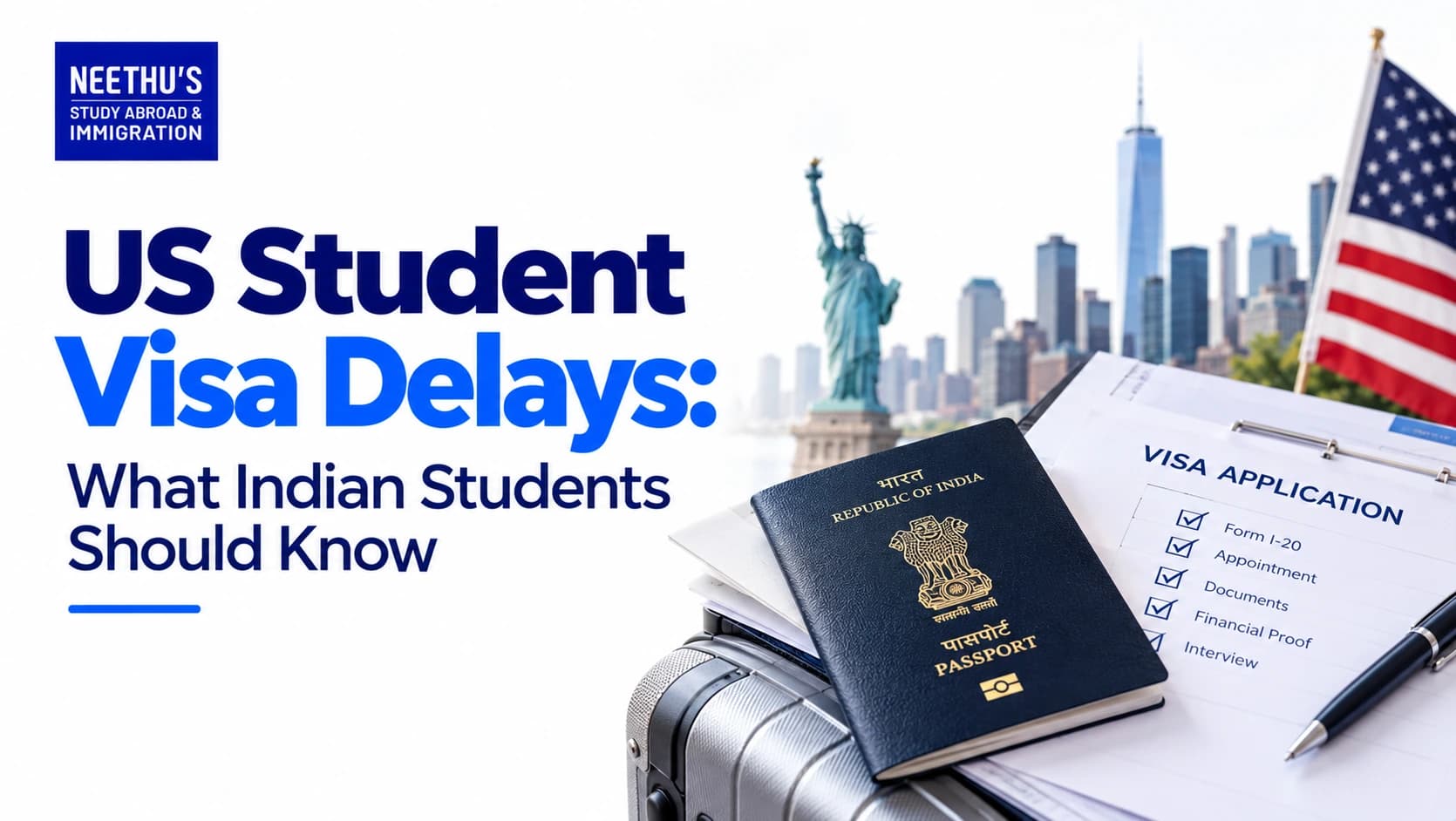
For many students from India, studying in the United States offers the chance to access quality education, explore new learning environments, and build skills for future career growth. However, securing university admission is only the beginning of the process. Students must also complete the necessary visa formalities before they can travel to the US and start their academic journey.
When appointments are difficult to secure, or an application requires additional review, students may find themselves uncertain about their travel plans. US student visa delays can affect university registration, accommodation arrangements, flight bookings, and the financial plans families have made for overseas education.
Although applicants cannot control every part of the immigration process, they can prepare for possible setbacks. Understanding the application procedure, organising documents early and maintaining communication with the university can make it easier to manage unexpected changes.
What Causes Student Visa Delays?
There is no single reason why every student visa application takes longer than expected. The waiting period can depend on appointment availability, the volume of applications, the applicant's circumstances and whether further examination is required.
One challenge is the demand for interview appointments. Many international students apply before the beginning of major academic semesters, which can make it harder to find a suitable date. Appointment availability also varies between consular locations and may change over time.
Another factor is additional administrative review. Some applications require further checks before a final decision can be made. The time required for these checks differs from case to case, and applicants may not be able to predict exactly when the process will finish.
Problems with documentation can create further complications. Incorrect details, missing records or inconsistencies between application forms and supporting documents may require clarification. Students should therefore check their information carefully before submitting an application.
It is important to remember that delays are not inevitable for every applicant. Students should assess their own circumstances and avoid making decisions based entirely on reports shared by friends, online groups or social media.
Which Student Visa Category Should You Apply For?
The correct visa category depends on the type of programme a student intends to pursue in the United States.
The F-1 visa is generally intended for international students enrolled in academic programmes at eligible educational institutions. The M-1 visa is commonly associated with qualifying vocational or non-academic programmes.
Students normally begin by obtaining admission from an institution authorised to enrol international students. Once the necessary requirements are completed, the institution issues Form I-20, which contains information about the student and the intended programme.
Applicants must then complete the relevant visa application, pay the required fees, and follow the instructions for arranging their appointments. They should also prepare the supporting documents required for their particular circumstances.
Anyone applying for a US student visa for Indian students should understand that receiving an admission offer does not guarantee visa approval. The applicant must satisfy the applicable immigration requirements and provide accurate information throughout the process.
How Can Delays Affect Your Study Plans?
A visa delay can disrupt several arrangements that students make before leaving India. Universities often have specific dates for orientation, course registration, and arrival on campus. Missing these deadlines may require the student to seek special permission or consider a later intake.
The consequences depend on the university and the course. Some institutions may allow a student to arrive late under certain conditions, while others may recommend postponing admission. Students should never assume that late arrival will automatically be accepted.
Financial commitments can also become difficult to manage. A student may have paid an initial tuition deposit, booked a room, or purchased flight tickets months before the expected departure date. If the visa is delayed, changing these arrangements could lead to extra charges.
To reduce uncertainty, students should read the university's refund and deferral policies before making substantial payments. They should also contact the institution promptly if a delay could prevent them from reaching campus on time.
Keeping important deadlines in one place can be useful. Students should record their course commencement date, latest permitted arrival date, accommodation cancellation deadline and any outstanding payment dates.
Practical Steps to Prepare for Your Visa Application
Start preparing as early as possible
Students should begin organising their application once they have the necessary admission documents and are eligible to proceed. Waiting until the weeks immediately before the course starts can leave little time to respond to appointment shortages or requests for additional information.
A preparation schedule should include the university's reporting dates, expected interview period, and intended travel window. Students should allow room for unexpected changes instead of planning everything around the earliest possible appointment.
Check appointment availability regularly
Visa appointment schedules can change. Applicants should monitor the official appointment system and follow the permitted procedures if they need to book or reschedule an interview.
They should avoid relying on unofficial individuals who promise guaranteed appointments in exchange for money. No third party should be trusted simply because they claim to have special access to the process.
Keep documents organised
Students should prepare their passport, application confirmation, Form I-20, appointment details, and relevant supporting records. Depending on their circumstances, additional documents may include academic transcripts, examination results, scholarship letters and financial evidence.
Before the interview, applicants should confirm that the details in their forms match their supporting documents. If a genuine error is discovered, they should follow the appropriate correction procedure.
Understand your academic and financial plans
Students should be able to explain why they selected their institution and course, how the programme relates to their previous education, and how their studies will be funded.
Preparation should focus on understanding the information rather than memorising answers. Clear, honest responses are more useful than rehearsed statements that do not accurately represent the student's situation.
What Should You Do When a Visa Is Taking Longer Than Expected?
The first step is to identify the nature of the delay. Waiting for an interview appointment is different from waiting for a decision after an interview or responding to a request for additional information.
Students should review any communication they have received and follow the instructions provided. If further documents are requested, they should submit the required material through the specified channel and retain copies for their records.
If the delay could affect the course start date, the university's international student office should be informed as soon as possible. The office can explain the institution's rules on late arrival, admission deferral, and other available arrangements.
Students should also reconsider travel plans when necessary. Booking an expensive flight before receiving a visa can expose families to avoidable losses if the departure date changes. Flexible booking arrangements may be useful, although their cost and conditions should be checked carefully.
US student visa delays can cause considerable stress, particularly when families have invested a large portion of their savings in education. Staying organised and seeking information from reliable sources can help students make decisions without relying on rumours or assumptions.
A Real-Life-Style Example: When an Interview Appointment Is Delayed
Imagine Meera, an Indian student who has received admission to a master's programme scheduled to begin in August. Her university has issued the necessary student documents, and she begins preparing for the visa application several months before the course starts.
However, the appointment dates she finds do not fit comfortably within her original travel schedule. Rather than immediately booking a non-refundable flight, Meera reviews her university's arrival requirements and organises the documents she will need for her interview.
She continues checking appointment availability and contacts the university to understand what options may exist if she cannot arrive by the expected date. She also reviews the conditions attached to her accommodation booking so she knows what changes might cost.
Even with careful preparation, Meera cannot guarantee when her appointment will become available or what the visa decision will be. However, she is better prepared to respond because she has kept her documents organised and considered alternative arrangements.
This example illustrates a useful lesson for prospective students: planning ahead cannot eliminate every delay, but it can reduce the financial and practical problems associated with unexpected changes.
Planning Your Education Budget
Studying overseas involves a range of expenses beyond university tuition. Students should account for accommodation, meals, transport, health insurance, books, personal costs and travel when calculating their total budget.
For families considering USA education for Indian students, a visa delay can create expenses that were not included in the original plan. Changes to flight bookings, accommodation dates, or the intended semester may affect the overall cost.
Before paying deposits, students should understand the relevant refund rules and payment deadlines. They should also maintain emergency savings to cover unexpected expenses rather than using their entire budget for tuition and travel.
Families should discuss what would happen if the student needed to postpone the start of the course. Knowing whether payments can be transferred to a later semester or refunded under particular conditions can make financial decisions easier.
Students should not depend on immediately finding part-time work to cover unexpected expenses. Employment opportunities are not guaranteed, and international students must comply with the work conditions attached to their visa.
Choosing the Right Support for Your Application
A good study plan begins with selecting a suitable course and institution. Students should compare programme content, entry requirements, total costs, location and career relevance instead of choosing a university based on rankings alone.
They should also consider the support available to international students, including academic guidance, accommodation assistance and career services. Understanding these factors before accepting an offer can help students make more confident decisions.
Applicants who need help organising applications may seek advice from experienced education professionals. Students exploring the Best study abroad consultants in Kerala should compare the services offered, ask about the application process, and remain cautious of anyone who promises guaranteed visa approval.
Education advisers can assist with documentation and general application planning, but they cannot control the final immigration decision. Students remain responsible for checking the accuracy of their information and understanding the requirements that apply to them.
Official announcements and current instructions should take priority over old advice, forwarded messages, or unverified claims about visa processing.
Conclusion
Student visa delays can create uncertainty for Indian students planning to begin their education in the United States. Appointment availability, additional application checks, and individual circumstances may affect the time required to complete the visa process.
The best approach is to start early, prepare all necessary documents, and remain flexible with travel arrangements. Students should communicate with their universities if delays affect their expected arrival dates and review financial commitments before making significant payments.
It is also important to remember that university admission, securing an interview appointment and receiving visa approval are separate stages. Completing one does not guarantee the next.
With realistic expectations, careful financial planning and a suitable backup plan, Indian students can manage unexpected challenges more confidently. Those planning to study in usa should stay informed about visa requirements and prepare well in advance to make their transition to international education smoother.
FAQs
1. Why are US student visas delayed for Indian students?
Delays may occur because of limited interview appointments, high application demand, additional administrative processing, or requests for further documents. The processing time varies depending on the applicant's circumstances.
2. How can Indian students check US student visa appointment availability?
Students should regularly check the official visa appointment system for India and review the latest information provided by the relevant US consular authorities.
3. What should students do if they cannot get a visa appointment before their course starts?
They should contact their university's international student office, explain the situation, and ask about late-arrival policies or the possibility of deferring admission to a later semester.
4. Can a student travel to the USA while their visa application is still processing?
Students should not assume they can travel for study without the appropriate visa. They should wait for the required visa to be issued and ensure they meet the applicable entry requirements before making travel plans.
5. Which documents are generally required for a US student visa interview?
Common documents include a valid passport, visa application confirmation, Form I-20, appointment confirmation, and evidence supporting the student's academic and financial circumstances. Additional documents may be required depending on the individual case.
6. Does receiving a university admission letter guarantee a US student visa?
No. Admission confirms that a university has accepted the student, but visa approval is a separate decision made by the relevant US immigration authorities.
7. What is administrative processing in a US student visa application?
Administrative processing refers to additional review that may be required after a visa interview or during application processing. The time needed varies, and applicants should follow the instructions provided by the consular authorities.
8. Can US student visa delays affect tuition fees and accommodation?
Yes. Delays may require students to change flight bookings, extend accommodation arrangements, or postpone their intake. Students should review refund policies, payment deadlines, and cancellation conditions before making financial commitments.
9. How early should Indian students begin preparing for a US student visa?
Students should begin preparing as soon as they receive the necessary admission documents and become eligible to apply. Early preparation provides more time to arrange appointments, organise supporting documents and address unexpected issues.
10. How can students prepare for visa delays when planning to study in the USA?
Students should prepare their documents early, monitor appointment availability, maintain emergency savings, and communicate with their university about possible arrival delays. Having a backup plan can help them manage changes without unnecessary financial stress.





































































































































_03-12-2025_01-17-26%20PM.webp&w=3840&q=75)
_02-12-2025_03-07-49%20PM.webp&w=3840&q=75)

_27-11-2025_04-06-24%20PM.webp&w=3840&q=75)
_25-11-2025_04-38-18%20PM.webp&w=3840&q=75)
_24-11-2025_03-20-26%20PM.webp&w=3840&q=75)
_22-11-2025_12-44-47%20PM.webp&w=3840&q=75)
_21-11-2025_04-17-47%20PM.webp&w=3840&q=75)
_20-11-2025_03-55-26%20PM.webp&w=3840&q=75)
_18-11-2025_04-00-40%20PM.webp&w=3840&q=75)
_15-11-2025_10-48-43%20AM.webp&w=3840&q=75)
%20(1)_14-11-2025_03-52-25%20PM.webp&w=3840&q=75)
_13-11-2025_03-02-38%20PM.webp&w=3840&q=75)
_08-11-2025_04-15-36%20PM.webp&w=3840&q=75)
_05-11-2025_04-01-50%20PM.webp&w=3840&q=75)
_05-11-2025_03-46-26%20PM.webp&w=3840&q=75)
_03-11-2025_03-31-09%20PM.webp&w=3840&q=75)
_04-11-2025_.webp&w=3840&q=75)
_04-11-2025_.webp&w=3840&q=75)
_29-10-2025_04-52-52%20PM.webp&w=3840&q=75)
_28-10-2025_04-09-08%20PM.webp&w=3840&q=75)
_24-10-2025_05-10-31%20PM.webp&w=3840&q=75)
_24-10-2025_04-55-51%20PM.webp&w=3840&q=75)
_22-10-2025_04-40-20%20PM.webp&w=3840&q=75)
%20(1)_21-10-2025_03-05-46%20PM.webp&w=3840&q=75)
_21-10-2025_02-43-15%20PM.webp&w=3840&q=75)
_17-10-2025_05-08-52%20PM.webp&w=3840&q=75)
_17-10-2025_04-54-54%20PM.webp&w=3840&q=75)
_15-10-2025_03-46-47%20PM.webp&w=3840&q=75)
_14-10-2025_03-42-40%20PM.webp&w=3840&q=75)
_14-10-2025_03-29-48%20PM.webp&w=3840&q=75)
_13-10-2025_03-48-51%20PM.webp&w=3840&q=75)
_11-10-2025_04-28-42%20PM.webp&w=3840&q=75)
%20(1)_09-10-2025_04-12-08%20PM.webp&w=3840&q=75)

_07-10-2025_02-55-25%20PM.webp&w=3840&q=75)
_07-10-2025_02-39-51%20PM.webp&w=3840&q=75)
_06-10-2025_03-42-37%20PM.webp&w=3840&q=75)
_03-10-2025_04-42-59%20PM.webp&w=3840&q=75)
_01-10-2025_11-12-12%20AM.webp&w=3840&q=75)
%20(1)_29-09-2025_02-54-12%20PM.webp&w=3840&q=75)
_26-09-2025_12-14-18%20PM.webp&w=3840&q=75)
_24-09-2025_04-44-26%20PM.webp&w=3840&q=75)
_23-09-2025_04-14-36%20PM.webp&w=3840&q=75)
_22-09-2025_04-08-09%20PM.webp&w=3840&q=75)
_20-09-2025_03-26-03%20PM.webp&w=3840&q=75)
_17-09-2025_04-06-42%20PM.webp&w=3840&q=75)
_15-09-2025_04-43-43%20PM.webp&w=3840&q=75)
_13-09-2025_12-17-49%20PM.webp&w=3840&q=75)
_12-09-2025_04-31-36%20PM.webp&w=3840&q=75)
_12-09-2025_04-17-03%20PM.webp&w=3840&q=75)
_10-09-2025_03-59-59%20PM.webp&w=3840&q=75)
_09-09-2025_04-11-16%20PM.webp&w=3840&q=75)
_09-09-2025_03-53-52%20PM.webp&w=3840&q=75)












































_12-06-2025_03-40-35%20PM.webp&w=3840&q=75)