The Real Cost of Studying in Germany vs Italy: A Guide for Indian Students
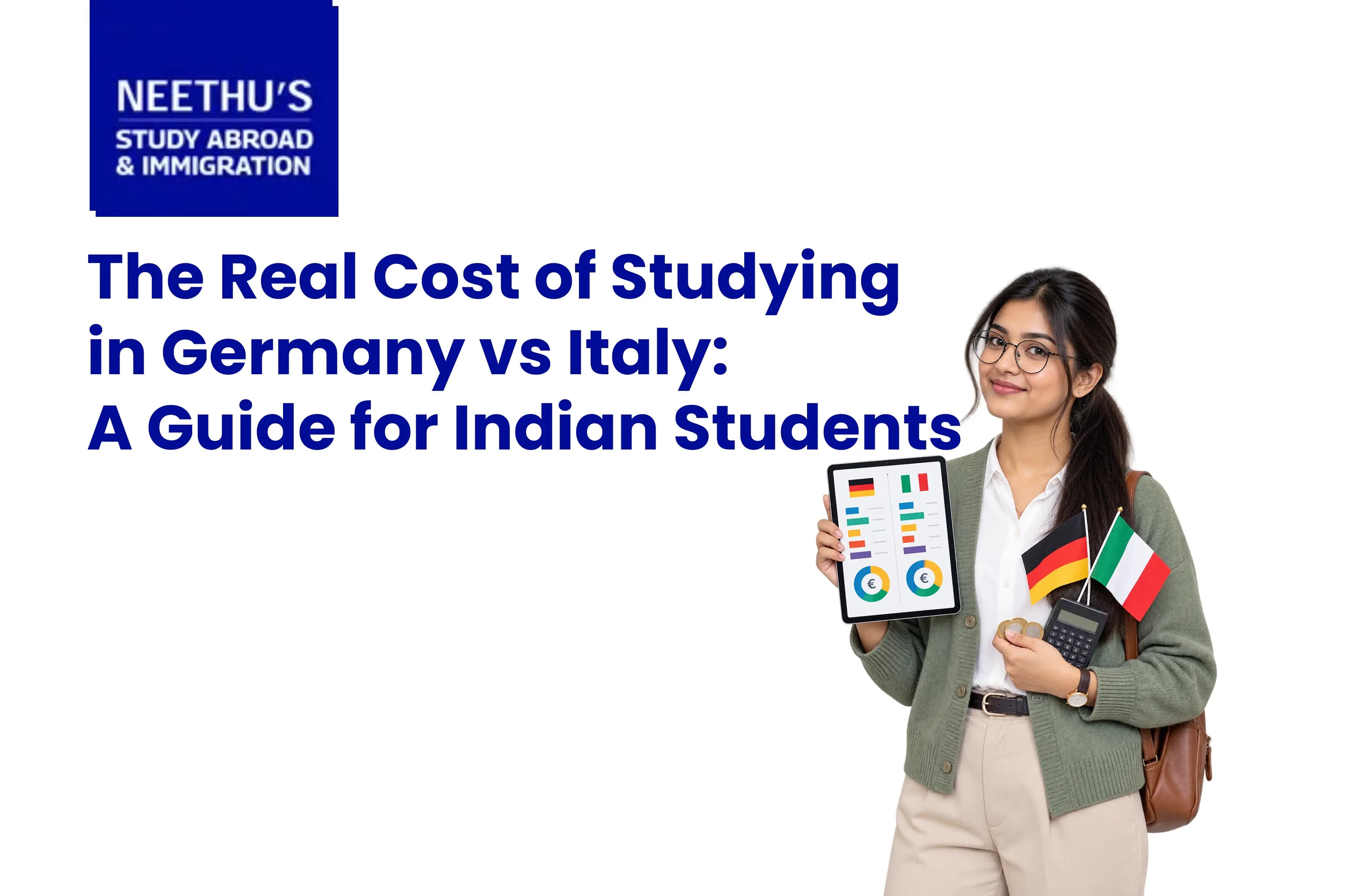
Germany and Italy are two attractive destinations for Indian students seeking higher education in Europe. Both countries offer recognised universities, a variety of programmes, and opportunities to gain international academic and cultural experience. However, the financial commitment involved in studying abroad goes beyond the tuition fee shown by a university.
Accommodation, food, health insurance, transportation, study materials, visa expenses, and personal spending can all contribute to the final budget. The amount can also differ significantly depending on the university and city.
Germany is often described as a country where international students can access tuition-free education. This is broadly true for many public universities, but there are important exceptions that Indian students should understand before making financial plans. Italy, on the other hand, generally charges tuition at public universities, although fees can vary according to individual circumstances and financial support may be available.
Understanding the Cost of Studying in Germany and comparing it with the Cost of Studying in Italy can help Indian students make a more informed decision.
Currency note: The INR figures in this article are approximate, using €1 ≈ ₹110 for easy calculation. Exchange rates change regularly, so students should check the latest exchange rate when preparing their actual budget.
Germany vs Italy: Which Is More Affordable?
There is no universal answer because the overall expense depends on several factors. Germany can be particularly attractive because many public universities do not charge conventional tuition fees. However, students still need to pay a semester contribution and cover their living expenses.
According to Germany's official government information portal, students at public universities generally do not pay tuition fees in most cases and instead pay an average semester contribution of around €300.
Italy generally has tuition fees at public universities. However, the amount can vary depending on the institution, course, and the student's financial circumstances. Scholarships and fee reductions can also affect the final amount.
Therefore, comparing only tuition fees does not give a complete picture. Students should calculate their expected annual expenses based on the specific university and city.
Is Studying at a Public University in Germany Really Tuition-Free?
For many students, yes. Public universities in Germany generally do not charge conventional tuition fees, including to many international students from outside the EU. However, this should not be interpreted as meaning that every university and programme is completely free.
Students normally have to pay a semester contribution, which covers items such as administrative expenses, student services and, at some universities, public transportation benefits. The amount varies by institution, with an average of around €300 per semester according to the German government's official information portal.
There are also specific situations where tuition fees apply.
Important Exceptions to Tuition-Free Study in Germany
Private universities: Private institutions generally charge tuition fees, and the amount can be substantially higher than at public universities.
Baden-Württemberg: Non-EU/EEA students at universities in this German state generally have to pay €1,500 per semester in tuition fees. There are several exemptions, so individual eligibility should be checked with the university.
Second degrees: Additional fees can apply to second-degree study. Baden-Württemberg, for example, charges €650 per semester for a second degree under its state regulations.
Certain specialised programmes: Some continuing education, professional or non-consecutive programmes may have their own tuition charges. Students should therefore examine the exact fee structure of their chosen programme rather than assuming that all public programmes are tuition-free.
The key point is simple: Germany offers tuition-free study at many public universities, but tuition-free does not mean completely cost-free.
Estimated Annual Cost of Studying in Germany
For an Indian student enrolled at a public university where no conventional tuition fee applies, the following figures provide a practical planning estimate:
-
Tuition fee: €0 at many eligible public universities and programmes
-
Semester contribution: Approximately €300–€700 per semester (around ₹33,000–₹77,000)
-
Monthly living expenses: Approximately €900–€1,200 (around ₹99,000–₹1.32 lakh)
-
Annual living expenses: Approximately €10,800–€14,400 (around ₹11.9–₹15.8 lakh)
-
Approximate annual budget including semester contributions: €11,400–€15,800 (around ₹12.5–₹17.4 lakh)
These figures are estimates rather than fixed costs. Students living in expensive cities such as Munich may spend significantly more on accommodation than students living in smaller university towns.
Indian students should also keep additional funds for their initial expenses, including flights, rental deposits, visa-related costs, residence formalities, household items and emergency requirements.
For students subject to tuition fees, such as eligible non-EU students in Baden-Württemberg, the annual budget would need to be adjusted accordingly.
Accommodation Costs in Germany
Housing is likely to be one of the largest components of a student's monthly budget.
Students can consider university accommodation, shared apartments, private rooms, and other student housing options. Shared accommodation can be particularly useful for reducing rent and utility expenses.
However, accommodation availability can be limited in popular university cities. Students should begin searching early rather than waiting until they arrive in Germany.
When comparing properties, check whether heating, electricity, water, and internet are included in the advertised rent. A security deposit may also be required.
Food and Daily Expenses in Germany
Food costs depend largely on personal habits. Students who cook at home and plan their grocery shopping carefully can generally control their spending more effectively.
Buying seasonal products, comparing supermarket prices, and preparing meals in advance can help reduce unnecessary expenses. Indian groceries are available in many larger cities, although imported products may cost more.
The monthly budget should also include mobile phone expenses, clothing, personal care, entertainment, and academic materials.
Health Insurance and Transportation in Germany
Health insurance is an important part of the student budget. International students generally need health insurance that satisfies German requirements.
Transportation is another consideration. Many universities include transport-related benefits in their semester contribution, depending on the institution and current local arrangements. Students should check exactly what their university's semester contribution covers.
For visa purposes, students from outside the EU/EEA also need to demonstrate sufficient financial resources. In 2026, Germany's official government portal states that students can demonstrate funding through a blocked account containing at least €11,904 for the year, although other approved forms of financial proof may also be available.
Tuition Fees in Italy
Italy follows a different approach to university fees.
Public universities generally charge tuition, but the amount can vary depending on the institution, programme and student's financial circumstances. Some universities have fee structures that take family income into account, while eligible students may receive reductions or exemptions.
Private universities normally have considerably higher fees.
Indian students should therefore check the actual tuition structure of the university and programme they are interested in rather than relying on a general national figure.
Estimated Annual Cost of Studying in Italy
For an Indian student attending a public university, the following figures can be used as a broad planning estimate:
-
Public university tuition: Approximately €900–€4,000 per year (around ₹99,000–₹4.4 lakh)
-
Monthly living expenses: Approximately €700–€1,200 (around ₹77,000–₹1.32 lakh)
-
Annual living expenses: Approximately €8,400–€14,400 (around ₹9.2–₹15.8 lakh)
-
Approximate annual budget including tuition: €9,300–€18,400 (around ₹10.2–₹20.2 lakh)
These are broad estimates. The actual amount can be higher or lower depending on the university, city, accommodation, and lifestyle.
Milan and Rome, for example, may require a larger housing budget than smaller Italian university cities.
Accommodation and Living Expenses in Italy
Accommodation can represent a substantial portion of the monthly budget in Italy.
Students may choose university residences, shared apartments or private rooms. Sharing a property can help reduce rent and household expenses.
Before signing a rental agreement, students should find out whether utilities such as electricity, water, heating and internet are included.
Food expenses can be managed by cooking at home, shopping at supermarkets and using university cafeterias where available. Students should also budget for transport, mobile services, study materials, personal expenses and occasional travel.
Scholarships and Financial Assistance
Scholarships can make a major difference to the total amount a student needs to spend.
Students planning to study in Germany can explore scholarships offered by universities and other organisations. However, students should not assume that a scholarship will automatically be available, particularly during the first semester.
Italy also offers university and regional financial support schemes. Depending on the programme, eligibility may be influenced by academic performance and financial circumstances.
Students should research these opportunities early and check the application deadlines and documentation requirements.
Part-Time Work While Studying
Part-time employment can help students manage some everyday expenses, but it should not be treated as the primary source of funding.
Students planning to study in Germany should understand the employment conditions attached to their residence status. Under current rules, third-country students can generally work up to 140 full days or 280 half-days per year, or up to 20 hours per week during lecture periods under the applicable arrangements.
Students planning to study in Italy should understand the employment conditions attached to their study residence permit. Under current Italian rules, international students can generally work part-time for up to 20 hours per week, with a maximum of 1,040 hours per year. Students should ensure that their employment remains within these limits while studying.
Language skills, location, previous experience and the local job market can influence the availability of part-time work.
Germany vs Italy: Annual Cost Comparison
|
Expense |
Germany |
Italy |
|
Tuition |
€0 at many eligible public universities* |
€900–€4,000 |
|
Approx. INR |
₹0* |
₹99,000–₹4.4 lakh |
|
Semester contribution |
€300–€700 per semester |
Varies |
|
Annual living expenses |
€10,800–€14,400 |
€8,400–€14,400 |
|
Approx. INR |
₹11.9–₹15.8 lakh |
₹9.2–₹15.8 lakh |
|
Estimated annual budget |
€11,400–€15,800 |
€9,300–€18,400 |
|
Approx. INR |
₹12.5–₹17.4 lakh |
₹10.2–₹20.2 lakh |
*Germany's €0 tuition figure applies to many eligible public university programmes, but exceptions exist. Non-EU/EEA students at universities in Baden-Württemberg generally pay €1,500 per semester, while private universities and certain programmes can have their own fees.
Which Country Should Indian Students Choose?
Germany may be a strong choice for students who want access to many public university programmes without conventional tuition fees. However, students need to be financially prepared for living expenses and semester contributions.
Italy can be attractive for students who prefer its academic offerings, culture, and potentially flexible tuition structures. Scholarships and regional financial assistance may also make the overall cost more manageable for eligible students.
The better option depends on the student's course, university, preferred city, financial situation, and career plans.
Final Thoughts
The Cost of studying in Italy and Germany should be evaluated using the complete financial picture rather than tuition fees alone. Germany can provide tuition-free study at many public universities, but students still need to cover semester contributions, accommodation, food, insurance, transportation, and other living expenses. Certain exceptions, including Baden-Württemberg's €1,500-per-semester tuition for many non-EU/EEA students, also need to be considered.
Italy generally has tuition fees at public universities, but the amount can vary, and eligible students may benefit from scholarships or financial assistance.
For Indian students, the best approach is to compare the specific university and city, calculate the complete annual budget, and keep additional savings for unexpected expenses. Always verify the latest tuition rules, living costs, and visa requirements directly with the university and relevant official authorities before making a final decision.
FAQs
1. Is studying in Germany free for Indian students?
Many public universities in Germany do not charge conventional tuition fees, including for many international students. However, students must generally pay a semester contribution, which averages around €300 per semester. Certain exceptions: universities and programmes may charge tuition fees.
2. Do Indian students have to pay tuition fees in Germany?
Not necessarily. At many public universities, Indian students can study without conventional tuition fees. However, non-EU students at public universities in Baden-Württemberg generally pay tuition, and private universities and certain programmes may also charge fees. Students should check the specific university and programme before applying.
3. How much does it cost to study in Germany per year?
For a public university where no conventional tuition applies, Indian students can broadly budget around €11,400–€15,800 per year, including semester contributions and estimated living expenses. The actual amount depends on the city, accommodation and lifestyle.
4. What is the semester contribution in Germany?
The semester contribution is a payment made by students each semester for administrative and student services. It can also include contributions to student organisations and, at many universities, a public transport ticket. The amount varies by institution.
5. Are there German states where Indian students have to pay tuition fees?
Yes. Baden-Württemberg is an important example. Non-EU/EEA students at its public universities generally pay €1,500 per semester, although exemptions may apply. Students should check their individual eligibility and university rules.
6. Is Italy cheaper than Germany for Indian students?
It depends on the university and city. Germany can be cheaper for tuition because many public universities do not charge conventional tuition. Italy generally charges tuition at public universities, but living costs can be manageable in some smaller cities, and scholarships may reduce the overall expense.
7. What is the estimated annual cost of studying in Italy?
For a student at a public university, a broad estimate is around €9,300–€18,400 per year, including tuition and living expenses. Actual costs vary depending on the university, city, accommodation, and lifestyle.
8. Can Indian students work part-time while studying in Germany?
Yes. International students can generally work within the permitted limits. Current German government guidance allows third-country students to work up to 140 full days or 280 half-days per year, or up to 20 hours per week during lecture periods.
9. How much money must Indian students show for a German student visa?
For 2026, students applying for a German study visa can demonstrate financial resources through, among other options, a blocked account containing at least €11,904 for the year. A scholarship or declaration of commitment can also be used where applicable.
10. Which is better for Indian students, Germany or Italy?
Both can be good choices, but the right option depends on the student's course, university, budget, preferred city, and career plans. Germany may be particularly attractive for students seeking many public university programmes with no conventional tuition, while Italy may appeal to students looking for specific programmes and scholarship opportunities.













































































































































































_03-12-2025_01-17-26%20PM.webp&w=3840&q=75)
_02-12-2025_03-07-49%20PM.webp&w=3840&q=75)

_27-11-2025_04-06-24%20PM.webp&w=3840&q=75)
_25-11-2025_04-38-18%20PM.webp&w=3840&q=75)
_24-11-2025_03-20-26%20PM.webp&w=3840&q=75)
_22-11-2025_12-44-47%20PM.webp&w=3840&q=75)
_21-11-2025_04-17-47%20PM.webp&w=3840&q=75)
_20-11-2025_03-55-26%20PM.webp&w=3840&q=75)
_18-11-2025_04-00-40%20PM.webp&w=3840&q=75)
_15-11-2025_10-48-43%20AM.webp&w=3840&q=75)
%20(1)_14-11-2025_03-52-25%20PM.webp&w=3840&q=75)
_13-11-2025_03-02-38%20PM.webp&w=3840&q=75)
_08-11-2025_04-15-36%20PM.webp&w=3840&q=75)
_05-11-2025_04-01-50%20PM.webp&w=3840&q=75)
_05-11-2025_03-46-26%20PM.webp&w=3840&q=75)
_03-11-2025_03-31-09%20PM.webp&w=3840&q=75)
_04-11-2025_.webp&w=3840&q=75)
_04-11-2025_.webp&w=3840&q=75)
_28-10-2025_04-09-08%20PM.webp&w=3840&q=75)
_24-10-2025_05-10-31%20PM.webp&w=3840&q=75)
_24-10-2025_04-55-51%20PM.webp&w=3840&q=75)
_22-10-2025_04-40-20%20PM.webp&w=3840&q=75)
%20(1)_21-10-2025_03-05-46%20PM.webp&w=3840&q=75)
_21-10-2025_02-43-15%20PM.webp&w=3840&q=75)
_17-10-2025_05-08-52%20PM.webp&w=3840&q=75)
_17-10-2025_04-54-54%20PM.webp&w=3840&q=75)
_15-10-2025_03-46-47%20PM.webp&w=3840&q=75)
_14-10-2025_03-42-40%20PM.webp&w=3840&q=75)
_14-10-2025_03-29-48%20PM.webp&w=3840&q=75)
_13-10-2025_03-48-51%20PM.webp&w=3840&q=75)
_11-10-2025_04-28-42%20PM.webp&w=3840&q=75)
%20(1)_09-10-2025_04-12-08%20PM.webp&w=3840&q=75)

_07-10-2025_02-55-25%20PM.webp&w=3840&q=75)
_07-10-2025_02-39-51%20PM.webp&w=3840&q=75)
_06-10-2025_03-42-37%20PM.webp&w=3840&q=75)
_03-10-2025_04-42-59%20PM.webp&w=3840&q=75)
_01-10-2025_11-12-12%20AM.webp&w=3840&q=75)
%20(1)_29-09-2025_02-54-12%20PM.webp&w=3840&q=75)

_26-09-2025_12-14-18%20PM.webp&w=3840&q=75)
_24-09-2025_04-44-26%20PM.webp&w=3840&q=75)
_23-09-2025_04-14-36%20PM.webp&w=3840&q=75)
_22-09-2025_04-08-09%20PM.webp&w=3840&q=75)
_20-09-2025_03-26-03%20PM.webp&w=3840&q=75)
_17-09-2025_04-06-42%20PM.webp&w=3840&q=75)
_15-09-2025_04-43-43%20PM.webp&w=3840&q=75)
_13-09-2025_12-17-49%20PM.webp&w=3840&q=75)
_12-09-2025_04-31-36%20PM.webp&w=3840&q=75)
_12-09-2025_04-17-03%20PM.webp&w=3840&q=75)
_10-09-2025_03-59-59%20PM.webp&w=3840&q=75)
_09-09-2025_04-11-16%20PM.webp&w=3840&q=75)
_09-09-2025_03-53-52%20PM.webp&w=3840&q=75)




















































_12-06-2025_03-40-35%20PM.webp&w=3840&q=75)