Canada Study Permit Rules 2027: What Indian Students Need to Know
Canada remains an important destination for Indian students seeking internationally recognised qualifications, practical learning opportunities, and exposure to a multicultural environment. However, planning an overseas education journey involves more than selecting a university and paying tuition fees. Students must understand the latest immigration policies, prepare financial evidence, and ensure that their chosen programme meets the relevant eligibility conditions.
For the 2027 intake, applicants should pay particular attention to study permit documentation, provincial or territorial attestation letters, proof of funds, and post-graduation work permit eligibility. Canadian immigration rules have undergone several changes in recent years, and students should not assume that the requirements applicable to an earlier intake will remain unchanged.
This guide explains the key rules Indian students should understand before applying, along with practical examples to help them prepare a more organised application.
1. Understanding Canada's Study Permit Rules for 2027
A Canadian study permit is an immigration document that allows eligible foreign nationals to study in Canada under specified conditions. Indian students generally need to obtain approval before travelling to begin their studies.
The first step is securing admission to a Designated Learning Institution (DLI). These are institutions authorised by a provincial or territorial government to enrol international students. However, admission to a DLI does not automatically mean that every programme qualifies for a post-graduation work permit.
Applicants should review the institution's status, the programme's eligibility, and the requirements applicable to their intended course.
The main Canada student visa requirements generally include:
-
A valid passport or travel document
-
A letter of acceptance from an eligible DLI
-
Proof of sufficient financial resources
-
A provincial or territorial attestation letter (PAL/TAL), where required
-
Supporting documents specified in the application checklist
-
Biometrics, medical examinations, or police certificates, where applicable
-
Evidence that the applicant meets Canada's immigration eligibility conditions
Students should also be prepared to explain their educational plans and demonstrate that they will comply with the conditions of their stay.
2. Provincial Attestation Letters and Study Permit Caps
Canada introduced a cap on many international student study permit applications in 2024 to manage the growth of its international student population. The system continues to affect application planning, making it important to understand whether an attestation letter is required.
For applicants covered by the rules, a PAL or TAL generally confirms that the application falls within the relevant provincial or territorial allocation. Students should ask their institution how the document is issued and whether they need to obtain it before submitting their application.
There are exemptions. Under the rules announced for 2026, students entering eligible master's and doctoral programmes at public designated learning institutions are exempt from the PAL/TAL requirement. Primary and secondary school students and certain other groups may also qualify for exemptions.
These provisions should not be assumed to remain unchanged for every 2027 application. Students should check the latest Immigration, Refugees and Citizenship Canada (IRCC) instructions before applying.
Practical example: An Indian student planning to enrol in a public university's master's programme should check whether the programme and institution meet the exemption conditions. A student applying for an undergraduate programme may face different documentation requirements.
3. Canada Student Visa Financial Requirements
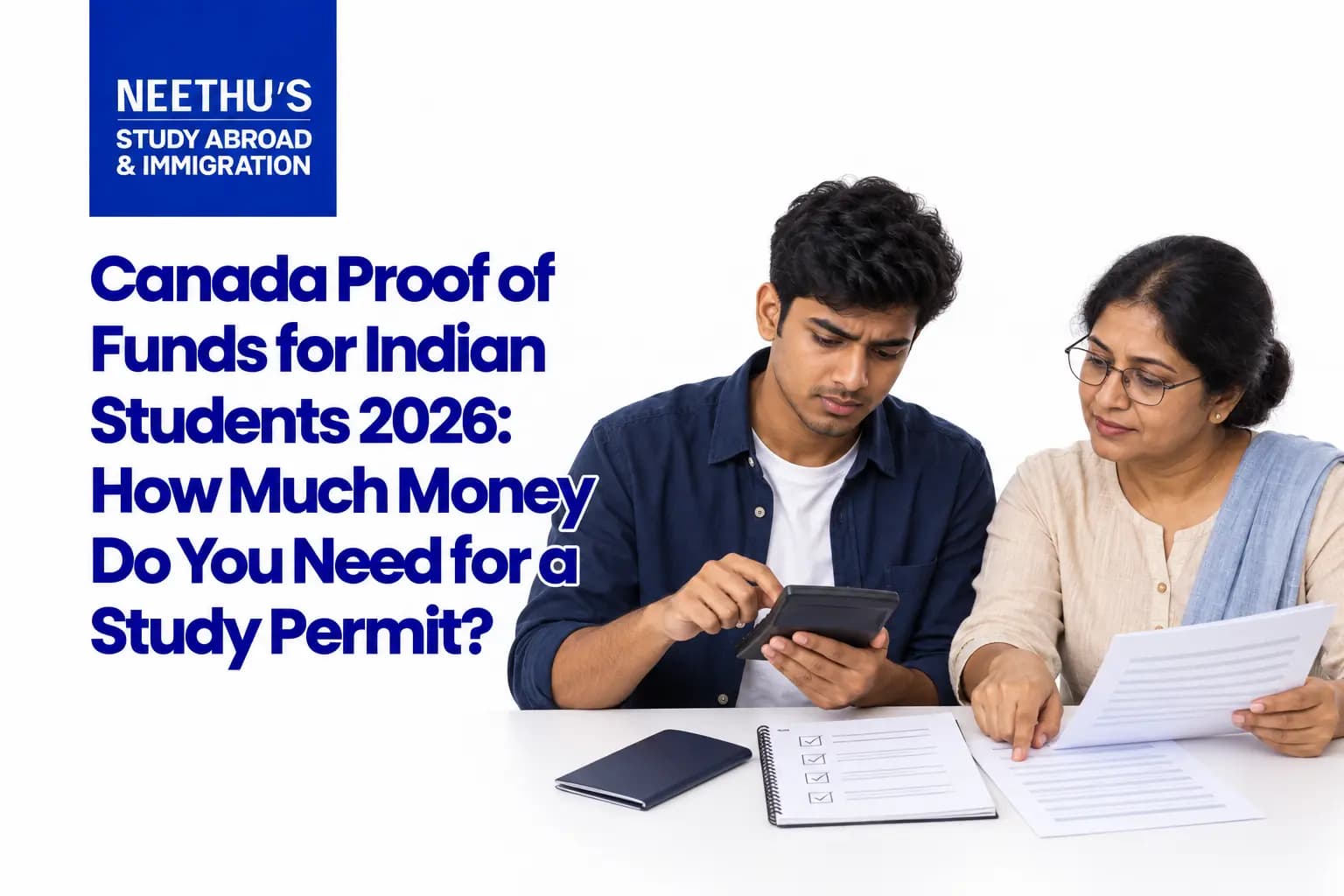
Financial preparation is one of the most important parts of an application. Students must demonstrate that they can pay their tuition fees, support themselves and any accompanying family members, and cover transportation to and from Canada.
Under the financial threshold published for applications submitted on or after 1 September 2026, a single applicant studying outside Quebec must demonstrate CAD 23,448 for one year of living expenses, excluding tuition and transportation.
This amount applies to the published 2026 threshold and should not automatically be treated as the final amount for the 2027 intake. Canada reviews its financial requirements periodically, so applicants should verify the applicable figure when preparing their documents.
For a student applying to a two-year programme, the financial plan should address more than the first year's expenses. IRCC expects applicants to demonstrate funding for the first year and explain how they intend to finance the remainder of their studies.
Common forms of financial evidence include:
-
Bank statements showing available funds
-
Proof of payment towards tuition or accommodation
-
Education loan documentation
-
Scholarship or funding letters
-
Guaranteed Investment Certificates (GICs), where applicable
-
Documents establishing a parent's or sponsor's ability to provide financial support
-
Evidence explaining the source of significant deposits
The Canada student visa financial requirements are not limited to maintaining a particular bank balance. Officers may assess the source, availability, and reliability of the funds.
4. How Indian Students Can Prepare Strong Financial Documents
Students should prepare financial documents that present a clear and consistent picture of their funding arrangements.
If parents are sponsoring the application, the student can provide evidence of the relationship, the sponsor's income, and their willingness and ability to pay the expenses. Depending on the circumstances, this may include salary slips, income tax returns, bank statements, and a sponsorship letter.
Education loan applicants should obtain the lender's official sanction letter and confirm that the amount and disbursement arrangements support their financial plan.
Scholarship recipients should submit documents specifying the amount awarded, the period covered, and the expenses included. A scholarship that covers tuition alone may not satisfy the requirement to demonstrate sufficient money for living expenses and travel.
Students should avoid unexplained large deposits or presenting borrowed funds without supporting evidence. If there has been a substantial recent transaction, retain documents showing its legitimate source.
Practical example: A student whose first-year tuition has been paid should still demonstrate adequate money for living costs and travel. A tuition receipt alone may not establish that the student can afford the full cost of studying abroad.
5. Tuition Fees and the Total Cost of Studying in Canada
Living expenses are only one part of the financial plan. Tuition fees vary according to the institution, course, province, and qualification level. Professional programmes and specialised courses may have different fee structures from other academic programmes.
Students should prepare a budget that includes:
-
Tuition fees and mandatory institutional charges
-
Rent, utilities, and food
-
Local transportation
-
Books, equipment, and study materials
-
Health insurance or medical coverage, as applicable
-
Airfare and airport transfers
-
Initial accommodation deposits
-
Emergency savings and personal expenses
For example, a student choosing accommodation in a major city may need a higher housing budget than someone living in a smaller community. Both should calculate expenses using realistic local estimates rather than relying entirely on the minimum immigration threshold.
Applicants should also consider currency fluctuations when converting Indian rupees into Canadian dollars. Keeping a reasonable financial buffer can help families manage changes in exchange rates and unexpected costs.
6. Can Indian Students Work While Studying?
Eligible international students may work part-time while meeting the conditions of their study permit. Under the rules introduced in November 2024, eligible students can generally work up to 24 hours per week off campus during regular academic terms. Different rules may apply during scheduled breaks and to certain categories of students.
However, students should not build their entire financial plan around anticipated earnings. Finding suitable employment can take time, and working hours must remain within the permitted limits.
For instance, a student may plan to use part-time income for groceries and personal expenses. Nevertheless, tuition fees, rent, and other essential costs should be supported by a reliable funding plan rather than depending on an uncertain job offer.
Students should check their permit conditions and the latest IRCC guidance before accepting employment.
7. Post-Graduation Work Permit Eligibility
Many Indian students consider future employment opportunities when choosing a Canadian programme. However, graduating from a Canadian institution does not automatically guarantee a Post-Graduation Work Permit (PGWP).
Eligibility depends on several factors, including the institution, programme, qualification, and applicable immigration rules. Certain programmes may also be subject to field-of-study requirements, while language requirements can apply depending on the student's circumstances.
Before accepting an offer, applicants should check whether the specific programme is PGWP-eligible and whether any additional conditions apply.
Students should avoid choosing a course solely because it is advertised as an easy route to a work permit. Immigration rules can change, and eligibility should be confirmed through official sources rather than marketing promises.
8. Common Mistakes to Avoid When Applying
A carefully prepared application can reduce avoidable delays and help applicants present their circumstances clearly.
Common mistakes include:
Using outdated financial figures: Always check the threshold applicable to the actual submission date.
Ignoring attestation requirements: Confirm whether a PAL/TAL is necessary or an exemption applies.
Choosing a programme without checking eligibility: Verify the institution and course before paying a deposit.
Submitting inconsistent financial records: Ensure that bank statements, sponsor documents, and funding declarations agree.
Relying on future employment: Demonstrate adequate financial resources without assuming that part-time work will cover essential expenses.
Applying too close to the intake date: Allow time for document preparation, biometrics, processing, and any requests for additional information.
9. Preparing for the 2027 Intake
Students planning to study in Canada should begin by identifying suitable institutions and programmes, checking admission requirements, and confirming that their chosen course fits their academic and career objectives.
Once an offer is received, review the institution's DLI status, determine whether an attestation letter is required, and prepare the financial evidence. Use the official application checklist for Indian applicants to identify any country-specific documentation requirements.
Students who need assistance can consider speaking with the Best study abroad consultants in kerala to understand admission procedures, organise documents, and plan deadlines. Applicants should still verify immigration information independently and ensure that all information submitted is accurate.
Apply early enough to allow for processing and check official updates regularly. A complete application does not guarantee approval, but careful preparation helps students avoid preventable errors.
Conclusion
Canada continues to offer educational opportunities for Indian students, but the application process requires careful attention to changing immigration rules. Understanding study permit eligibility, attestation letters, financial evidence, work restrictions, and post-graduation options is essential when preparing for the 2027 intake.
The financial threshold published for September 2026 provides a useful planning reference, but students must confirm the amount that applies when they submit their applications. Tuition, living expenses, and travel should be budgeted separately, and funding documents should clearly establish the availability and source of money.
With early planning, accurate documentation, and regular checks of official IRCC guidance, students can approach their Canadian education plans with greater confidence.
Important: Immigration policies and financial thresholds may change before the 2027 intake. Always consult official Government of Canada resources before submitting an application.
FAQs
1. What are the Canada student visa requirements for Indian students in 2027?
Indian students generally need a valid passport, an acceptance letter from a Designated Learning Institution (DLI), proof of sufficient funds, and a provincial or territorial attestation letter (PAL/TAL) where required. Additional documents may include biometrics, medical examination results, and other supporting evidence.
2. How much money do Indian students need to show for a Canada study permit in 2027?
The published living-expense requirement for a single student applying outside Quebec from September 1, 2026, is CAD 23,448 for one year, excluding tuition and transportation. Students should verify the applicable financial threshold for their 2027 application.
3. Is a PAL or TAL mandatory for all international students?
No. Many applicants require a provincial or territorial attestation letter, but exemptions apply to certain categories. Students should check the latest IRCC rules to determine whether their institution and programme qualify for an exemption.
4. Can parents sponsor an Indian student's education in Canada?
Yes. Parents can provide financial support. Students may need to submit bank statements, proof of income, tax documents, a sponsorship letter, and evidence of their relationship with the sponsor.
5. Can I use an education loan as proof of funds for a Canadian study permit?
Yes, education loan documents can support an application. Students should provide official loan sanction documents and ensure that their overall financial evidence demonstrates sufficient funds for tuition, living expenses, and travel.
6. Can international students work part-time in Canada while studying?
Eligible international students can generally work up to 24 hours per week off campus during regular academic terms, subject to their permit conditions and applicable rules. Students should not rely entirely on future employment income to finance their education.
7. Does admission to a Canadian college guarantee a study permit?
No. Admission is only one part of the process. Applicants must also satisfy immigration requirements, provide appropriate financial evidence, and meet the other conditions assessed by Canadian immigration authorities.
8. Are all Canadian college programmes eligible for a Post-Graduation Work Permit (PGWP)?
No. PGWP eligibility depends on the institution, programme, qualification, and applicable immigration rules. Students should verify eligibility before accepting an offer or paying a tuition deposit.
9. When should Indian students apply for a Canada study permit for the 2027 intake?
Students should begin preparing several months before their intended start date. They should allow time for admission procedures, financial documentation, attestation letters where required, biometrics, and visa processing.
10. How can students prepare for the Canada student visa financial requirements?
Students should calculate tuition, living expenses, travel costs, and initial accommodation expenses. They should then organise bank statements, sponsor documents, education loan records, or scholarship letters and verify the latest financial requirements through official IRCC resources.