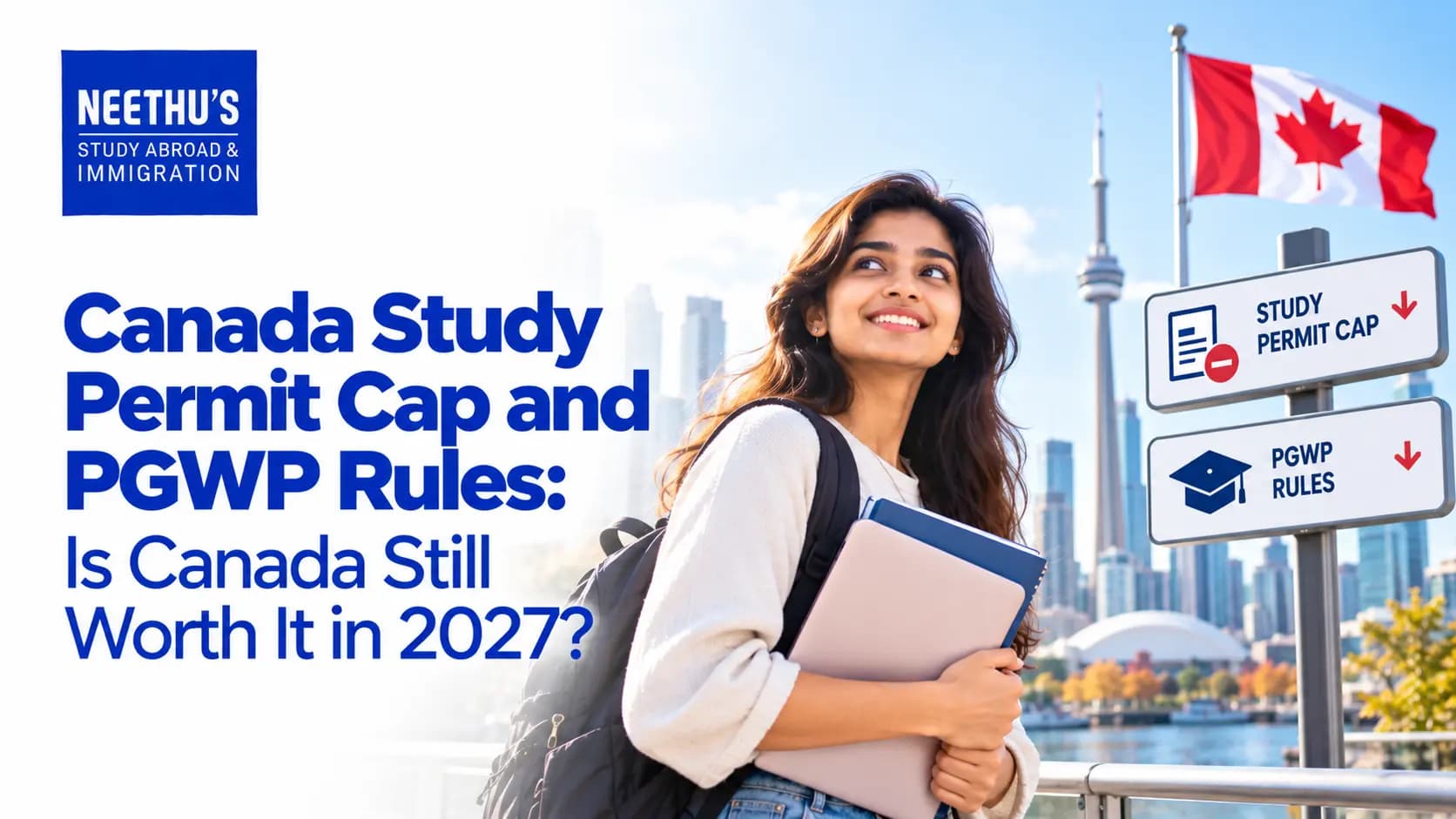
Canada PGWP Rules in 2026: A Guide for Indian Students Planning to Study Abroad
Canada continues to attract Indian students who want quality education, international exposure, and opportunities to develop their careers. However, the process of studying in Canada has become more complicated as immigration authorities introduce measures to manage international student numbers and strengthen application requirements.
Getting an offer letter from a Canadian institution is only the beginning. Students must also consider study permit approval, financial documentation, course eligibility and the conditions for obtaining a work permit after graduation. These factors can influence both the cost of studying abroad and the career opportunities available after completing a qualification.
For Indian applicants, understanding the latest requirements before making a financial commitment is essential. This guide examines the important changes affecting students in 2026, explains how to prepare a stronger application and explores alternative routes for those who may find Canada’s requirements difficult to meet.
Immigration policies can change during the year. Always verify the rules that apply to your application date and chosen program before making a decision.
1. Why Studying in Canada Requires More Planning
Canada has introduced restrictions to manage the number of international students entering the country. Study permit targets, provincial or territorial attestation requirements, and additional eligibility checks have made advance planning particularly important.
An admission offer does not guarantee permission to study in Canada. Applicants must satisfy the immigration requirements that apply to their individual circumstances and provide the necessary supporting documents.
Depending on the program and applicant category, a provincial or territorial attestation letter may be required. Some students, including eligible graduate-level applicants, may qualify for exemptions. These rules can differ according to the type of qualification and the relevant application period.
Students should therefore check their institution’s requirements early. Waiting until the final weeks before the intended intake can create difficulties if additional documentation or financial evidence is needed.
Before paying substantial fees, review the course details, expected expenses, application timeline, and immigration conditions. This approach can help reduce avoidable costs and give you time to consider other options if your original plan becomes impractical.
2. Canada’s Stricter PGWP Rules in 2026
The Post-Graduation Work Permit allows eligible international graduates to gain employment experience in Canada after completing their studies. However, completing a course at a Canadian institution does not automatically make every graduate eligible.
The eligibility framework includes requirements relating to the qualification, language proficiency, and, for certain non-degree programs, the field of study. Students should understand these conditions before selecting a course rather than checking them only after graduation.
Language proficiency requirements
Many applicants must demonstrate English or French proficiency when applying for a PGWP. The required level depends on the type of qualification completed.
Graduates of bachelor’s, master’s and doctoral programs generally need Canadian Language Benchmark level 7 or an equivalent French benchmark. Graduates of many college and other non-university programs generally need level 5 or the corresponding French benchmark.
Applicants should confirm the accepted language tests and the minimum requirements for each language skill. IELTS scores, for example, should not be assumed to correspond directly to Canadian benchmark levels without checking the applicable conversion requirements.
Preparing for a language test early is a sensible step. It allows students to improve weaker skills and arrange another test if their first result does not meet the required level.
Field-of-study restrictions
Certain graduates of non-degree programs must complete an eligible field of study to qualify for a PGWP. The requirement depends on factors such as the type of program and when the study permit application was submitted.
Bachelor’s, master’s, and doctoral degree graduates are generally exempt from this field-of-study requirement, although they must still meet other applicable conditions.
Students choosing a diploma or certificate should verify the precise program and its classification against the current eligibility rules. The institution’s reputation alone does not establish whether a particular course qualifies.
Before accepting an offer, confirm that the qualification supports your intended post-study plans. This is especially important if the main reason for choosing a program is the opportunity to work in Canada after graduation.
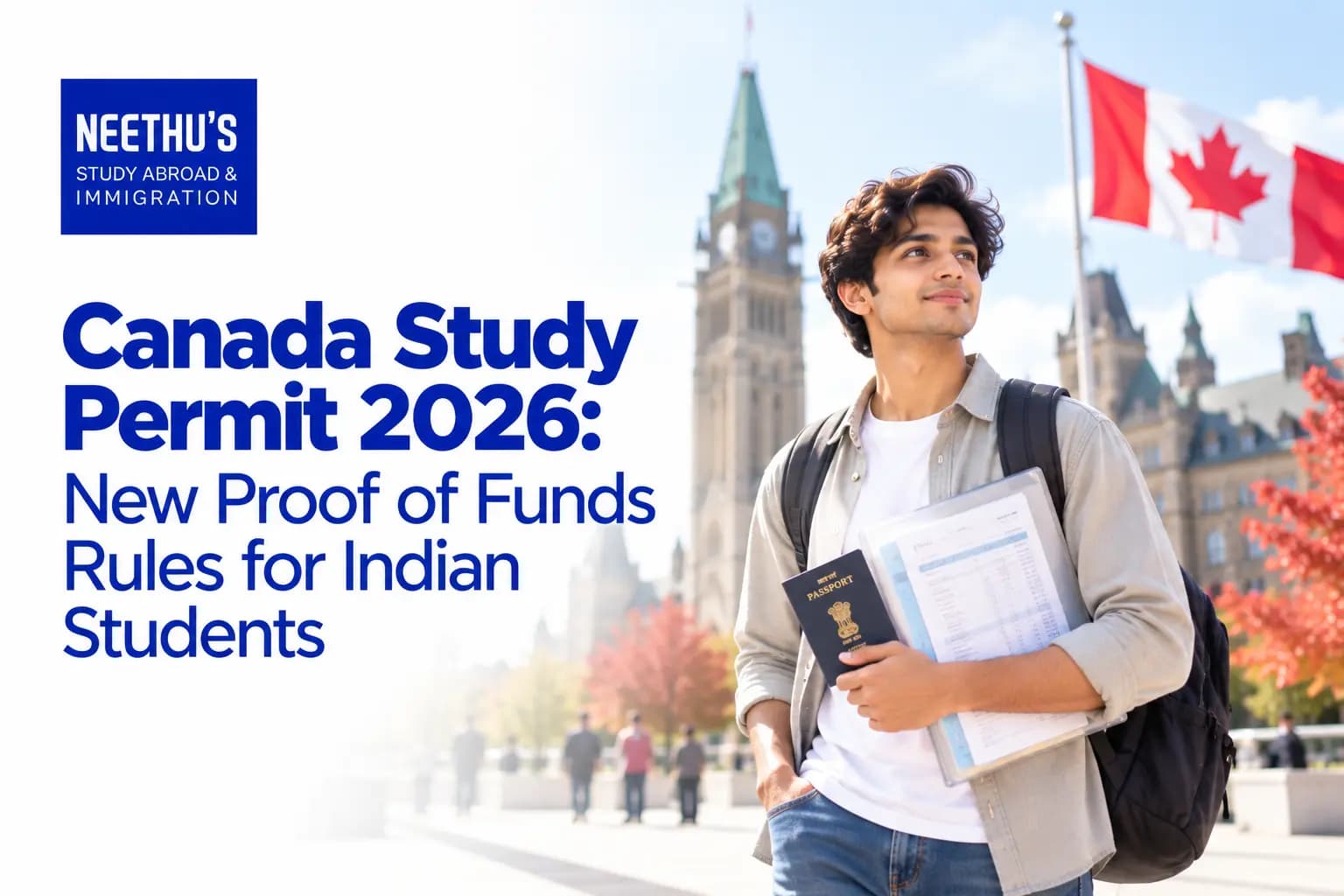
3. Financial Documentation and Proof of Funds
Financial preparation is an important part of a study permit application. Applicants must demonstrate that they can pay the required tuition fees and cover living expenses, transportation, and other applicable costs.
The amount required for living expenses can change. Students should check the official figure applicable when they apply and calculate their budget using realistic estimates rather than relying on older information.
A financial plan should account for more than the first tuition payment. Accommodation, food, transport, books, health-related expenses, and other daily costs can add considerably to the total amount needed.
Supporting documents may include:
-
Recent bank statements showing available funds
-
Education loan approval documents and relevant disbursement details
-
Proof of tuition payments already made
-
Sponsor income records and evidence of financial capacity
-
Documents explaining significant deposits or transfers
-
Evidence of other legitimate sources of funding
For instance, if a parent is sponsoring the student, the application should explain the relationship and demonstrate that the parent can provide the promised financial support.
Large deposits shortly before applying may need additional explanation. Applicants should be prepared to show where the money came from and whether it is genuinely available for education and living expenses.
Avoid arranging temporary funds simply to make a bank statement appear stronger. A financial application should reflect the student’s actual circumstances and a sustainable plan for paying the costs of study.
4. Why Academic Background and Career Goals Matter
A well-prepared application should explain why the selected course is appropriate for the applicant. Immigration officers assess applications individually, so students should present an honest and coherent explanation of their educational plans.
Imagine a student who has completed a degree in computer science and wishes to study cybersecurity. The connection between the previous qualification and the new program may be relatively straightforward to explain.
A student moving from an unrelated academic field may also have a valid reason for changing direction. However, the application should clearly describe what motivated the decision and how the proposed course supports future goals.
Before applying, consider the following questions:
-
Does the program build on your previous education or work experience?
-
Can you explain why you selected this particular qualification?
-
Are the course content and career objectives consistent with one another?
-
Can you provide credible evidence of financial support?
-
Have you checked the institution and program against the relevant requirements?
These considerations do not guarantee approval. They help applicants identify possible weaknesses and ensure that their documents tell a consistent, evidence-based story.
5. What the Changes Mean for Indian Applicants
For Indian students, the tighter requirements mean that choosing a course requires more research than comparing tuition fees and admission deadlines.
A program may look affordable but still be unsuitable if its eligibility conditions do not match the student's intended outcome. Similarly, an applicant with sufficient funds may need to strengthen other aspects of the application, such as the study plan or supporting documentation.
Students planning to study in Canada should evaluate the entire journey, from admission and visa preparation to graduation and possible employment. They should also consider whether the qualification would remain valuable if they could not obtain a PGWP.
For example, a student choosing a business qualification should assess the course curriculum, potential career applications and recognition of the credential. The decision should make sense educationally and financially, even if future immigration opportunities change.
Taking this broader view helps students avoid relying entirely on promises about post-study employment or permanent residence.
6. Alternative Options When Canada Is Not the Best Fit
Canada may remain a suitable destination for many applicants, but it is not the only option. Students who find the financial requirements or program restrictions difficult should compare alternatives before making a final decision.
Consider an appropriate degree program
Some students may benefit from a bachelor’s, master’s or doctoral program that aligns with their academic background and career ambitions. Degree graduates are generally exempt from the PGWP field-of-study requirement, although other eligibility conditions continue to apply.
A degree can involve higher tuition and a longer commitment, so applicants should assess the total cost and value of the qualification rather than choosing it solely for immigration reasons.
Research different Canadian institutions
Compare multiple institutions and programs instead of making a decision based on a single offer. Check program eligibility, fees, location, course content, and any attestation requirements that apply.
A lower-cost college or smaller city does not automatically provide an easier immigration pathway. The applicant must still meet the relevant requirements.
Explore other countries
If the Canadian route does not suit your finances or academic profile, research other destinations with suitable courses and realistic budgets.
Compare tuition fees, living costs, admission criteria, language requirements, qualification recognition and post-study work policies. Rules can differ significantly, so use current official information rather than relying on general claims made online.
Investigate employment-based routes
Depending on their qualifications, professional experience, and occupation, some applicants may be eligible for work-based immigration programs. These routes are separate from study permits and have their own conditions.
A job offer does not automatically provide permission to work or guarantee permanent residence. Applicants should check eligibility carefully and avoid paying agencies that promise guaranteed immigration outcomes.
7. A Checklist Before Applying
Before committing to a Canadian institution, use this checklist to organise your preparation:
-
Verify that the institution and intended program meet the relevant requirements.
-
Confirm whether the exact qualification is eligible for a PGWP.
-
Check whether field-of-study restrictions apply.
-
Review the language requirements for your credential.
-
Calculate tuition, living expenses, travel, and other expected costs.
-
Determine whether a provincial or territorial attestation letter is required.
-
Gather genuine financial documents and supporting evidence.
-
Prepare a clear explanation of your academic choice and career objectives.
-
Consider a backup plan if your study permit or future work permit is not approved.
If you need professional guidance, look for advisers who explain the process transparently and distinguish between education counselling and regulated immigration advice. The Best study abroad consultants in Kerala should help you compare suitable courses, understand application requirements, and make informed choices without promising guaranteed visa approval or employment.
Conclusion
Canada remains an important destination for international education, but students need to approach the process with realistic expectations. Study permit limits, financial evidence requirements, and PGWP eligibility conditions make careful research essential before choosing a course.
The Canada post-graduation work permit can provide valuable employment opportunities for eligible graduates. However, it should not be treated as an automatic result of completing a Canadian qualification. Students must check the conditions that apply to their program and prepare for the relevant language and application requirements.
For Indian applicants, the best strategy is to choose a course that matches their academic background, fits their budget, and supports a realistic career plan. Study in Canada may be the right choice for some students, while others may benefit from a different qualification, destination or employment pathway.
Ultimately, informed decisions are more valuable than rushed applications. By verifying the current rules, preparing genuine documents, and comparing alternatives, students can make choices that better support their education and long-term goals.
FAQs
1. What is the Canada post-graduation work permit (PGWP)?
The Canada post-graduation work permit allows eligible international students to work in Canada after completing an eligible programme at a designated learning institution. The permit helps graduates gain Canadian work experience and explore long-term career opportunities.
2. What are the major PGWP changes affecting international students in 2026?
Students should pay close attention to eligibility requirements, language proficiency, field-of-study conditions where applicable, and changes to study permit policies. Requirements may vary depending on the programme, institution, and application circumstances.
3. Can Indian students still apply for a PGWP in 2026?
Yes. Indian students may qualify if they meet the applicable eligibility criteria. Before enrolling, they should verify whether their institution and specific programme qualify for a PGWP under the rules in effect at the time of application.
4. Is English language proficiency required for a PGWP?
Many PGWP applicants must demonstrate English or French language proficiency. The required level and accepted tests depend on the applicable rules. Students should check the latest official requirements before booking a language test.
5. Does every course in Canada qualify for a PGWP?
No. Not every course or institution qualifies. Eligibility can depend on the institution, programme type, programme duration, and other applicable conditions. Students should confirm PGWP eligibility before paying tuition fees.
6. How much money should students show when applying for a Canadian study permit?
Students must demonstrate that they can cover the required expenses, including tuition fees, living costs, and travel. The exact financial requirement can change, so applicants should check the latest official amount and provide clear, genuine financial documents.
7. Can a student’s academic profile affect a Canadian study permit application?
Yes. Academic history, the relevance of the chosen programme, study plans, financial evidence, and the consistency of application documents can all matter during assessment. Students should choose a course that aligns with their previous education and career goals.
8. What should students do if their preferred Canadian programme is not PGWP-eligible?
They should compare other eligible programmes and institutions before making a decision. It is important to assess course quality, tuition fees, career prospects, and immigration eligibility rather than choosing a programme based only on its affordability or location.
9. Are there alternatives if Canada’s immigration requirements become more restrictive?
Students can compare destinations such as the UK, Australia, Germany, Ireland, and other countries. They should review each destination’s tuition costs, post-study work options, employment prospects, and visa requirements before deciding where to study.
10. Should Indian students consult an education adviser before applying to Canada?
Students may consult an experienced adviser, including the Best study abroad consultants in Kerala, to understand programme options, documentation, and application procedures. However, they should independently verify immigration requirements through official Canadian government sources before making financial commitments.