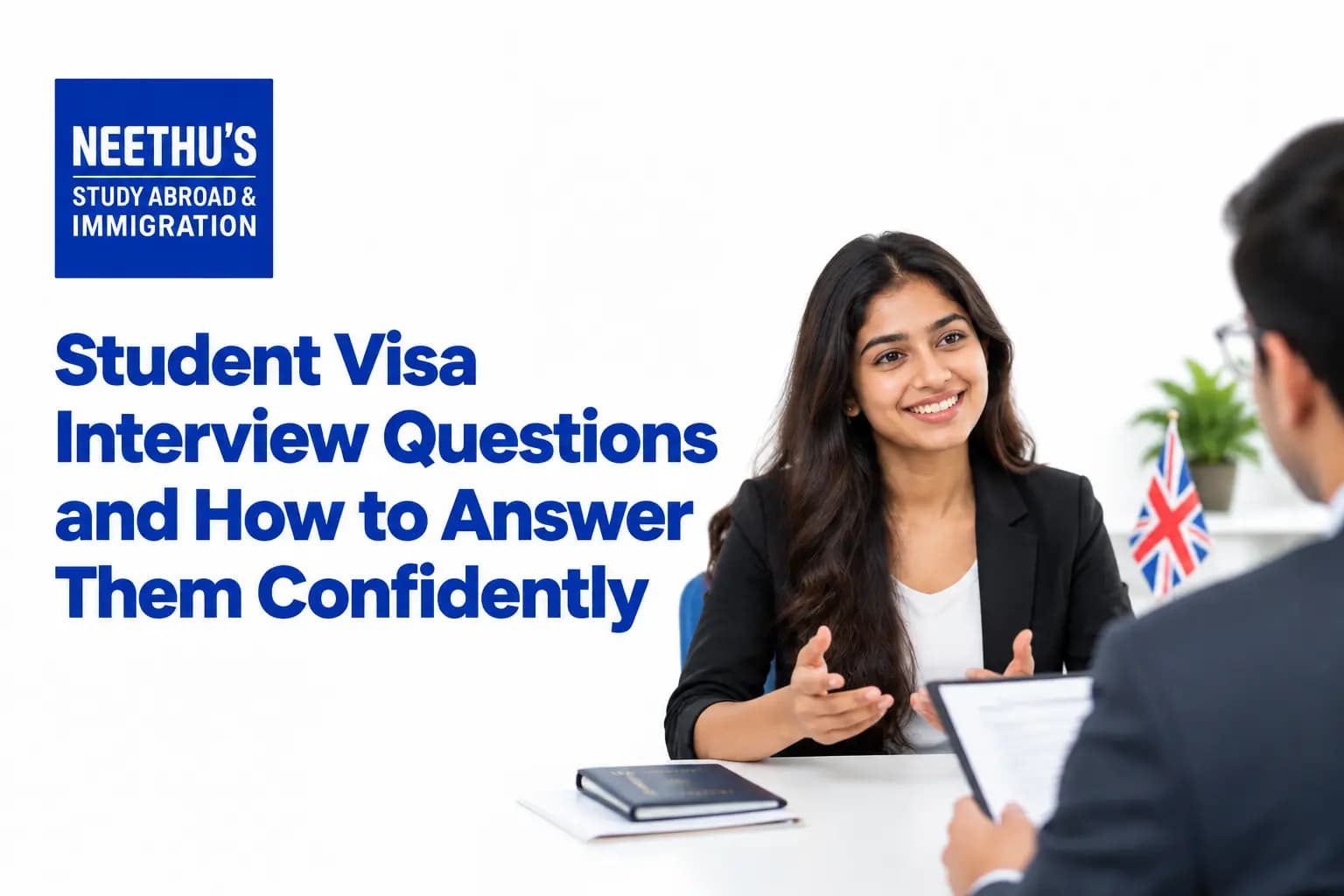
Student Visa Interview Questions and How to Answer Them Confidently
For many students, the visa interview is one of the final steps before beginning their international education journey. After completing university applications, arranging finances and preparing documents, sitting in front of a visa officer can still feel intimidating. The good news is that you do not need to memorise complicated speeches to handle the conversation well.
A visa officer may ask about your education, selected course, university, financial arrangements and plans after graduation. The exact questions depend on the applicant and the visa process of the destination country. The most useful preparation is therefore to understand your own application thoroughly and practise explaining your decisions in a simple and honest manner.
Preparing for student visa interview questions should be about building familiarity with your application rather than learning scripted answers. When you know why you selected your course, how you plan to finance your studies and what you hope to achieve academically, it becomes easier to respond naturally.
What Does a Student Visa Interview Assess?
The purpose and format of an interview vary between countries and visa categories. In general, the officer may want to clarify information connected with your application and understand your proposed study plans.
Questions can cover areas such as:
-
Previous education
-
Selected university
-
Chosen programme
-
Reasons for studying abroad
-
Financial arrangements
-
Sponsor details
-
Career plans
-
Previous work experience
-
Study gaps or changes in academic direction
Your answers should correspond with the information you have already submitted. If your documents say one thing while your spoken answers suggest something different, the inconsistency may require further explanation.
Questions About Your Course
One of the easiest ways to prepare is to become familiar with your programme.
Why Did You Choose This Course?
Your response should demonstrate that you have a genuine academic reason for selecting the programme.
Explain how the course connects with your previous studies, interests, skills or career plans. If particular subjects or practical components attracted you to the programme, you can mention them.
For example, someone with an undergraduate degree in business might explain that a master's in supply chain management will provide specialised knowledge that was not covered extensively during their bachelor's programme.
Avoid giving an answer based entirely on salary or immigration opportunities. Keep the main focus on your education and career development.
What Do You Know About Your Programme?
Make sure you know the programme's official name, duration and general course structure. You should also be familiar with the subjects or specialisations that influenced your choice.
You do not need to memorise the entire university website. However, being unable to explain what you are going to study may make it difficult to demonstrate that you have researched your course properly.
Questions About Your University
Why Did You Select This University?
Prepare a few genuine reasons for choosing the institution.
You might discuss:
-
Relevant modules
-
Programme structure
-
Academic facilities
-
Teaching approach
-
Research opportunities
-
Industry-related learning
-
Location, where relevant to your studies
Avoid saying that you selected the university only because it was recommended by someone else. You should be able to explain why the institution suits your educational objectives.
Did You Apply to Other Universities?
If asked, answer honestly. If you applied to several institutions, you can explain that you compared factors such as course content, admission requirements and programme structure before making your final decision.
There is no need to invent applications or provide information that is not true.
Questions About Your Choice of Country
Why Do You Want to Study in This Country?
This is an opportunity to explain the academic reasons behind your destination choice.
You could discuss the specific educational environment, programme availability, specialised training or other factors relevant to your chosen field.
Avoid making sweeping statements such as claiming that one country is automatically the best place for everyone. Your answer should explain why the destination fits your educational plans.
Questions About Your Finances
Financial questions are an important part of preparation because studying overseas requires careful planning.
Who Will Pay for Your Studies?
Be prepared to identify your source of funding. This could involve your parents, another family member, personal savings, a scholarship or another legitimate source.
Know the basic information associated with your funding arrangement, including tuition costs and how your living expenses will be managed.
What Does Your Sponsor Do?
If a family member is sponsoring you, understand their occupation and the financial information included in your application.
For example, if your mother is your sponsor, you should know what she does for a living and how the funds for your education have been arranged.
Do not memorise figures without understanding them. Your answers should match your submitted financial documentation.
Questions About Your Academic History
What Did You Study Previously?
Be ready to discuss your previous qualification, institution, graduation year and major subjects.
The officer may also ask how your previous studies relate to your new programme. Prepare a clear explanation if there is a connection between the two.
Why Are You Changing Your Field?
A change of academic direction is not something you should try to conceal. If your new programme differs from your previous education, explain the reason clearly.
For instance, a student who studied mechanical engineering but now wants to study business analytics might explain how professional exposure or a developing interest in data-driven decision-making influenced the change.
The explanation should be genuine and consistent with your application.
Questions About Study Gaps
Students with a gap in their education should be prepared to discuss it if asked.
The explanation depends entirely on the individual's circumstances. You might have spent the period working, preparing for an examination, completing professional training, managing family responsibilities or dealing with another genuine situation.
Keep the explanation factual. If supporting documents exist, make sure the information is consistent with them.
Questions About Your Future Plans
What Will You Do After Graduation?
This question requires a clear explanation of your career direction.
Discuss how the qualification fits into your professional plans. You might explain the type of role or industry you intend to pursue after completing your studies.
Your answer should not contain promises about immigration outcomes that you cannot guarantee. Instead, describe your genuine plans while recognising that future immigration and employment opportunities are subject to applicable rules.
How to Answer Difficult Questions
Not every question will be one you have practised. The best approach is to remain calm and answer based on your actual circumstances.
Take a Moment Before Answering
You do not need to respond instantly. Listen carefully, understand the question and then give a direct answer.
If you did not hear the question properly, politely ask the officer to repeat it.
Avoid Very Long Responses
A visa interview is generally a conversation rather than a presentation. Give enough information to answer the question without moving into unrelated details.
For example, if you are asked why you selected a particular course, start with your academic reason. You do not need to describe your entire childhood or every stage of your education.
Speak Naturally
Try to use language that you normally use when communicating in English. Complicated vocabulary does not automatically make an answer stronger.
Natural communication can also make it easier to handle follow-up questions.
Preparing for Possible Visa Concerns
Understanding common visa rejection reasons can help applicants identify weaknesses in their preparation. Depending on the country and visa category, concerns may relate to insufficient documentation, financial requirements, credibility of the study plan, failure to meet eligibility criteria or inconsistencies in the information provided.
A visa decision is not necessarily based on the interview alone. The complete application and supporting evidence can be relevant.
For this reason, interview preparation should be part of a broader application review rather than treated as a separate exercise.
How to Practice Before the Interview
One effective method is a student visa mock interview. A practice session can help you become more comfortable answering questions aloud instead of simply reading sample answers.
Ask someone to question you about:
-
Your university
-
Your course
-
Your academic background
-
Your finances
-
Your sponsor
-
Your career plans
-
Your reason for choosing the destination
-
Any study gap
-
Any change in academic field
After the practice session, identify answers that were unclear or unnecessarily long and improve them.
Recording yourself can also be useful. You may notice that you speak too quickly, repeat certain words, or provide more information than necessary.
Visa Interview Preparation for Students in India
Effective visa interview preparation India students undertake should focus on the destination country's current requirements and their individual circumstances.
Begin by reviewing the information in your application. Know your university, course, tuition fees, funding arrangements, and academic history. Then research the visa process using reliable official sources.
Do not depend entirely on videos or social media posts containing lists of supposedly guaranteed interview questions. Interview experiences can vary considerably between applicants.
Mistakes That Can Affect Your Interview
Memorising Sample Answers
Sample questions are useful for practice, but complete scripts can make your responses sound unnatural and may leave you confused when the officer asks the same question differently.
Giving False Information
Never invent employment, financial details, academic achievements or other information. Your answers should reflect your actual circumstances.
Contradicting Your Documents
Review your application before the interview. Pay attention to dates, course details, financial information, and previous education.
Speaking Too Quickly
Nervousness can cause applicants to rush. Slow down, listen carefully and speak at a comfortable pace.
Giving Unnecessary Information
Answer the question that was asked. If the officer wants additional information, they can ask a follow-up question.
Getting Professional Guidance
Students who are uncertain about their application or interview can seek guidance from experienced education professionals. Study Abroad Consultants in Kerala may provide services such as application support, document review, university guidance, and interview practice, depending on the organisation.
Professional assistance should complement your own preparation. Make sure that any information submitted in your application or discussed during the interview is accurate and genuinely reflects your circumstances.
A Simple Preparation Plan
You can organise your preparation into four stages.
Stage 1: Review your application
Read through your application, university documents and financial information.
Stage 2: Research your course
Know what you will study, why you selected it and how it relates to your background.
Stage 3: Prepare for likely topics
Practise discussing your education, university, finances, destination and career plans.
Stage 4: Practise naturally
Conduct practice interviews without memorising complete responses. Concentrate on communicating your actual thoughts clearly.
Final Thoughts
A visa interview does not require you to deliver perfect or highly sophisticated answers. What matters is that you understand your study plans and can communicate them honestly and clearly.
When preparing for student visa interview questions, concentrate on the areas that are directly connected to your application. Know your university and programme, understand your financial arrangements, review your academic history and be prepared to explain any unusual circumstances.
Confidence usually comes from preparation rather than memorisation. By researching your application, practising realistic questions and checking that your answers remain consistent with your documents, you can enter the interview better prepared to discuss your plans clearly and calmly.
FAQs
1. What questions are commonly asked in a student visa interview?
Questions often cover your chosen course, university, academic background, reasons for studying abroad, financial arrangements, sponsor and plans after graduation. The exact questions can vary depending on the country and individual application.
2. How should I prepare for a student visa interview?
Review your application carefully, research your university and course, understand your financial arrangements and practise answering questions about your academic and career plans. Focus on understanding the information rather than memorising scripts.
3. Should I memorise answers for my visa interview?
It is better to understand the main points you want to communicate rather than memorising complete answers. Scripted responses can sound unnatural and may become difficult to adapt if the officer asks a follow-up question.
4. What should I say if I do not understand a visa interview question?
Politely ask the visa officer to repeat or clarify the question. It is better to request clarification than to answer a question you have misunderstood.
5. Can a study gap affect my student visa interview?
A study gap may lead to questions about what you did during that period. Be prepared to explain the reason for the gap honestly and provide supporting documents when relevant.
6. What financial information should I know before the interview?
You should understand your tuition fees, expected living expenses, source of funding and sponsor details where applicable. Your answers should be consistent with the financial documents submitted with your application.
7. Can I be asked why I chose a particular university?
Yes. You may be asked why you selected your university over other options. Prepare a genuine explanation based on factors such as the course structure, subjects, academic facilities or other relevant features.
8. What should I wear to a student visa interview?
Choose clean, neat and appropriate clothing. You do not necessarily need highly formal clothing, but your appearance should be professional and suitable for an official interview.
9. What mistakes should I avoid during a student visa interview?
Avoid giving false information, memorising lengthy answers, contradicting your documents, speaking too quickly or providing unnecessary details. Listen carefully and answer each question directly.
10. Can I practise for a student visa interview before attending it?
Yes. Practising with a student visa mock interview can help you become more comfortable answering questions aloud. You can also review your responses to improve clarity, pace and confidence.











































_03-12-2025_01-17-26%20PM.webp&w=3840&q=75)
_02-12-2025_03-07-49%20PM.webp&w=3840&q=75)

_27-11-2025_04-06-24%20PM.webp&w=3840&q=75)
_25-11-2025_04-38-18%20PM.webp&w=3840&q=75)
_24-11-2025_03-20-26%20PM.webp&w=3840&q=75)
_22-11-2025_12-44-47%20PM.webp&w=3840&q=75)
_21-11-2025_04-17-47%20PM.webp&w=3840&q=75)
_20-11-2025_03-55-26%20PM.webp&w=3840&q=75)
_18-11-2025_04-00-40%20PM.webp&w=3840&q=75)
_15-11-2025_10-48-43%20AM.webp&w=3840&q=75)
%20(1)_14-11-2025_03-52-25%20PM.webp&w=3840&q=75)
_13-11-2025_03-02-38%20PM.webp&w=3840&q=75)
_08-11-2025_04-15-36%20PM.webp&w=3840&q=75)
_05-11-2025_04-01-50%20PM.webp&w=3840&q=75)
_05-11-2025_03-46-26%20PM.webp&w=3840&q=75)
_03-11-2025_03-31-09%20PM.webp&w=3840&q=75)
_04-11-2025_.webp&w=3840&q=75)
_04-11-2025_.webp&w=3840&q=75)
_28-10-2025_04-09-08%20PM.webp&w=3840&q=75)
_24-10-2025_05-10-31%20PM.webp&w=3840&q=75)
_24-10-2025_04-55-51%20PM.webp&w=3840&q=75)
_22-10-2025_04-40-20%20PM.webp&w=3840&q=75)
%20(1)_21-10-2025_03-05-46%20PM.webp&w=3840&q=75)
_21-10-2025_02-43-15%20PM.webp&w=3840&q=75)
_17-10-2025_05-08-52%20PM.webp&w=3840&q=75)
_17-10-2025_04-54-54%20PM.webp&w=3840&q=75)
_15-10-2025_03-46-47%20PM.webp&w=3840&q=75)
_14-10-2025_03-42-40%20PM.webp&w=3840&q=75)
_14-10-2025_03-29-48%20PM.webp&w=3840&q=75)
_13-10-2025_03-48-51%20PM.webp&w=3840&q=75)
_11-10-2025_04-28-42%20PM.webp&w=3840&q=75)
%20(1)_09-10-2025_04-12-08%20PM.webp&w=3840&q=75)
_07-10-2025_02-55-25%20PM.webp&w=3840&q=75)
_07-10-2025_02-39-51%20PM.webp&w=3840&q=75)
_06-10-2025_03-42-37%20PM.webp&w=3840&q=75)
_03-10-2025_04-42-59%20PM.webp&w=3840&q=75)
_01-10-2025_11-12-12%20AM.webp&w=3840&q=75)
%20(1)_29-09-2025_02-54-12%20PM.webp&w=3840&q=75)
_26-09-2025_12-14-18%20PM.webp&w=3840&q=75)
_24-09-2025_04-44-26%20PM.webp&w=3840&q=75)
_23-09-2025_04-14-36%20PM.webp&w=3840&q=75)
_22-09-2025_04-08-09%20PM.webp&w=3840&q=75)
_20-09-2025_03-26-03%20PM.webp&w=3840&q=75)
_17-09-2025_04-06-42%20PM.webp&w=3840&q=75)
_15-09-2025_04-43-43%20PM.webp&w=3840&q=75)
_13-09-2025_12-17-49%20PM.webp&w=3840&q=75)
_12-09-2025_04-31-36%20PM.webp&w=3840&q=75)
_12-09-2025_04-17-03%20PM.webp&w=3840&q=75)
_10-09-2025_03-59-59%20PM.webp&w=3840&q=75)
_09-09-2025_04-11-16%20PM.webp&w=3840&q=75)
_09-09-2025_03-53-52%20PM.webp&w=3840&q=75)














_12-06-2025_03-40-35%20PM.webp&w=3840&q=75)